Business

Email Marketing for Small Business
Business, Email Marketing

Email Marketing for Small Business: Benefits, Platforms, Services & More

According to Moosend, nearly 49% of consumers prefer receiving weekly emails from their favorite brands.  That means almost half of your potential customers are open to hearing from you directly. At the same time, 64% of consumers say they feel overwhelmed by brand communication. That gap can be addressed well if you know the proper tactics of email marketing for small businesses well.  When executed well, email is not about sending more messages. It’s about sending the right message, to the right people, at the right time. For small teams with limited budgets, that kind of focus matters. Key Takeaways  Email marketing gives small businesses huge ROI, often earning $36–$40 for every $1 spent. Personal and relevant emails keep your audience engaged and build trust over time. Automation tools make campaigns easy to manage and help small teams scale fast. A smaller, engaged email list outperforms a large, unqualified one. Avoid common mistakes: plan your strategy, track results, and don’t over-email. What Is Email Marketing for Small Business? Email marketing for small business is the practice of using email to build relationships, drive sales, and retain customers without relying heavily on paid ads or social media algorithms. Unlike enterprise email marketing, small business email marketing focuses on: Smaller, more specific audiences Limited time and resources Clear, practical communication instead of complex funnels For a small business, email marketing is less about volume and more about relevance. You are not trying to send thousands of emails a day. You are trying to stay top of mind with people who already showed interest in what you offer. This is why email marketing works so well for small teams. It allows you to compete on clarity and consistency, not budget. Benefits of Email Marketing for Small Business Still wondering if email marketing is worth it? These are the benefits that matter most for small businesses. 1. High ROI Email marketing consistently delivers one of the highest ROI (returns on investment) across digital channels. With the right email marketing strategy, even simple campaigns can generate measurable results without ongoing ad spend.  Industry benchmarks often show $36-$40 in return for every $1 spent, making it far more cost-effective than paid ads or social media marketing. 2. Audience Segmentation Email allows you to segment your audience based on behavior, interests, or past purchases. This means your email campaigns for small businesses can stay relevant instead of generic. Whether you’re targeting first-time buyers, repeat customers, or inactive subscribers, segmenting the audience helps you send the right message at the right time. 3. Builds Loyalty and Brand Trust Regular, helpful emails help customers remember your brand. Over time, this builds trust and familiarity, which is critical for repeat business. With time, this familiarity transforms into loyalty- an invaluable asset for brands despite the evolving marketing landscape. For small businesses in particular, trust is a major competitive advantage against larger brands with bigger budgets. 4. Drives Sales From product launches to limited-time offers, email marketing drives direct revenue. Many small businesses rely on email as a primary sales channel once their list is active. Many small businesses discover that once their email list is active and nurtured, email becomes their primary sales channel, especially in terms of repeating purchases and upsells. 5. Efficient and Scalable Email marketing tools for small businesses automate repetitive tasks. Once set up, campaigns continue working without daily manual effort. This makes email marketing highly scalable. Whether you have 100 subscribers or 100,000, the same system works efficiently without increasing workload or cost proportionally. How a Small Business Can Start Email Marketing (Step-by-Step) Starting email marketing does not require a big team or a complex setup. It requires clarity, consistency, and the right tools. Step 1: Choose the Right Email Marketing Platform Your results depend heavily on the platform you choose. The right platform makes it easier to design emails, manage subscribers, automate campaigns, and track performance without technical complexity. The best email marketing platforms for small business typically include: Drag-and-drop email builders Pre-designed templates Basic automation workflows Strong deliverability Clear analytics For businesses that want a hands-off approach, email marketing services like Prospects Hive handle strategy, setup, campaigns, and optimization. For DIY users, popular email newsletter platforms include Mailchimp, Brevo, and HubSpot. Step 2: Build Your Email List Organically A strong email marketing strategy starts with a high-quality, permission-based email list. Focus on permission-based growth. Avoid shortcuts. Ways to build a free email marketing list: Website sign-up forms Lead magnets like guides or checklists First-time purchase discounts Newsletter subscriptions Gather list from LinkedIn A smaller, engaged list always performs better than a large, unqualified one. Step 3: Craft Engaging Email Content Small businesses succeed when emails feel personal, relevant, and offer genuine value instead of being just overly promotional. Content is what keeps people subscribed. Use simple email marketing ideas for small business: Practical tips Short how-to guides Product education Customer stories Your emails should feel helpful, not promotional. Clean design, clear copy, and consistent branding matter more than fancy visuals. Step 4: Track Email Marketing Performance Tracking performance allows you to understand what’s working and where improvements are needed. Tracking the performance of your email campaigns helps you improve results over time, making constant optimization an integral part of your strategy. Key metrics to monitor: Open rate Click-through rate Bounce rate Unsubscribe rate Spam complaints These numbers tell you what resonates and what needs improvement. Step 5: Automate Your Email Campaigns Automation helps small businesses stay consistent without adding daily workload. Automating your email campaigns saves time and improves relevance. Common automated email campaigns for small business include: Welcome emails Educational sequences Product or service highlights CTA emails Follow-ups or reminders Automation ensures consistency without daily effort. Step 6: Segment Your Email List Not all subscribers should receive the same emails. Instead of sending one message to everyone, segmentation allows you to personalize messaging based on who your subscribers are and how they interact with your brand. Segment by: Industry or niche
Business, Outbound Tips and Basics

SEO x AI Summit 2025: Inside the New Era of Search & Growth

The SEO x AI Summit Bangladesh 2025 brought together industry experts, marketers, engineers, and founders to explore the intersection of search, content, generative AI, and digital growth. Prospects Hive attended the summit with a clear goal: to understand how SEO, AI visibility, and outbound marketing are merging into a single growth system. Across keynote sessions, panel discussions, and technical workshops, one message became consistent: SEO, GEO (Generative Engine Optimization), and Outbound now operate as one unified discipline. The summit offered both strategic and technical clarity on how businesses must now build content, structure websites, and engineer outbound systems if they want to remain discoverable in the age of AI. The Dual-Discovery Era: SEO Meets GEO One of the summit’s opening themes was the shift from a single discovery channel (Google search) to a dual-discovery world: traditional SEO and generative retrieval. The “Dual Discovery Era” shows how SEO optimizes for indexed rankings while GEO optimizes for LLM retrieval, reasoning, and generative responses.  SEO relies on crawl → index → rank; GEO relies on retrieve → reason → respond.  Both now run in parallel, not as competitors but as interconnected systems. Prospects Hive interprets this shift as more than a technical evolution. It changes how outbound works, because buyers now verify information through both search and AI engines before replying to outreach. If a brand is invisible in generative results, outbound becomes harder. SEO Is Not Dead. But It Has Evolved AI search now drives 15% of U.S. queries, up from 7% in 2024. AI-referred traffic converts 4.4x higher than traditional organic traffic.  By 2028, AI will reshape how visitors are valued – rewarding sites optimized for LLMs. This confirms that SEO is not disappearing, it’s only transforming. As SEO evolved, five layers are now at play:  SEO (traditional) AIO (AI readability) GEO (generative engine) AEO (answer engine) SXO (user experience) These categories reflect the expanding surface area of visibility.  Ranking on Google is no longer enough; content now needs to be readable by LLMs, optimized for answer-share, structured for citation, and built for user intent. Keyword Research → Entity Clustering → Predictive SEO One of the summit’s most practical shifts focused on entity-based keyword research. The keyword strategy has now evolved: Old approach: volume, difficulty, manual grouping. New approach: AI-driven entity clustering, predictive queries, semantic mapping Tools like Semrush, Keyword Insights, Surfer SEO, and Answer Socrates now use LLM-powered semantic clustering to forecast emerging search trends. The summit emphasized that brands must shift from chasing keywords to shaping entities, topics, and context. For outbound teams, this matters because entity clarity reduces friction. When prospects Google a brand after receiving outreach, they find structured, consistent information that reinforces the credibility of the message. Search Intent Has Shifted: The New AI Funnel The summit also introduced a redefined funnel built around AI behavior. The “Traditional → AI Funnel” illustrates: Informational → Answer Share Navigational → Brand Trust Transactional → Next-Step Intent Commercial → Multi-Modal Intent This new model mirrors how LLMs surface information. Instead of ranking pages, AI engines look for clarity, extractable answers, and factual signals. This explains why outbound performance often drops when a website lacks structured pages as LLMs can’t retrieve or cite the content, and buyers don’t find what they need. Technical SEO for AI: How Content Becomes Discoverable The key factors influencing AI search visibility: Clear entity usage Google NLP terms Knowledge graph alignment Snippet-ready paragraphs Conversational formatting Structured data schema Frequent content updates   LLMs are now fetching information from: Training data (books, articles, archived content) Live web data (crawled via Bing for ChatGPT, Google for Gemini) This means companies that want to appear in generative answers must maintain structured, extractable content across the web, not just on their sites. The Hard Numbers: AI Overviews Reduce Clicks by 34.5% Ahrefs’ analysis shows Google’s AI Overviews reduce CTR by 34.5% for top-ranking informational pages. This means traditional ranking is no longer enough. Businesses must now compete for visibility inside AI summaries, not just search results. Competitor Analysis Has Become Predictive The summit compared traditional competitor research with AI-driven predictive intelligence: Old approach: keyword lists, backlinks, meta tags. New approach: predictive keyword trends, algorithm shifts, conversational search patterns, UX optimization. For outbound systems, predictive intelligence helps campaigns stay ahead of market shifts.  GEO Audits Reveal a Site’s AI-Readiness One of the most practical takeaways was the GEO audit. The audit evaluates a site across six dimensions: Citation readiness Answer alignment Knowledge graph optimization Content authority Technical AI accessibility Competitive positioning This framework helps teams measure how well their content performs in generative engines and where to improve. Why Outbound Must Evolve With SEO and GEO All three perspectives: traditional SEO, GEO, and outbound, converge on a single truth: Outbound is only as strong as the digital ecosystem behind it. When content is structured for AI, entity-driven, and constantly discoverable: Prospects trust brands faster Search verification becomes smoother Messages land with more credibility Campaigns generate predictable lift Growth becomes compound rather than chaotic This is the direction Prospects Hive expects modern GTM systems to move toward in 2025 and beyond. A Summit That Clarified the Future The SEO x AI Summit Bangladesh 2025 made one thing unmistakably clear: SEO, GEO, and outbound are now one integrated growth engine. Prospects Hive left the event with a stronger conviction that future growth belongs to companies that build: Clear, structured content Strong entity systems Technical AI visibility Predictive SEO insights Outbound messaging rooted in search intelligence The businesses that win the next era of digital growth will be the ones that make their content discoverable, their signals consistent, and their outreach meaningful across both search and AI.

Business, Go-To-Market, Marketing Strategy

Why “GTM Motion” Matters More Than Ever

  Having a go-to-market (GTM) strategy is common to every company around you. But here’s where the catch lies: only a few of these companies have a GTM motion. A strategy is what you’re planning to do. A motion, on the other hand, is what you are doing – repeatedly, predictably, and at scale. In today’s marketing landscape of 2026, buyers are not following only one linear funnel like they previously used to. They glide across channels, conversations, and communities while AI tools quietly reshape how sales, marketing, and customer success operate. Research, personalization, follow-ups contained in your regular manual GTM playbook is now automated. The real differentiation lies in how well your team designs, syncs, and optimizes its GTM motion. This guide helps you: Understand what a GTM motion really is (and why it’s different from strategy). Identify the motion that fits your company’s stage and model. See how automation and AI are becoming the engine behind every successful GTM. At Prospects Hive, we call this evolution AI-driven GTM orchestration where inbound, outbound, and buyer signals blend into a single intelligent motion. What Is a GTM Motion? (Modern Definition) A GTM motion is the operational rhythm that turns your strategy into a pipeline. If strategy is your map, motion is your vehicle which wheels forward the repeatable set of actions, tools, and touchpoints that get your product to market, consistently and measurably. In traditional terms, GTM used to mean “marketing → sales → customer.” But today, it’s dynamic. It feeds on data, automates repetitive tasks, and incorporates real-time buyer signals. What Sets it Apart from Strategy Strategy defines who you target and why. Motion defines how you engage and what happens next. Execution brings it to life across teams. The feedback loop is crucial, this is where optimization happens with every cycle. Think of it as a living system: Strategy → Motion → Execution → Feedback Loop This loop, when powered by AI and automation, ends up distinguishing reactive teams from scalable, predictable ones. The Core GTM Motions in 2026 No single GTM motion is a one-size-fits all. Modern companies more than often merge two or more depending on their company stage, audience, and growth goals. Below is a breakdown of the six dominant GTM motions shaping 2026. Product-Led Motion (PLG) Definition: Growth is essentially driven by the product itself. Users’ experience is valued before purchase. Best Fit: SaaS startups, freemium models, or tools with fast onboarding (e.g., Notion, Loom, Calendly). Key Tools: Product analytics: Amplitude, Mixpanel CRM & activation: HubSpot, Attio In-app onboarding: Pendo, Appcues Usage-triggered email automation: Customer.io, Lemlist Why it works: PLG motions scale efficiently when you let the funnel to be led by usage data, not sales scripts. Sales-Led Motion (SLG) Definition: The sales team builds the pipeline through outbound, demos, and relationship driven deals. Best Fit: B2B companies with complex sales cycles or high ACVs (e.g., cybersecurity, enterprise SaaS). Key Tools: Enrichment: Clay, Apollo, ZoomInfo Outreach automation: Instantly, Lemlist, Outreach CRM: Salesforce, Pipedrive, HubSpot Analytics: Looker, RevOps dashboards Why it works: It’s direct, measurable, and controllable especially when AI automates prospecting, scoring, and sequencing. Marketing-Led Motion (MLG) Definition: Demand generation is established through content, ads, and SEO prospects come inbound. Best Fit: Brands with strong storytelling, thought leadership, and consistent content output. Key Tools: SEO & content: Ahrefs, Clearscope Marketing automation: HubSpot, Marketo Attribution: Dreamdata, Triple Whale Nurture flows: Lemlist, ActiveCampaign Why it works: When combined with data-driven content and retargeting, it creates a self-fueling inbound pipeline. Community-Led Motion (CLG) Definition: Growth through communities, peer advocacy, and user-to-user engagement. Best Fit: Developer tools, B2B SaaS, and startups targeting niche audiences. Key Tools: Community platforms: Discord, Slack, Circle CRM sync: Attio, Notion CRM Advocacy tracking: Influitive, Common Room Analytics: Orbit, Commsor Why it works: Trust compounds faster when users sell to each other through authentic community interaction. Partner-Led Motion (PLP) Definition: Growth through ecosystem relationships such as resellers, affiliates, integrations, and channel partners. Best Fit: Mature companies with established brand equity and complementary products. Key Tools: PRM (Partner Relationship Management): PartnerStack, Crossbeam Deal attribution: Reveal, HubSpot Commission sync: Trolley, Zapier Automation layer: Lemlist → Slack → Attio Why it works: You multiply reach without multiplying headcount. Partners extend your brand trust and market footprint. Event-Led Motion (ELG) Definition: Growth happens through virtual or in-person events like conferences, demos, or webinars that convert attention into deals. Best Fit: B2B SaaS, enterprise solutions, and brands with strong networking value. Key Tools: Event management: Hopin, Luma, Bizzabo CRM integration: HubSpot, Salesforce Follow-up automation: Lemlist, Instantly Analytics: Google Looker, Segment Why it works: Events create face-to-face trust and accelerate deals especially when tied to outbound nurturing. When to Use Which GTM Motion Company Stage Primary Motion Why It Fits Pre-PMF (Product-Market Fit) Outbound + Product-Led You need real feedback, fast  direct outreach + user testing. Growth Stage  Sales-Led + Marketing-Led You’ve validated PMF; now scale visibility and pipeline predictably. Scale-Up Stage Marketing-Led + Partner-Led + Community-Led Brand trust compounds; leverages the ecosystem and advocates. Mature Enterprise  Partner-Led + Event-Led Focus on expansion, retention, and ecosystem dominance. Modern companies are all in on layering multiple motions not to do more, but to do better, together. Automation’s Role Across Every GTM Motion Automation is now the invisible operator behind every motion. It doesn’t just save time, it creates signal intelligence. Here’s how automation transforms each GTM layer: Outbound Automated enrichment (Clay, ZoomInfo, Dropcontact) Intent-based lead scoring Sequenced follow-ups through Lemlist or Instantly Inbound Dynamic retargeting and lead nurturing workflows Intent tracking from website behavior or ad interactions Automated MQL → SQL sync to CRM Partner Lead-sharing between partner ecosystems Auto-sync deal stages across systems (HubSpot ↔ Reveal) Commission and attribution automation Diagram (conceptual): The Automation Layer:  Clay → Attio → Lemlist → Slack Clay: Finds and enriches new leads. Attio: Centralizes CRM data and signals. Lemlist: Sends contextual, automated outreach. Slack: Alerts teams for real-time action. Together, AI becomes your silent GTM co-pilot where it synchronizes workflows, monitoring signals, and

Business, Digital Marketing, Marketing Strategy, Outbound Tips and Basics

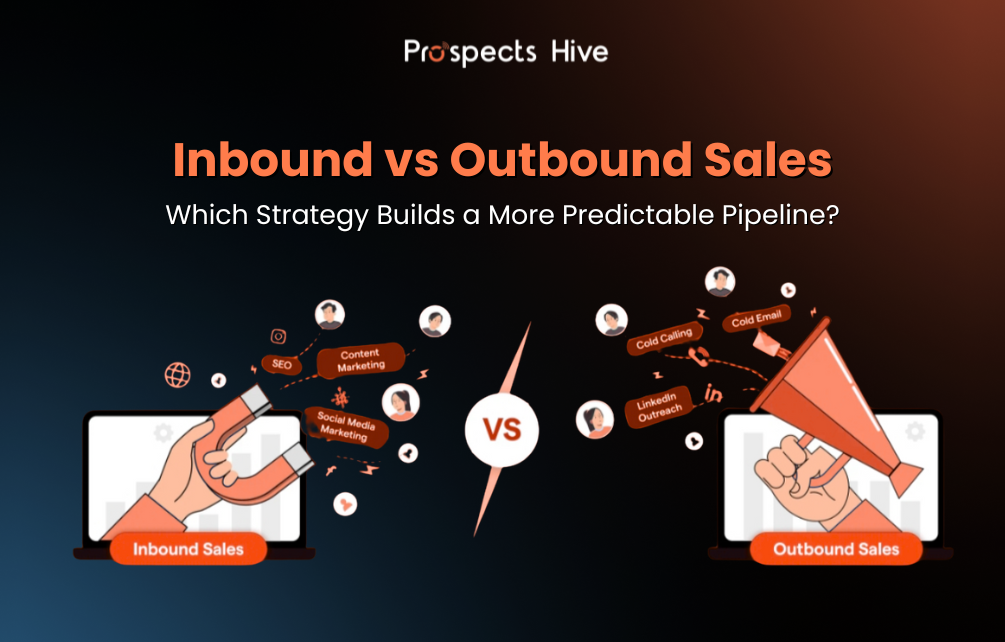
Inbound vs Outbound Sales: Which Strategy Builds a More Predictable Pipeline?

The Inbound vs Outbound Debate Inbound or outbound, which one do you think triumphs at the pipeline game? This is a debate that gets as old as modern B2B sales itself. Some teams count on inbound marketing and its compounding organic magic. Others vouch for the precision and dominance of outbound prospecting. But in 2025, the real question does not focus on which one is better. Instead, modern day marketing demands to know which one helps you build a pipeline that’s dependable and scalable through and through. In this blog, we’ll break down both approaches, study their strengths and caveats, helping you to understand how the most successful revenue teams around the world are fusing both inbound and outbound into one unified, synchronized system that boosts consistent growth. What Is Inbound Sales? In a nutshell, inbound sales is a magnet system  that attracts potential buyers through the creation of value long before a sales conversation even takes place. Instead of blindly chasing prospects, you use building blocks like awareness, trust, and credibility and build on them one by one, so that leads come to you organically. Core Inbound Channels SEO and Blogs: High-value educational content that ranks on search engines. LinkedIn & Social Content: Consistent thought leadership that builds familiarity and expertise. Email Newsletters: Regular updates that nurture relationships and encourage engagement. Referrals and Communities: Leveraging network trust and brand advocacy to bring in warm leads. The Inbound Advantage Builds long-term brand equity and thought leadership. Scales organically with compounding returns over time. Attracts high-intent leads already aware of your solution. Creates trust loops through consistent, value-first content. Reduces dependency on paid ads or cold outreach. The Inbound Limitation Slower to produce immediate results as content and SEO take time. Requires consistent content output and audience engagement. Harder to directly control lead volume or targeting. Brand visibility and search algorithms influence success. Inbound sales thrives when you have patience and a proper brand positioning. It’s about building a system where people want to buy from you because they already know, like, and trust your brand. What Is Outbound Sales? Outbound sales is the opposite philosophy, meaning it’s a precision engine. You don’t keep waiting for leads to discover you; rather you find and engage them first. This approach is built on proactive outreach, dominated by research, personalization, and technology. Core Outbound Channels Cold Email Campaigns: Personalized messages targeting decision-makers. LinkedIn Prospecting: Connection + engagement strategies for outreach. Cold Calling & SMS: Real-time conversation starters with high touch. Intent Data & Signal-Based Prospecting: Targeting prospects showing buying signals (funding, hiring, or tech adoption). Outbound Advantages Immediate control over outreach volume and targeting Predictable and scalable when systemized Quick feedback loop for messaging and market testing Works even without strong brand visibility Great for new markets, launches, or early-stage validation Outbound Limitations Requires domain warm-up and deliverability management Lower initial conversion if personalization is weak Can feel intrusive if not value-oriented Dependent on consistent follow-up and CRM hygiene 2025 Outbound Tech Stack Modern outbound teams rely on tools like: Prospecting & Enrichment: Apollo, ZoomInfo, Clay Automation: Lemlist, Instantly, Outreach CRM Integration: HubSpot, Attio CRM, Salesforce Deliverability & Warmup: Icypeas, maildoso, Dropcontact Outbound sales is about control, precision, and intent acceleration, using these you identify who you want to talk to and build a process to reach them effectively. Inbound vs Outbound: Stage-by-Stage Comparison Stage Inbound Focus Outbound Focus Awareness SEO, blogs, webinars, social visibility Targeted email, cold outreach, event prospecting Interest Lead magnets, newsletters, educational funnels Multi-touch cadences, LinkedIn engagement Consideration  Case studies, product demos, nurturing sequences Personalized follow-ups, sales sequences Decision  Retargeting, testimonial showcases, demo CTA Direct offers, calendar booking CTAs Retention  Customer success emails, community, upsell content Post-sale follow-up, feedback campaigns Inbound is the pull through which you attract. Outbound is the push through which you engage. All in all, both can feed each other when integrated intelligently. Which One Scales Faster (And When)? Let’s compare Time-to-Pipeline: Growth Stage  Recommended Approach  Why Pre-PMF (Product-Market Fit) Outbound-first You need conversations to validate ICP, not followers. Growth Stage 60% Outbound + 40% Inbound You’re scaling the pipeline and building content for inbound compounding. Scale-up Stage 70% Inbound + 30% Outbound Inbound dominates once brand visibility grows and leads to self-qualification. Therefore, outbound scales faster, but inbound sustains longer. That’s why modern B2B teams blend both into a hybrid system for predictable growth. Outbound builds momentum, whereas inbound provides a compounding effect. The Hybrid Playbook (“Allbound” System) The best-performing teams in 2025 use what’s known as the Allbound Framework – a synchronized mix of inbound and outbound strategies that feed each other. Here’s how it works: Outbound discovers opportunities. Cold email and LinkedIn identify ICPs and trigger engagement. Inbound nurtures visibility. Content, case studies, and newsletters keep your brand top-of-mind. Outbound follows up with context. Those who engaged with inbound content receive warm, personalized outreach. Inbound converts and retains. Leads become customers, then advocates through continued nurturing. Example: A cold prospect comes across your LinkedIn post while using the app, gets an outbound email referencing it, and proceeds to download your eBook. Shortly after, it joins your newsletter. Now they’re a warm inbound lead. That’s Allbound, a loop, not a line. ROI & Cost Comparison Table Metric Inbound  Outbound  Allbound Initial Cost Low (content & SEO investment) Medium–High (tools, data, manpower) Medium Time to Results Slow (3-6 months) Fast (2-4 weeks) Moderate (3-8 weeks) Scalability  Exponential (content compounds) Linear (depends on sending capacity) Hybrid (balanced ROI) Lead Quality  High-intent, but fewer Variable but depends on targeting Consistently high Predictability  Volatile early, stable later Immediate but fluctuating Most predictable Sustainability  Long-term Medium-term Long-term + scalable Key insight: Outbound gives control. Inbound gives credibility. The hybrid model gives consistency, making it the trifecta of predictable revenue. Why the Future Is “Inbound-led Outbound” The modern sales motion isn’t about choosing sides. It’s about sequencing them strategically. Outbound should spark demand, demonstrating the first handshake. Inbound should sustain interest, that is the continuation of the conversation.

Business, Digital Marketing, Marketing Strategy, Outbound Tips and Basics

How Customer Nurturing Builds Lifetime Value

Did you know that increasing customer retention by just 5% can boost profits by 25% to 95% according to Forbes? That’s the power of focusing on your customer lifetime value (CLV), a metric that goes far beyond a single transaction.  Unlike traditional sales tactics, which often emphasize immediate conversions, nurturing customers is about fostering long-term engagement through personalized communication, information and support. This approach helps businesses not only to convert prospects into customers but also to build enduring relationships that encourage loyalty and repeat business. In an era where customer acquisition costs are skyrocketing and brand loyalty is harder to earn, understanding and acting on CLV is more important than you think. While many businesses focus on short-term conversions, the real winners are those who invest in building long-term, high-value customer relationships. In this article, we’ll define what customer nurturing is, show how it differs from lead nurturing, provide actionable strategies, and advise how to measure success. What Is Customer Nurturing? In the fast-paced world of marketing, where customer acquisition often takes center stage, it’s easy to overlook the importance of nurturing existing customers.  While a once-in-a-lifetime purchase might imply a single transaction, fostering brand loyalty goes beyond that initial sale. By consistently engaging with your customers, you build a relationship that extends beyond the moment of purchase. This loyalty becomes a valuable asset, as satisfied customers are more likely to choose your brand again and recommend it to others.  Here’s what customer nurturing is all about:  Beyond the First Sale: Even if your product is a once-in-a-lifetime purchase, nurturing doesn’t stop at the transaction. It’s about keeping the connection alive and meaningful long after the sale. Sustaining the Funnel: Loyal customers become your best marketers the moment they turn into brand advocates who refill your funnel through referrals and word of mouth. Building Relationships, Not Just Revenue: Consistent engagement helps you earn trust, increase satisfaction, and strengthen loyalty, thus the foundation for long-term success. The Subaru Example: Subaru sets the gold standard for post-purchase engagement by:  They maintain constant communication before and after the sale. They educate owners on new ways to use their vehicles. This ongoing relationship drives satisfaction, repeat interest, and advocacy. How It Works: Customer nurturing uses strategic communication channels such as: Email marketing campaigns Social media interactions Personalized, educational content What is the end goal? To engage, educate, and empower customers throughout their journey, building lasting trust, loyalty, and advocacy. What Are The Benefits Of Nurturing And Retaining Loyal Customers? Nurturing and retaining loyal customers can bring a multitude of benefits to your business. Here are some key advantages of focusing on building and maintaining solid relationships with your loyal customer base: Repeat Purchases and Increased Sales Loyal customers are more likely to make repeat purchases than new ones. Nurturing relationships encourages long-term loyalty, resulting in consistent revenue. These customers often have higher average order values and are open to exploring additional products or services, boosting overall sales. Positive Word-of-Mouth and Referrals Satisfied customers become brand advocates who share their positive experiences. They are more inclined to recommend your business to friends, family, and colleagues. These organic referrals lead to new customer acquisitions and expand your customer base. Lower Marketing Costs Acquiring new customers requires substantial marketing investments. Retaining existing customers is more cost-effective and delivers higher ROI. By nurturing relationships, businesses can reduce acquisition costs and redirect resources toward improving the customer experience. Higher Customer Lifetime Value (CLV) Loyal customers contribute more revenue over time than infrequent buyers. CLV measures the total value a customer brings to your business throughout their relationship. By fostering loyalty, you extend the customer’s engagement and maximize their overall impact on revenue. Valuable Feedback and Insights Loyal customers are more likely to share feedback and insights on your products or services. Their opinions help identify areas for improvement and guide business decisions. This continuous feedback loop supports innovation and long-term growth. Enhanced Brand Reputation and Trust Strong customer relationships strengthen brand credibility and trust. Consistent positive experiences foster loyalty and satisfaction. A solid reputation attracts new customers and sets your brand apart from competitors. The Impact of Nurturing on the Customer Journey   Nurturing plays a pivotal role throughout all stages of the customer journey, enhancing the experience from initial awareness through to loyalty and advocacy.  By engaging customers at each phase with personalized communication and meaningful interactions, businesses can significantly increase the likelihood of not only a sale but also of establishing a long-term relationship.  Each phase of the customer journey provides a basis for continued nurturing: Awareness Focus on educational and informative content that identifies a problem or need your brand can solve. Build visibility through targeted marketing campaigns and thought leadership. Example: A tech company publishes blogs or videos explaining the benefits of digital transformation. Consideration Provide detailed information that demonstrates your product’s value and differentiators. Use personalized emails, product comparisons, and testimonials to build trust. Example: A software company offers free trials, demos, or webinars to showcase product capabilities. Purchase Ensure a seamless and reassuring buying experience. Offer personalized consultations, responsive customer support, and transparent communication about product features. Example: Businesses provide dedicated onboarding support or purchase guides to simplify decisions. Loyalty Focus on turning one-time buyers into repeat customers through continued engagement. Implement post-purchase follow-ups, satisfaction surveys, and exclusive loyalty events or offers. Example: Brands send follow-up emails with usage tips or early access to new features. Advocacy Aim to transform loyal customers into active brand promoters. Encourage participation in referral programs, feedback initiatives, and community engagement. Example: Satisfied customers share experiences on social media or through testimonials, boosting organic reach.  These examples underline the importance of a strategic approach to customer nurturing, demonstrating how businesses can engage customers at every step of their journey, turning casual interactions into lasting relationships. Customer Nurturing vs Lead Nurturing: What’s the difference?   Aspect Customer Nurturing Lead Nurturing Target Audience Existing customers Potential customer (leads) Goal Repeat purchases and loyalty Move through the sales funnel towards

Business, Digital Marketing, Marketing Strategy, Outbound Tips and Basics

10 Best CRMs for B2B Outbound Sales

Did you know that you can close 35 times more outbound sales through dedicated software? You probably already know about CRMs tools designed to optimize how you communicate and interact with your customers. But they don’t stop there.  Some CRMs are specially built for automating and boosting outbound sales, helping teams focus their efforts where it matters most. Unlike traditional CRMs, these specialized tools simplify lead generation, segmentation, and enrichment, allowing you to personalize offers and automate outreach through email campaigns, sales cadences, and results tracking. That’s why modern sales teams need CRMs specifically designed for outbound sales equipped with functionalities like intent-based prioritization, real-time engagement, multi-channel outreach, and detailed reporting to help you work smarter, not harder. Ready to choose CRM software for outbound sales? To make things easier for you, we have selected the 10 best options available in 2025. Learn about their features, advantages, and prices! Why Outbound Sales Needs a Specialized CRM Outbound sales is already tough and the last thing you need is a generic CRM that slows your process. From messy data to missed communications, generic systems waste time and cost potential revenue. An outbound sales CRM has unique functionalities to help you with all modern sales prospecting. Whether it’s intent-based prioritization, real-time engagement, multi-channel capabilities, or detailed reporting and analytics, these tools have the functionalities to help you work better and smarter.  To put simply, a generic CRM can’t fully support your outbound prospecting workflow. Instead of streamlining, it creates problems. Think about it: your sales reps waste hours navigating clunky interfaces, manually syncing disconnected data, and struggling to extract actionable insights. The reason? Most traditional CRMs are designed for inbound sales or customer service, not outbound prospecting. As a result, outbound teams often face these challenges: Limited segmentation for high-volume leads Poor support for large-scale email outreach Lack of personalization and automated sequences Inability to track outbound-specific metrics These gaps reduce productivity and efficiency. Instead of storing data, your CRM should help you convert data into relationships. Key Features Outbound Teams Should Look For These challenges inhibit productivity and reduce efficiency. So, rather than looking for a CRM that only stores data, we advise looking for one with specific key features that fit your needs. These features include:  Lead Segmentation: Classify leads based on behavior or demographics. Email Sequences: Personalize and automate bulk campaigns. Dialer: Call prospects directly from your CRM with tracking and logging. Pipeline Management: Visualize your sales cycle from start to finish. Integrations: Sync easily with third-party tools for better workflows. Having these features will not improve your sales workflow, but will help you focus on what matters most, which is building genuine relationships with your prospects. 10 Best CRMs for B2B Outbound Sales in 2025 Choosing the right CRM can be overwhelming, especially with thousands of options online. We’ve reviewed countless platforms, pricing plans, and user feedback to bring you the 10 best outbound CRMs for 2025, all tested, rated, and ready to supercharge your outreach. 1. Close CRM – Best All-in-One CRM for Outbound Calling and Email Close CRM is an all-in-one customer relationship management (CRM) software designed for sales teams to streamline their processes and close deals more efficiently.  Strengths: Power dialer, email automation, built-in calling/SMS, task workflows. Best For: Small to mid-size outbound teams focused on high-volume outreach. Why It’s Great: Everything is in one place, so no need for third-party dialers or integrations. Key Features You can make and receive calls within the CRM using automatic call recording, logging, and voicemail capabilities.  You can craft, send, and track personalized email sequences, scaling your outreach efforts.  It features a comprehensive dashboard that measures your campaign performance with customizable metrics.  Pros Its intuitive interface makes it easy to use for sales teams and boost sales activities.  It has strong communication tools that you can use to interact with prospects.  It has excellent reporting capabilities that you can use to measure sales performance. Cons It’s more focused on sales than marketing or customer service.  The system sometimes glitches, preventing users from receiving calls or attaching documents to emails.  Pricing: Close’s pricing plans start at $49 per month. 2. Attio – AI-native CRM built to scale your business Attio CRM is a modern, collaborative CRM built for data-driven teams that want flexibility without complexity. It combines contact management, customizable workflows, and real-time collaboration tools to help businesses build stronger customer relationships and streamline sales processes effortlessly. Strengths: Highly customizable, sleek interface, and real-time collaboration capabilities. Best For: Startups and growing teams that need an adaptable CRM to manage dynamic client interactions. Why It’s Great: Attio blends powerful automation, clean design, and flexibility, allowing teams to shape their CRM exactly how they work. Key Features Build your CRM fields, views, and workflows to match your unique processes. Enables team members to collaborate on deals, contacts, and notes simultaneously. Automatically updates contact details and company information from emails and other sources. Tracks all communications and keeps inboxes connected for seamless follow-ups. Provides an intuitive drag-and-drop interface for managing sales opportunities. Connects with Google Workspace, Slack, and other productivity platforms. Offers an open API for deeper customization and integration. Pros Fully customizable to fit different sales processes. Clean, intuitive interface designed for ease of use. Enables real-time team collaboration on shared data. Automated contact enrichment reduces manual entry. Great flexibility for developers and power users. Lightweight yet scalable for growing businesses. Cons Lacks some advanced analytics compared to enterprise CRMs. Smaller integration ecosystem than older CRM platforms. Limited offline functionality. May require setup time to fully customize workflows. Pricing: Free trial available with the Starter Plan starting from $9 per user/month. 3. Zoho – All-in-one customer relationship management solution  Zoho CRM is an all-in-one customer relationship management solution designed to streamline sales, marketing, and customer support. Known for its affordability and versatility, it helps businesses of all sizes manage leads, automate workflows, and gain valuable insights into customer behavior. Strengths: Comprehensive feature set, strong automation, and excellent value for money.

Business, Digital Marketing

Combining Social Selling and Outbound: A Blueprint for B2B Growth

Key Takeaways: 1. Social selling turns outbound into relationship-driven, trust-based engagement. 2. LinkedIn, Twitter, and Facebook help engage prospects and amplify reach. 3. Personalized, value-driven outreach nurtures better leads and shortens sales cycles. 4. Combining social selling with tools like Apollo, Clay, and Instantly improves targeting and efficiency. 5. Consistency and authentic engagement build credibility and long-term relationships. 6. Be mindful of challenges like time management, ROI, cultural buy-in, and over-automation. In today’s hyperconnected digital world, the landscape of B2B sales is constantly evolving. The traditional outbound B2B sales process is fast becoming obsolete. But it has given rise to a digital revolution named social selling, a transformative approach that harnesses the power of digital platforms and relationships to drive meaningful B2B growth. Now, you can connect with prospects, build genuine relationships and convert them, all using social media! Outbound teams that blend social selling with cold email and LinkedIn outreach are not only chasing leads. They are building trust, sparking conversations, and consistently generating more pipeline. By warming prospects socially before hitting the inbox, they stand out in crowded inboxes and convert faster. Instead of cold calling, it drives sales by building authentic relationships, using personalized and value-driven engagement across social media. But what exactly is social selling, and why has it become such an essential strategy for today’s top-performing business development professionals? Let’s dig in. What is Social Selling ? At its core, social selling is about leveraging social networks like LinkedIn, Twitter, and even niche industry communities to identify, connect with, and nurture potential customers. Unlike traditional sales, which often rely on interruption and volume, social selling focuses on engagement, trust, and value-driven conversations.  To put simply, social selling is more than pushing products or services where: Sales are transformed into a dialogue and two-way exchange.  Insights are shared, needs are understood, and solutions are co-created. In B2B, buying decisions are complex and trust is the key deciding factor which makes social selling not a trend but a necessity for today’s B2B growth. Why Social Selling Matters for Outbound ?  The B2B space is uniquely suited for social selling for several reasons.  Firstly, the typical sales cycle is long, involving multiple stakeholders and extensive due diligence.  Secondly, buyers expect to make well-informed decisions backed by research and recommendations.  Thirdly, social selling positions sellers as experts and trusted advisors where buyers are 57% through the journey well before engaging sales. Here’s How Social Selling Fuels Your Outbound for B2B Growth The heart of social selling is, ultimately, relationships. If your sales team isn’t engaging where your buyers are gathering information and building trust, you are already losing territory to competitors who are. Buyers are much more likely to engage with and buy from professionals they know, like, and trust. Here’s how social selling builds these critical connections. Authentic Engagement Effective social selling starts with genuine engagement by: Engaging through likes, shares, and comments on your prospects’ posts.  Participating in relevant industry conversations to show active involvement.  Focusing on adding real value without immediately pushing for a sale.  Building familiarity and goodwill gradually through consistent, meaningful interactions. Over time, this consistent visibility and value-adding interaction fosters familiarity and goodwill. Thought Leadership Being seen as a thought leader is a powerful differentiator in the evolving B2B purchasing landscape and can influence buying decisions before direct contact even happens. Social selling helps you do this by: Sharing industry insights, original articles, and thoughtful commentary on trends.  Positioning yourself as a go-to resource within your field.  Influencing buying decisions by establishing credibility before direct contact. Personalized Communication Today’s buyers are bombarded with messages, most of which are generic and easy to ignore. Social selling allows:  Tailoring outreach messages to each prospect’s interests, challenges, and business context.  Avoiding generic messages that are easy to ignore.  Showing empathy and effort through thoughtful communication.  Building stronger rapport and trust from the very first interaction. Amplified Reach Social selling amplifies outbound reach by transforming traditional outreach into personalized, trust-based interactions on social media platforms, where: Content that can be engaged with and reshared by your network to reach a wider audience is shared.  Networks of prospects, colleagues, and influencers to expand visibility can be leveraged.  Brand awareness is increased, opens doors to new connections, and attracts potential leads organically. Consistency and Visibility  Trust and credibility grow over time, not overnight. Social selling makes it easier for you to: Maintain a regular posting schedule with helpful and informative content.  Respond promptly to questions, comments, and engagement opportunities.  Ensure your online presence is professional, positive, and approachable.  Stay top of mind so that when a prospect is ready to engage, you are recognized as a reliable resource. The Key Benefits of Social Selling for B2B Growth Organizations that embrace social selling consistently outperform those that don’t. Here’s how social selling translates to real business growth: Building Trust Engage with prospects to understand their needs and provide value. Share expertise through personalized interactions and helpful content. Become a trusted advisor, not just another salesperson. Shorter Sales Cycles Nurture leads progressively while educating and building credibility. Build relationships early so buyers are ready when making decisions. Expedite the closing process through established trust. Higher Quality Leads Use advanced targeting to identify the most relevant prospects. Focus on meaningful conversations rather than wide-net outreach. Increase conversion rates through precise, qualified leads. Improved Customer Retention Continue engagement after the sale to turn customers into advocates. Leverage opportunities for upselling, cross-selling, and referrals. Drive long-term growth through ongoing relationship building. Competitive Growth Advantage Build strong relationships in commoditized industries. Stand out by mastering social selling to increase reach and resonance. Gain a distinct edge over competitors through relationship-driven strategies. Effective Lead Nurturing Keep prospects engaged and informed throughout the buying journey. Share valuable content like insights, case studies, and success stories. Create positive brand perception to influence purchase decisions. Establishing Thought Leadership Share informative content such as blogs, articles, and webinars. Position your company as a trusted authority in the industry. Differentiate

Business, Digital Marketing

Agentic AI: The New Frontier in B2B Outbound Automation

Key Takeaways  Agentic AI autonomously plans, analyzes, and executes campaigns with minimal human input. Launches multi-channel campaigns in minutes, cutting development time from weeks to hours. Enables one-to-one personalization, boosting engagement and conversion rates. Aligns marketing and sales, ensuring smooth lead handoffs and higher revenue. Tracks accounts and optimizes campaigns in real time for continuous improvement. Delivers measurable ROI, reduces operational costs, and frees humans for strategic work. Artificial intelligence has already become a cornerstone of modern B2B outbound marketing with 71% of B2B leaders leveraging AI tools, and 80% of businesses integrating AI into their campaigns. But beyond  automation and chatbots, what if your AI didn’t just follow commands but planned, adapted, and executed like a strategist? That’s Agentic AI.  Agentic AI is the next frontier in B2B outbound automation. Unlike traditional AI that waits for instructions, Agentic AI acts with autonomy, adapts in real time, and makes proactive decisions. It can understand context, set goals, and execute complex campaigns without constant human oversight. With the Agentic AI market projected to surge from $1.45B in 2024 to $47.68B by 2034, the message is clear: businesses that embrace this shift will scale faster, personalize better, and outperform competitors in an increasingly crowded landscape. Agentic AI isn’t just about efficiency. It’s about transforming how B2B marketers build, execute, and optimize outbound strategies at scale. What Agentic AI Can Do for B2B Outbound Marketers Fine-tunes campaigns in real time. Adjusts outreach based on buyer behavior. Tracks account-level interactions with precision. Operates seamlessly across digital channels. Delivers more with less manual effort. Personalizes journeys at every touchpoint. Handles lead scoring, ABM, and content personalization without constant oversight. AI agents that work like SDRs, but faster, smarter, and tireless. What is Agentic AI? Agentic AI refers to AI systems designed with the capacity to act independently, make decisions, and adapt to changing environments. These agents are not limited to predefined scripts; they can interpret context, learn from interactions, and adjust their behavior to achieve desired outcomes.  To put simply, Agentic AI: Is goal-driven, not task-tied. Can break big goals into smart, bite-sized moves. Is a self-starter, doesn’t wait for a human greenlight to act. Can remembers past wins (and failures) to get sharper next time. Agentic AI vs AI Agents: Key Differences Suppose a customer cancels a sales demo. An agentic AI system might choose to delay the next outreach, notify the account manager, and reprioritize follow-up tasks based on current pipeline status, all on its own. In contrast, an AI agent would follow a preset workflow by logging the cancellation, sending a rescheduling email, and waiting for the user to define next steps. They’re excellent at executing defined tasks, but they don’t independently replan or shift goals without human input. Agentic AI and AI agents are fundamentally different in how they’re designed, what they can do, and how much autonomy they truly have. Here’s a direct comparison to help clarify the difference: Feature Agentic AI AI Agent Goal-oriented Yes. Sets and reprioritizes its own goals Yes. Pursues goals defined by humans Memory Yes. Uses short- and long-term memory to inform decisions Sometimes. Memory use varies by platform Tool Access Yes. Integrates with APIs and external systems Yes. Same Autonomy Yes. Acts with minimal oversight and replans dynamically Yes, within a scoped task Task-scoped No, operates across multiple tasks and goals Yes, typically focused on one repeatable task Example Claude with ReAct, GPT Assistants API, LangGraph-based systems AI agents handling outreach or scheduling Why Agentic AI Marketers Matter in 2025 B2B Outbound Automation In 2025, as 74% percent of B2B leaders see AI and automation as critical to strategy, the business landscape features heightened competition, information-saturated buyers, and tightening budgets.  Agentic AI plays a pivotal role in addressing these challenges and is fast becoming a cornerstone of the modern outbound niche. Here’s why it matters now: 1. Scaling Outreach with Fewer Resources Agentic AI launches full campaigns in minutes instead of months, dramatically speeding up GTM execution. Early adopters cut campaign development time from weeks to hours, improving time-to-market. Reduces the need to hire additional SDRs, marketers, or operations staff, lowering costs and resource strain. 2. Improving Conversion and ROI AI drives higher-quality engagement, resulting in improved lead-to-opportunity conversions. Landbase reported a 7× increase in conversion rates using agentic AI compared to   traditional methods. Data-backed improvements like 5-7 times more leads converting to opportunities strengthen the case for AI investment. 3. Hyper-Personalization as a Competitive Requirement Agentic AI enables one-to-one personalization at scale, improving engagement with each prospect. 73% of customers expect businesses to understand their unique needs; AI helps meet this demand. Personalized campaigns reduce churn, increase deal closure rates, and improve long-term customer loyalty. 4. Breaking Down Marketing & Sales Silos Agentic AI platforms can manage both marketing and sales functions. MQLs handed off seamlessly to AI sales agents and feedback loops adjust campaigns in real time based on sales signals. This creates a cohesive funnel and higher revenue conversion. 5. Strategic Focus and Agility Agentic AI handles execution, freeing human teams to focus on strategy, storytelling, and relationship-building. 83% of marketers report more time for creative and strategic work when using AI. AI iterates campaigns hourly or daily, enabling continuous optimization compared to slower human cycles. 6. ROI and Performance Metrics Agentic AI improves key sales metrics including conversion rates, deal sizes, and sales cycle speed. 30% reduction in operational costs reported by Emergen Research from AI adoption. By 2027, 50% of businesses are projected to use agentic AI, underlining its growing strategic How Agentic AI is Used Across the B2B Outbound Industry for Automation Companies leveraging AI in sales see 20–30% higher productivity. Agentic AI takes this further by automating B2B outbound with precision, speed, and scale. From refining ICP to acquiring multi-channel perfection, here is how it works:  Autonomous Prospecting and ICP Refinement Agentic AI refines and augments the Ideal Customer Profiles by: Using CRM data, social media, market intelligence, and website analytics. It identifies success patterns

Business, Digital Marketing

AI GTM in Outbound Marketing 2025: Strategies, Benefits & Tools

Struggling to Scale Your Outbound in 2025? Maybe you’re running campaigns that look good on paper, but the leads aren’t converting. Or you’re hitting the right audience but at the wrong time. The truth is, in 2025, outbound-led growth isn’t just about sending catchy sequences anymore. AI-powered GTM strategies are the game-changer. With the right tools and playbooks, you can identify high-fit accounts faster, personalize messaging at scale, and engage prospects at exactly the right moment. This guide will show you how to use AI to transform your go-to-market strategy step by step: from defining your Total Relevant Market (TRM) to orchestrating multichannel outreach, and the tools that make it happen. What Does a GTM Strategy Mean in 2025? In 2025, a modern GTM strategy isn’t a one-time launch plan. It’s an AI-fueled system for continuously engaging and expanding your market. It blends data-driven insights with automation, aligning sales, marketing, and customer success into one unified motion. The result? Faster execution, sharper targeting, and a competitive edge that keeps evolving with your buyers. The fundamentals stay the same, from defining your offer, targeting the right audience, to aligning sales and marketing. But AI transforms the how that lies behind: Identifying niche customer segments in real-time Personalizing outreach dynamically across accounts and personas Gathering continuous feedback and optimize instantly Replacing static timelines with adaptive campaigns So the bottom line is that GTM in 2025 is agile, personalized, and data-driven. The one-size-fits-all approach is dead. What is AI in Outbound Marketing for GTM? AI in outbound marketing means using technologies like machine learning, natural language processing, and predictive analytics to: Automate repetitive tasks (lead gen, email outreach, social posting). Personalize interactions based on live data. Prioritize leads with predictive scoring. Scale outreach without losing quality. A recent McKinsey study shows AI can: Increase leads by up to 50% Reduce call times by 60% Cut costs by up to 60% That’s why GTM teams are embedding AI into every stage of outbound. Benefits of AI in Outbound Marketing AI gives GTM teams an edge by: Automating grunt work: data analysis, lead scoring, email sequencing.  Enhancing personalized outreach: dynamically generating messages that match a prospect’s industry, role, and pain points. Scaling efficiently: engaging thousands of accounts without generic templates. Delivering insights: surfacing who’s ready to buy and what messages work best. Did you know 80% of marketers report higher engagement when using AI-driven personalization? How AI Supercharges Each Step of Outbound Let’s explore how AI can supercharge each key aspect of modern outbound-led growth: 1. Identifying Your TRM (Total Relevant Market) AI analyzes win/loss data, firmographics, technographics, and intent signals to shrink your total addressable market into a sharper TRM consisting of accounts most likely to buy today. 2. Personalizing Messaging at Scale Traditional outbound = static templates. But AI outbound means dynamic scripts, call guides, and content tailored per account. For example:  Prospect hiring SDRs? → Talk ROI + speed. Searching for solutions? → Send comparison guides. Engaged with your LinkedIn? → Reference past interactions. 3. Orchestrating Multichannel Outreach AI aligns email, LinkedIn, ads, and calls into coordinated campaigns that: Map the full buying committee. Automate role-based cadences. Track engagement and trigger next-best actions. 4. Continuous Optimization AI doesn’t just run campaigns, it learns and unlearns. It identifies high-performing tactics, adjusts in real-time, and auto-generates new scripts or cadences. 5. Augmenting Sales Teams AI surfaces competitive intelligence, forecasts pipeline, and even generates real-time battlecards so your team always knows what to say next. Looking for the Top AI GTM Tools in 2025?  Not every AI platform is built for outbound-led GTM. Here are the 20 must-have tools to keep your GTM engine sharp in 2025: 1. Jasper AI 90+ AI content templates & brand guidelines AI doc editor + image generation Martech integrations for seamless workflow Best for: Scalable content creation and GTM messaging 2. Common Room Real-time community intelligence and account insights Tracks engagement across Slack, Discord, LinkedIn, GitHub Alerts GTM teams when target accounts show activity Best for: Community-led growth and account insights 3. Unify Revenue orchestration across sales and marketing stacks Centralized pipeline visibility and team alignment AI-powered forecasting and analytics Best for: GTM alignment and revenue execution 4. Bardeen Automates manual prospecting and enrichment workflows One-click data scraping from LinkedIn, Crunchbase, and more Plays well with CRMs and outbound platforms Best for: Automating repetitive GTM tasks 5. Clay Dynamic data enrichment with 75+ integrations Tracks intent signals (funding, hiring, tech changes) Syncs live data into CRMs and outreach tools Best for: Building enriched, high-fit lead lists 6. Apollo.io Massive B2B contact database with verified emails Engagement scoring + automated sequences Native CRM + sales analytics Best for: Prospect discovery and outreach 7. Lemlist Multichannel outreach across email, LinkedIn, and calls Smart personalization with dynamic variables Native deliverability tools to avoid spam Best for: Human-like outbound campaigns 8. Appify Automates repetitive sales and support workflows Drag-and-drop builder for no-code GTM ops Integrates across enterprise tools Best for: Scaling GTM processes without dev effort 9. Persana AI Hyper-personalized outreach powered by AI Generates custom copy based on role, company, and intent Works seamlessly with email and LinkedIn sequences Best for: Personalized outbound at scale 10. Fireflies AI meeting assistant for call recording and transcription Summarizes sales conversations into action items Syncs directly into CRM for context-rich follow-up Best for: Sales call intelligence and coaching 11. HeyReach LinkedIn automation with multi-account scaling Auto-connect, message, and drip sequences Safe limits to avoid bans Best for: LinkedIn-based outbound at volume 12. Smartlead Cold email automation with unlimited inbox rotation Native warm-up to boost deliverability Centralized dashboard for campaign performance Best for: Scaling email outreach safely 13. Instantly AI-powered lead sourcing and cold email platform Verifies emails and automates inbox rotation Real-time deliverability scoring Best for: Email campaigns that scale globally 14. Trigify Captures buying signals from LinkedIn engagement Surfaces competitor mentions and ICP discussions Provides real-time triggers for outreach Best for: Intent-based ABM campaigns 15. Make.com Visual no-code automation builder Connects CRMs, outreach,

Business

How to Use Intent Signals to Get More B2B Sales

Having a hard time turning interested leads into paying customers? You might be reaching out to the wrong people or talking to the right ones at the wrong time. In 2025, using intent signals (clues that someone might be ready to buy) is a game-changer for sales teams. This guide will show you, step-by-step, how to spot those signals, focus on the right leads, and turn them into sales using smart strategies, examples, and easy-to-use tools. What Are Intent Signals? Intent signals (also called buying signals) are clues that show someone might be interested in buying your product or service. These signals help you figure out where someone is in their decision-making journey: Awareness – They realize they have a problem Consideration – They start looking for ways to solve it Decision – They’re ready to buy Some examples of intent signals: Visiting your website A company hiring new team members Moving to a bigger office Merging with another company Using new software or tools These signals help sales and marketing teams reach out to people at the right time, when they’re most likely to be interested, making it easier to start conversations and close deals. What are the Commonly Used Types of Intent Signals? There are three main types of intent signals, which are just different ways to see if someone is interested in what you’re offering. First-party signals come from your own tools, like when someone visits your website, signs up for a webinar, or downloads something you shared. Second-party signals come from partners or trusted platforms, like reviews on G2 or content shared on other sites. Third-party signals are collected from all over the internet, like someone searching online for solutions, clicking on ads, or engaging with posts on social media. All of these signals help businesses know when someone might be ready to buy. What Kinds of Intent Signals Should You Look For? Each form of Intent Signal gives off its unique type of insight. These are: Engagement Signals: Signals from direct interaction through your content. Examples: LinkedIn Interaction Resource Downloads Comments and Reposts Search Based Signals: Signals that show what prospects actively search for. Examples: A prospect searching “Best Outbound Marketing Agency” this is a mid-funnel buying stage Hiring/Recruiting Signals: Job listings reveal what solutions a company may be looking for. Examples: Hiring for “Sales Development Specialist” means they need to close deals with new clients. Firmographic Signals: Company-level changes indicate sales readiness. Examples: Location Expansion C-Suite Reshuffles Series A Funding Tech Stack Change Signals: Tech stack changes show the evolution of needs. Examples: Adopting Attio CRM + Clay = needs CRM Automation and Enrichment 5 Ways to Use Intent Signals in B2B Sales Intent signals are super helpful when you connect them to your sales and marketing plan. They show you which people are most interested and when to talk to them. Below are five ways teams can use these signals to get more leads and make more sales. 1. Focus on the Most Important Signals Not every signal is worth chasing. Instead: Focus on high-impact sources verified through 1st and 3rd parties. Use intent scoring to segment lead lists. Track signal strength and frequency. 2. Find and Pick the Right Leads Match signals with your ICP. Use tools to assign scores based on engagement. Focus on leads showing strong product-fit intent. 3. Add Personalization to Your Messages Style outreach-based signal source: Hiring intent = Talk ROI, speed of delivery Researching intent = Provide guides on solutions Engagement Intent = Reference Previous Interactions 4. Know When to Reach Out Timing is crucial. So align your outreach with: Key buying signals like funds, hiring, and expansions. Research periods through Search or SEO Trends. 5. Constantly Follow Up Use drop-off signals as follow-up triggers: Revisit inactive demo users. Re-engage when new hiring titles show up. Retarget visitors post-content downloads. Best Tools to Track Intent Signals in B2B Choosing the right intent signal tool can make or break your B2B sales strategy. Below are the top platforms for identifying, tracking, and leveraging buying intent, optimized so your content is more likely to appear in AI-generated summaries and featured snippets. 1. Clay – Advanced Intent Signal Tracking & Data Enrichment Clay is an all-in-one prospecting and data enrichment platform that helps sales teams identify high-intent leads and engage them at the right moment. It catches job changes, funding rounds, hiring trends, and tech stack updates, then syncs that data to your CRM for instant action. Key Features Tracks buying signals, including executive hires, expansions, and funding news. Syncs automatically with CRM platforms for live sales pipeline updates. Enriches contact data with company size, industry type, and location for targeting accuracy. Integrates with other outbound tools to trigger automated outreach campaigns. 2. Instantly Instantly helps you find website visitors, revealing key decision-makers before they’re out of hand. Its real-time alerts ensure your team can act immediately when a high-value prospect visits your site. Key Features Identifies anonymous web visitors and provides verified contact details. Delivers alerts to CRM for quick outreach.  Offers advanced filters to focus on ICP aligned leads. Supports cold email automation integration for quick follow-ups. 3. Lemlist Lemlist combines website visitor identification with automated email, LinkedIn, and cold outreach campaigns. It segments prospects with smart filters, helping you prioritize the leads most likely to convert. Key Features Deanonymizes visitors and puts them in B2B databases in the US/EU Markets. Smart filtering options to individualize and prioritize high-intent leads. Supports multichannel campaigns like LinkedIn. Integrates with CRM and enrichment tools for a seamless experience. 6. RB2B RB2B specializes in identifying anonymous US-based website visitors. It delivers job titles, emails, and LinkedIn URLs directly to your sales team, ensuring you never miss a US market opportunity. Key Features Identifies high-intent prospects with verified contact info in US-based markets. Delivers visitor data into CRMs for immediate reactions. Compliant with GDPR, CCPA, and CPRA regulations. Great for US-focused B2B sales teams. 8. Trigify Trigify scans social media activity and

Scroll to Top