Outbound Tips and Basics

Automation, Go-To-Market, Outbound Tips and Basics

AI for Knowledge, Humans for Relationships: GTM Lessons You Can Actually Use

AI is everywhere in marketing right now. More tools. More automation. More content than ever before. And somehow, less trust. Buyers are overwhelmed. Inboxes are noisy. LinkedIn feels automated. Blogs keep getting published, but very few are actually read. The promise of AI-driven scale has arrived, but the outcomes GTM teams care about pipeline quality, speed of deal, and revenue efficiency haven’t improved at the same pace. There’s a simple idea that cuts through the noise: “Use AI for knowledge and leave the relationships to humans.” That sentence should be the throughline for how GTM teams think about AI in marketing in 2026. It’s not anti-AI or anti-automation. It’s a clear-eyed view of where AI creates leverage and where it quietly destroys trust. What follows are GTM lessons you can actually apply, using an allbound marketing lens that connects strategy, execution, RevOps, and reality. TL;DR: The 10 Biggest Takeaways AI accelerates insight, not trust. Marketing still requires both science and art. Fake personalization does more harm than generic messaging. AI is best used before the conversation, not during it. Deleting content often outperforms publishing more. LLMs reward authority, depth, and real experience. Events work when they drive pipeline acceleration, not badge scans. Lead scoring breaks when teams stop talking to customers. Data hygiene for AI matters more than adding another tool. Revenue per employee is one of the most honest GTM metrics. What GTM Teams Get Right (and Where They Still Go Wrong) Most modern GTM discussions get a few important things right. First, AI has raised the bar, not lowered it. When everyone can publish “decent” content, decent stops working. The tolerance for average marketing is shrinking fast, especially in B2B. Second, personalization at scale is not automatically a win. Pretending to care about someone when you don’t is worse than being honest and relevant at a segment or category level. This is why AI personalization vs authenticity has become a defining tension in modern GTM. Where teams still go wrong is assuming tools will fix strategy. They automate before they clarify. They publish before they read. They rely on dashboards instead of conversations. AI didn’t create these problems. It just exposed them faster. The Allbound Lens: Turning Insight Into an Operating System Allbound marketing only works when inbound trust and outbound relevance reinforce each other. Inbound without relevance becomes passive content. Outbound without trust becomes noise. The lesson isn’t “do less marketing.” It’s to do marketing with intent, structure, and care and to use AI where it genuinely creates leverage. Here’s what that looks like as an operating system: Step 1: PASS-F Preflight Before a campaign launches, before content gets written, and even before tools get involved, teams need clarity. The PAS(S)-F framework forces that clarity: Purpose: Why does this campaign exist? What decision should it influence? Audience: Who is this really for? Not job titles, real buyers. Scope: How narrow or broad is the effort? Schedule: When does it launch, iterate, and stop Format: Blog, event, outbound sequence, workshop, asset? Most GTM campaigns fail because one of these is vague. That’s why PASS-F campaign planning matters more than prompt engineering. This is where AI helps. It can analyze markets, break industries into sub-verticals, map buying committees, and surface common pain patterns. What AI cannot do is decide what matters most. That judgment stays human. Step 2: AI for Knowledge, Not for Relationships AI is excellent at getting you close to the conversation. It can accelerate research, clarify ICPs, identify pain points, draft first versions, and compress weeks of analysis into hours. What it cannot do is finish the interaction. Relationships still require judgment, taste, context, empathy, and accountability. That’s why founder-led brand moments like direct conversations, clear POVs, and real presence continue to outperform polished automation. A useful mental model is simple: you can set up the interaction, but you can’t force the relationship. That’s how AI should be used in GTM. Let it do the heavy lifting before the interaction. Let humans handle what happens after. Step 3: The Quality-First Content Sprint One lesson that’s becoming hard to ignore: Deleting content often improves performance. This is no longer an edge case. It’s becoming standard as SEO quality vs quantity becomes the defining trade-off. Search engines and AI systems increasingly reward first-hand experience, clear POV, depth over volume, and evidence of real understanding. A quality-first sprint looks like this: Fewer pieces Stronger POV Bottom-of-funnel focus Subject-matter depth Founders and operators involved in review If you wouldn’t click it yourself, don’t publish it. Step 4: Events as a Pipeline Engine Events are expensive. That hasn’t changed. What’s often missed is why they fail. Events should do two things: generate pipeline and accelerate existing deals. Most only attempt the first, and poorly. Events fail when meetings aren’t booked in advance, follow-up is generic, ownership is unclear, and expectations are unrealistic. For smaller or bootstrapped teams, events work best when they’re targeted, relationship-driven, and designed for conversation, not volume. A dinner with the right ten people beats a booth scanned by five hundred. That’s real pipeline acceleration. Step 5: Attribution and RevOps Guardrails Perfect attribution is a trap. Smart teams focus on attribution that answers one question: did this create or accelerate real opportunities? Instead of obsessing over dashboards, focus on opportunity creation, sales conversations, deal velocity, retention, and expansion. A few hard truths: Lead scoring is overrated when it replaces human judgment. Most teams already have too many tools. Everyone says their data is terrible, and they’re usually right. This is where the real RevOps advantage lives. Clean data, fewer tools, clearer ownership, and better decisions. One metric that cuts through the noise is revenue per employee. It exposes inefficiency fast and highlights where AI can actually help. Where We Go From Here AI will keep getting better. What won’t change is how trust is built. The teams that win in 2026 won’t be the ones automating everything. They’ll be the ones who: Use AI to sharpen thinking
Business, Outbound Tips and Basics

SEO x AI Summit 2025: Inside the New Era of Search & Growth

The SEO x AI Summit Bangladesh 2025 brought together industry experts, marketers, engineers, and founders to explore the intersection of search, content, generative AI, and digital growth. Prospects Hive attended the summit with a clear goal: to understand how SEO, AI visibility, and outbound marketing are merging into a single growth system. Across keynote sessions, panel discussions, and technical workshops, one message became consistent: SEO, GEO (Generative Engine Optimization), and Outbound now operate as one unified discipline. The summit offered both strategic and technical clarity on how businesses must now build content, structure websites, and engineer outbound systems if they want to remain discoverable in the age of AI. The Dual-Discovery Era: SEO Meets GEO One of the summit’s opening themes was the shift from a single discovery channel (Google search) to a dual-discovery world: traditional SEO and generative retrieval. The “Dual Discovery Era” shows how SEO optimizes for indexed rankings while GEO optimizes for LLM retrieval, reasoning, and generative responses.  SEO relies on crawl → index → rank; GEO relies on retrieve → reason → respond.  Both now run in parallel, not as competitors but as interconnected systems. Prospects Hive interprets this shift as more than a technical evolution. It changes how outbound works, because buyers now verify information through both search and AI engines before replying to outreach. If a brand is invisible in generative results, outbound becomes harder. SEO Is Not Dead. But It Has Evolved AI search now drives 15% of U.S. queries, up from 7% in 2024. AI-referred traffic converts 4.4x higher than traditional organic traffic.  By 2028, AI will reshape how visitors are valued – rewarding sites optimized for LLMs. This confirms that SEO is not disappearing, it’s only transforming. As SEO evolved, five layers are now at play:  SEO (traditional) AIO (AI readability) GEO (generative engine) AEO (answer engine) SXO (user experience) These categories reflect the expanding surface area of visibility.  Ranking on Google is no longer enough; content now needs to be readable by LLMs, optimized for answer-share, structured for citation, and built for user intent. Keyword Research → Entity Clustering → Predictive SEO One of the summit’s most practical shifts focused on entity-based keyword research. The keyword strategy has now evolved: Old approach: volume, difficulty, manual grouping. New approach: AI-driven entity clustering, predictive queries, semantic mapping Tools like Semrush, Keyword Insights, Surfer SEO, and Answer Socrates now use LLM-powered semantic clustering to forecast emerging search trends. The summit emphasized that brands must shift from chasing keywords to shaping entities, topics, and context. For outbound teams, this matters because entity clarity reduces friction. When prospects Google a brand after receiving outreach, they find structured, consistent information that reinforces the credibility of the message. Search Intent Has Shifted: The New AI Funnel The summit also introduced a redefined funnel built around AI behavior. The “Traditional → AI Funnel” illustrates: Informational → Answer Share Navigational → Brand Trust Transactional → Next-Step Intent Commercial → Multi-Modal Intent This new model mirrors how LLMs surface information. Instead of ranking pages, AI engines look for clarity, extractable answers, and factual signals. This explains why outbound performance often drops when a website lacks structured pages as LLMs can’t retrieve or cite the content, and buyers don’t find what they need. Technical SEO for AI: How Content Becomes Discoverable The key factors influencing AI search visibility: Clear entity usage Google NLP terms Knowledge graph alignment Snippet-ready paragraphs Conversational formatting Structured data schema Frequent content updates   LLMs are now fetching information from: Training data (books, articles, archived content) Live web data (crawled via Bing for ChatGPT, Google for Gemini) This means companies that want to appear in generative answers must maintain structured, extractable content across the web, not just on their sites. The Hard Numbers: AI Overviews Reduce Clicks by 34.5% Ahrefs’ analysis shows Google’s AI Overviews reduce CTR by 34.5% for top-ranking informational pages. This means traditional ranking is no longer enough. Businesses must now compete for visibility inside AI summaries, not just search results. Competitor Analysis Has Become Predictive The summit compared traditional competitor research with AI-driven predictive intelligence: Old approach: keyword lists, backlinks, meta tags. New approach: predictive keyword trends, algorithm shifts, conversational search patterns, UX optimization. For outbound systems, predictive intelligence helps campaigns stay ahead of market shifts.  GEO Audits Reveal a Site’s AI-Readiness One of the most practical takeaways was the GEO audit. The audit evaluates a site across six dimensions: Citation readiness Answer alignment Knowledge graph optimization Content authority Technical AI accessibility Competitive positioning This framework helps teams measure how well their content performs in generative engines and where to improve. Why Outbound Must Evolve With SEO and GEO All three perspectives: traditional SEO, GEO, and outbound, converge on a single truth: Outbound is only as strong as the digital ecosystem behind it. When content is structured for AI, entity-driven, and constantly discoverable: Prospects trust brands faster Search verification becomes smoother Messages land with more credibility Campaigns generate predictable lift Growth becomes compound rather than chaotic This is the direction Prospects Hive expects modern GTM systems to move toward in 2025 and beyond. A Summit That Clarified the Future The SEO x AI Summit Bangladesh 2025 made one thing unmistakably clear: SEO, GEO, and outbound are now one integrated growth engine. Prospects Hive left the event with a stronger conviction that future growth belongs to companies that build: Clear, structured content Strong entity systems Technical AI visibility Predictive SEO insights Outbound messaging rooted in search intelligence The businesses that win the next era of digital growth will be the ones that make their content discoverable, their signals consistent, and their outreach meaningful across both search and AI.

Automation, CRM, Go-To-Market, Outbound Tips and Basics

How to Keep Your Campaigns Out of Spam and Land in the Inbox

Imagine having crafted the perfect cold email with a sharp subject line, meticulously personalized introduction, and ending with a compelling offer. You’ve finally hit the send button… and to much dismay, nothing goes as planned. No opens, and of course, no replies. Possibly your problem isn’t the message, but deliverability. In today’s world of aggressive filters to get rid of spam and smart inbox softwares to get the top priority emails on the go, even the best copy or segmentation won’t matter if your emails never reach the inbox. For those working in the domain of outbound marketing, they know that this silent killer is capable of draining ROI faster than poor targeting ever could. In this blog, you’ll learn how to master cold email deliverability as we unpack the technical and strategic steps that guarantee your messages actually land in the inbox and are not filtered as spam. What Is Cold Email Deliverability? Cold email delivery means your email technically gets delivered to the recipient’s mail server. Now, deliverability is what determines where it actually ends up landing, either the inbox, promotions, or spam. Inboxes like Gmail, Outlook, and Apple Mail use complex, perplexing filters that are competent to scrutinize each message based on: Domain reputation and past sender behavior. Content quality and structure. Engagement signals like opens, clicks, replies, deletions. Technical setup, including SPF, DKIM, and DMARC authentication. As inbox algorithms are growing stricter, even a single misstep such as a poor warm-up, spammy content, or a bad list can downgrade your campaigns’ deliverability directly to the spam folders. In 2025, deliverability has become the backbone of modern outbound success. Without it, you’re indisputably sending out your best efforts straightaway into an abyss. Why Deliverability Is Crucial for Your Campaigns In 2025, email service providers (ESPs) are all in on emphasizing security than ever. With the increasing spam volumes, they’ve essentially toughened up their filters, ensuring sender trust and user engagement to be their first and foremost priority. Here’s why deliverability deserves your full attention: Stricter ESP standards: Gmail and Outlook can now flag even minor anomalies in authentication or content. Blacklisting risks: Once your domain or IP is blacklisted, recovery is a toiling process that can take weeks. Campaign decay: Poor sender reputation degrades inbox placement over time regardless of how amazing your copy is. ROI impact: Every email landing in spam means wasted spend, lower open rates, fewer conversions, and decreasing credibility. To simply put, you can’t make conversions out of campaigns that never even got delivered to the right prospect at the right time! What Impacts Deliverability? (Key Factors) 1. Sender & Domain Reputation Your sender reputation is equivalent to your credit score for inboxes. It’s built from your domain’s sending records, bounce rates, and spam reports. A bad sender reputation inevitably leads to your emails being delivered to the spam folder. A good reputation means securing inbox priority. Avoid shared IPs if possible and monitor blacklists regularly. 2. Email Infrastructure & Authentication Set up email authentication methods such as SPF, DKIM, and DMARC to authenticate your domain. These signals inboxes that “Yes, this email really came from us.” and not from any bot. Without these, your emails may come across as spoofed or malicious. 3. Bounce & Spam Complaint Rates High bounce rates or complaint rates indicate to ESPs that your list isn’t capable of being trusted. Clean lists and make your messaging relevant to reduce these risks. 4. Engagement Metrics ESPs continue to track how recipients interact with your emails through opens, clicks, replies, and even their reading time before deleting. Low engagement can be a bigger blow to your reputation. 5. Sending Behavior & Volume Patterns Sudden surge in email volume or inconsistent sending patterns give rise to doubts. Ramp up gradually and maintain consistency in your sending habits. 6. Content Quality & Formatting Spam filters study the tone, structure, and formatting of your emails over time. Avoid spammy words like “Free!!!”, “Act now”, “Limited offer” and image-heavy templates. Steer clear of overusing links or tracking pixels. Keep your emails conversational and text-forward because plain text often outperforms. 7. Domain & IP Sharing Avoid using your main business domain for cold outreach. If other users on a shared IP are flagged for spam, your deliverability suffers too. Use secondary or dedicated domains for outreach. Best Practices to Improve Deliverability in Outbound Campaigns 1. Domain & Inbox Warm-up Don’t send 500 cold emails on day one. Warm up gradually: Start with 10–20 daily sends, increasing over 3–4 weeks. Simulate engagement (replies, opens) using warm-up tools like Mailflow or Warmbox. 2. Use Dedicated or Secondary Domains Keep outreach isolated from your core brand domain. If deliverability drops, you can pause or rotate domains without affecting your main domain reputation. 3. Confirm Authentication Setup Set up SPF, DKIM, and DMARC records correctly. Align the “From,” “Reply-To,” and “Envelope Sender” addresses for consistency as ESPs love alignment. 4. Clean & Verify Your Lists Use tools like Dropcontact, Icypeas, or NeverBounce to validate emails before sending. Remove: Invalid or role-based addresses Catch-all domains Inactive or unengaged leads 5. Optimize Email Content Avoid clickbait or trigger words and keep links minimal (preferably one). Personalize with context rather than with just the first name. Balance plain-text and HTML formats for deliverability and readability. 6. Throttle & Control Sending Volume Send in waves. Don’t blast thousands from one inbox. If complaint rates rise, pause campaigns and cool down your domain. 7. Monitor Deliverability & Metrics Track inbox placement, spam score, and domain health weekly. Tools like Mailflow, Postmaster Tools, or MxToolbox can help identify issues before they escalate. 8. Rotate or Replace Domains or IPs If a domain gets burned (high spam rates or blacklisted), retire it gracefully. Set up new secondary domains and warm them up again before resuming campaigns. 9. Compliance & Unsubscribe Practices Even cold emails must respect privacy laws. Include a clear unsubscribe link. Honor opt-outs immediately. Follow CAN-SPAM, GDPR, and CASL regulations. Tools &

Automation, CRM, Go-To-Market, Outbound Tips and Basics

The BFCM Sales Ops Checklist: Automations Every Team Should Set Up Before the Holiday Rush

Black Friday and Cyber Monday are no longer just B2C moments anymore: they’re high-velocity weeks for B2B teams, too.  Your prospects are online, their inboxes are buzzing, LinkedIn becomes more active than usual, and decision-makers are eager than ever to close budgets before the year ends. But here’s the catch: Most sales teams enter the BFCM period with clogged CRMs, inconsistent follow-ups, and cold outreach systems that aren’t holiday-proof. If you want to turn this season into a sales engine rather than a scramble, you need your operations tight, automated, and optimized. This checklist gives you the exact tactical automations every B2B team should set up before BFCM; and how Prospects Hive can help you build a scalable, low-touch sales ops system that survives holiday chaos. 1. Clean Up & Standardize Your CRM Before Anything Else You cannot automate chaos. Before launching any seasonal campaigns, ensure your CRM isn’t holding messy data, duplicate contacts, outdated tags, and dead deals. Your BFCM CRM Cleanup Checklist: ✓ Remove duplicates and merge fragmented contact records. ✓ Standardize fields like industry, title, lead status, lifecycle stage. ✓ Reassign stalled deals to the right owner. ✓ Delete bounced, unsubscribed, or invalid emails. ✓ Refresh company info with enriched, verified data. ✓ Archive old sequences and workflows that may conflict with new ones. Why does this matter? Holiday-week engagement spikes, and your CRM becomes your battlefield. A clean CRM ensures your outreach is accurate, your routing works, and your analytics don’t lie. How Prospects Hive helps Our CRM optimization service rebuilds workflows, cleans data, syncs multiple sources, enriches contacts, and ensures your HubSpot/Attio/Zoho instance is BFCM-ready- with zero manual effort. 2. Warm Up Your Sending Domains Before Sending a Single Holiday Email During Black Friday week, even legitimate emails get stuck in spam. Everyone is sending more emails than usual, including your competitors. Domain Warmup Checklist: ✓ Slowly increase daily email volume weeks before BFCM. ✓ Set up SPF, DKIM, and DMARC correctly. ✓ Use multiple domains/subdomains for cold outreach. ✓ Run a warmup tool to improve sender reputation.  ✓ Spread outreach across different mailboxes to avoid throttling.  Why does this matter? If your emails don’t land in the inbox, nothing else matters. And for that, your domain health must be perfect. Prospects Hive advantage In the last 3 years, we have- Sent 2M+ outbound emails over the last three years. Maintained top-tier deliverability across all campaigns. Ensured healthy sender reputations for every domain. Achieved consistent inbox placement with minimal spam leakage. We manage domain tracking, warming, and deliverability prep as part of their outreach optimization, ensuring your emails land where they’re supposed to.  3. Build Automated Follow-Up Sequences (So No Lead Slips Away While You’re Off the Work!) During BFCM, prospects open emails, click offers, and interact but may respond hours or days later. Your team might be offline. Which is why automated follow-up is a must have! Follow-Up Automations to Set Up: ✓ Multi-touch email sequences (7–12 steps). ✓ Automated LinkedIn follow-ups after connection requests. ✓ Behavioral triggers (opens, clicks, replies). ✓ Auto-reminders for SDRs when a hot lead engages. ✓ Automated meeting-booking flows with calendar links. ✓ Lead reactivation sequences for inactive contacts. Why does this matter? Holiday attention spans are short. If you’re slow, someone else books the meeting. Prospects Hive advantage We curate outreach flows that highly convert using: Email + LinkedIn automation. A/B testing to optimize messaging. Real-time optimization for maximum engagement. Lead nurturing sequences to keep prospects engaged until they’re ready to convert. This way, you can get consistent engagement even when your team is out of office. 4. Set Up AI-Driven Lead Scoring to Prioritize High-Intent Prospects BFCM brings in tons of activity BUT not all activity means interest. AI Lead Scoring Checklist: ✓ Score based on behaviors (opens, clicks, page visits). ✓ Score based on firmographics (industry, size, title). ✓ Apply intent signals like buying stage or competitor research. ✓ Auto-classify leads into hot, warm, cold. ✓ Auto-route hot leads to the right rep instantly. ✓ Trigger personalized outreach for top scorers. Why does this matter? Your reps shouldn’t waste time during high-traffic weeks. AI scoring ensures your team focuses on decision-ready prospects. Prospects Hive advantage Our AI-powered enrichment and scoring models help teams categorize prospects, automate priority routing, and accelerate conversations during peak demand. 5. Automate Pipeline Routing to Keep Deals Moving During the Holiday Delays Teams travel. Reps go home. People take leave. Deals end up stalling. Unless you automate routing. Pipeline Automation Checklist: ✓ Auto-assign new leads by region, industry, or rep availability. ✓ Create auto-advance rules (open → engaged → qualified).  ✓ Trigger tasks when deals get stuck too long. ✓ Auto-notify managers about stalled opportunities. ✓ Auto-send check-in messages to prospects sitting in the pipeline. ✓ Automatically close lost deals when inactive beyond X days.  Why does this matter? Without routing automation, your pipeline freezes and January starts slow. Prospects Hive advantage Our CRM + outreach automation ensures every new lead flows into the right place and every stalled deal gets the next action without manual workload. 6. Refresh Your Holiday Messaging & Sequences Your normal sales copy won’t work during BFCM. This week demands urgency, relevance, and hyper-personalization. Holiday Messaging Checklist: ✓ Update intros to reference holiday timing. ✓ Add scarcity-driven CTAs (limited spots, year-end budgets, etc.). ✓ Personalize with AI-enriched insights. ✓ Shorten messages as attention is the lowest during holidays. ✓ Build 2–3 variations for A/B testing. ✓ Update your LinkedIn messaging scripts. Why does this matter? Everyone’s inbox is swamped, and only fresh, relevant messages cut through. Prospects Hive advantage Our outbound playbooks and dynamic AI personalization help craft sequences that don’t sound robotic, and convert even during noisy periods. 7. Run a Deliverability Check Before Campaign Launch This is your last step before you hit “Send.” Deliverability Audit Checklist: ✓ Test inbox placement across major providers (Gmail, Outlook, Yahoo). ✓ Verify spam-filter checks and bounce rates. ✓ Validate all email addresses in your sending list. ✓

Automation, Go-To-Market, Outbound Tips and Basics

How SaaS Companies Can Scale Faster by Combining ABM and Allbound Marketing

Still wondering why the pipeline feels flat despite having a great SaaS product and a flawlessly mapped out ideal customer profile? Your SDRs are chasing outbound while the  marketing team is curating and pushing ads. The revenue generating opportunities nonetheless, remain utterly deflated. Guess what, you’re not alone. Most SaaS teams show the tendency to treat ABM (Account-Based Marketing) and outbound as two distinct plays, in which marketing is tasked with only building target lists while it’s the sales pursuing the cold leads. This is where the problem lies.You’re running parallel engines without a unified motion. The modern rapidly growing SaaS companies don’t make a choice between ABM and outbound. What they do is merge ABM’s precision targeting with Allbound’s execution power! In this blog, stick around to understand how combining ABM and Allbound into one scalable system can be powered by real-time signals, automation, and team alignment. We’ll also disseminate vital tools and workflows (like Clay + Lemlist +  Attio+ Make) to get you all set to start from this week. The Problem: Why SaaS GTM Gets Stuck Most SaaS teams hit a predictable wall after their first growth sprint known as the “pipeline plateau.” Here’s why it happens: Outbound and inbound live in silos. SDRs chase cold lists while marketing pushes inbound campaigns that don’t reach decision-makers. ABM becomes a list-building theatre. Teams build “target account lists” but fail to engage them meaningfully. Outbound lacks signal and timing. Cold messages go out without context like funding updates, hires, and tech shifts are ignored. No feedback loop. CRM data isn’t synced across sales and marketing tools, so learnings stay locked in silos. The result? Leads slip through the cracks. Sales and marketing misalign. Pipeline velocity drops and your GTM feels reactive instead of strategic. To break that cycle, SaaS teams are now blending ABM with Allbound marketing, a full-funnel system that unites outbound precision, inbound demand, and partner signals into one coordinated play. Understanding the Difference: ABM vs Allbound Approach ABM Allbound Goal Identify and engage high-value accounts Activate every buying signal across inbound, outbound, and partners Focus Precision targeting Multi-channel execution Core Team Marketing + Sales alignment Marketing + Sales + Partnerships Weakness Alone Slow to scale, heavy setup Fast but noisy and scattered When Combined Signal-driven, coordinated, scalable growth Think of it like this: ABM is your compass — it tells you which accounts matter most. Allbound is your engine — it executes personalized engagement across every channel. Together, they create a motion where every touchpoint (email, LinkedIn, ad, or webinar) is synchronized around the same target accounts driven by data, not guesswork. The 5-Step Framework for SaaS ABM + Allbound Let’s turn theory into action. Here’s a 5-step framework you can use to merge ABM and Allbound into one revenue engine. Step 1: Identify High-Intent Accounts Start with precision. Use enrichment tools like Clay or Apollo to build your base list using firmographics (industry, size, location) and technographics (what tools they use). Then layer in real-time buying signals such as: Recent funding rounds Job postings for relevant roles Tech stack changes News mentions Pro Tip: Connect Clay + Crunchbase so your account list auto-updates whenever a company in your ICP raises funding. Once enriched, score and prioritize accounts based on intent data. Step 2: Align Your Teams Around Revenue The real power of ABM + Allbound lies in alignment. Sync your ABM list in your CRM whether you’re using Attio, HubSpot, Salesforce, or Pipedrive. Then, set up a shared revenue scorecard so marketing, SDRs, and AEs measure the same outcomes: Meetings booked Pipeline created Deals won Automation Tip: When an SDR updates a contact stage to “Interested,” trigger an automated nurture sequence via HubSpot or Make to keep engagement alive. This ensures every hot account receives consistent follow-up, regardless of which team initiated the contact. Step 3: Map Personalized Journeys per Account Once your target accounts are aligned in CRM, build personalized sequences across multiple touchpoints: Email: Lemlist, Instantly, or ReachInbox LinkedIn: HeyReach, GetSales.io Ads & Retargeting: LinkedIn Ads, Meta Use dynamic variables from Clay to personalize each message based on signals not just the first name. Example Pain-Based Opener: Saw you’re hiring 5 SDRs — congrats! Many SaaS teams at this stage struggle with scaling outbound personalization. Here’s how we help teams like [Company] turn job-change signals into warm leads.” Pro Tip: Combine context (signal) + value (solution) in your opener for instant relevance. Step 4: Automate Engagement Across Channels Now connect the dots with automation. Use Make.com to orchestrate your Allbound workflow: Example Flow: New funding signal in Clay → Add contact to Lemlist sequence → Sync to Attio CRM → Notify SDR in Slack → Update stage to “Engaged.” This automation ensures no hot signal slips through, and every action is visible across the team. Visual Workflow Example: Clay → Make → Attio → Lemlist → Slack Each tool plays its part: Clay: Detects signal Make: Automates task Attio: Logs CRM data Lemlist: Sends sequence Slack: Alerts team This turns your go-to-market engine into a living system that reacts in real-time. Step 5: Measure What Matters Finally, ditch vanity metrics and track pipeline impact. Focus on these key metrics: Engagement per account (email replies, LinkedIn touches) Time-to-first-response Meetings booked per enriched account Deal velocity Revenue from engaged accounts Pro Tip: Create a “Signal Scoreboard” in your CRM showing how each trigger (funding, job hire, tech change) correlates to conversion. Feed this back into your ABM audience list for smarter retargeting. The goal isn’t just more leads, it’s shorter sales cycles and higher win rates. The Tech Stack That Powers It Here’s what a modern ABM + Allbound stack looks like in practice: Stage Tool Function Prospecting Apollo, Crunchbase Build ICP lists Enrichment & Signals Clay Automate intent data & triggers Outreach Lemlist, GetSales.io, HeyReach Multichannel engagement Automation Make.com Cross-tool workflows CRM Attio, HubSpot Centralized account data Nurture & Retargeting HubSpot Workflows, Meta/LinkedIn Ads Keep warm accounts engaged Analytics HubSpot Dashboards, Google Looker Pipeline

Business, Digital Marketing, Marketing Strategy, Outbound Tips and Basics

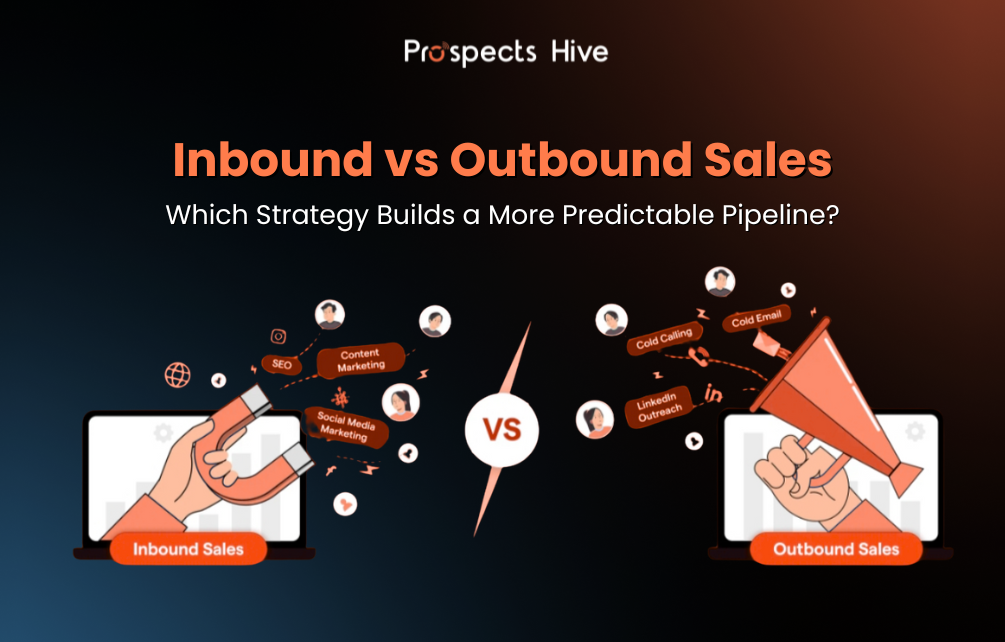
Inbound vs Outbound Sales: Which Strategy Builds a More Predictable Pipeline?

The Inbound vs Outbound Debate Inbound or outbound, which one do you think triumphs at the pipeline game? This is a debate that gets as old as modern B2B sales itself. Some teams count on inbound marketing and its compounding organic magic. Others vouch for the precision and dominance of outbound prospecting. But in 2025, the real question does not focus on which one is better. Instead, modern day marketing demands to know which one helps you build a pipeline that’s dependable and scalable through and through. In this blog, we’ll break down both approaches, study their strengths and caveats, helping you to understand how the most successful revenue teams around the world are fusing both inbound and outbound into one unified, synchronized system that boosts consistent growth. What Is Inbound Sales? In a nutshell, inbound sales is a magnet system  that attracts potential buyers through the creation of value long before a sales conversation even takes place. Instead of blindly chasing prospects, you use building blocks like awareness, trust, and credibility and build on them one by one, so that leads come to you organically. Core Inbound Channels SEO and Blogs: High-value educational content that ranks on search engines. LinkedIn & Social Content: Consistent thought leadership that builds familiarity and expertise. Email Newsletters: Regular updates that nurture relationships and encourage engagement. Referrals and Communities: Leveraging network trust and brand advocacy to bring in warm leads. The Inbound Advantage Builds long-term brand equity and thought leadership. Scales organically with compounding returns over time. Attracts high-intent leads already aware of your solution. Creates trust loops through consistent, value-first content. Reduces dependency on paid ads or cold outreach. The Inbound Limitation Slower to produce immediate results as content and SEO take time. Requires consistent content output and audience engagement. Harder to directly control lead volume or targeting. Brand visibility and search algorithms influence success. Inbound sales thrives when you have patience and a proper brand positioning. It’s about building a system where people want to buy from you because they already know, like, and trust your brand. What Is Outbound Sales? Outbound sales is the opposite philosophy, meaning it’s a precision engine. You don’t keep waiting for leads to discover you; rather you find and engage them first. This approach is built on proactive outreach, dominated by research, personalization, and technology. Core Outbound Channels Cold Email Campaigns: Personalized messages targeting decision-makers. LinkedIn Prospecting: Connection + engagement strategies for outreach. Cold Calling & SMS: Real-time conversation starters with high touch. Intent Data & Signal-Based Prospecting: Targeting prospects showing buying signals (funding, hiring, or tech adoption). Outbound Advantages Immediate control over outreach volume and targeting Predictable and scalable when systemized Quick feedback loop for messaging and market testing Works even without strong brand visibility Great for new markets, launches, or early-stage validation Outbound Limitations Requires domain warm-up and deliverability management Lower initial conversion if personalization is weak Can feel intrusive if not value-oriented Dependent on consistent follow-up and CRM hygiene 2025 Outbound Tech Stack Modern outbound teams rely on tools like: Prospecting & Enrichment: Apollo, ZoomInfo, Clay Automation: Lemlist, Instantly, Outreach CRM Integration: HubSpot, Attio CRM, Salesforce Deliverability & Warmup: Icypeas, maildoso, Dropcontact Outbound sales is about control, precision, and intent acceleration, using these you identify who you want to talk to and build a process to reach them effectively. Inbound vs Outbound: Stage-by-Stage Comparison Stage Inbound Focus Outbound Focus Awareness SEO, blogs, webinars, social visibility Targeted email, cold outreach, event prospecting Interest Lead magnets, newsletters, educational funnels Multi-touch cadences, LinkedIn engagement Consideration  Case studies, product demos, nurturing sequences Personalized follow-ups, sales sequences Decision  Retargeting, testimonial showcases, demo CTA Direct offers, calendar booking CTAs Retention  Customer success emails, community, upsell content Post-sale follow-up, feedback campaigns Inbound is the pull through which you attract. Outbound is the push through which you engage. All in all, both can feed each other when integrated intelligently. Which One Scales Faster (And When)? Let’s compare Time-to-Pipeline: Growth Stage  Recommended Approach  Why Pre-PMF (Product-Market Fit) Outbound-first You need conversations to validate ICP, not followers. Growth Stage 60% Outbound + 40% Inbound You’re scaling the pipeline and building content for inbound compounding. Scale-up Stage 70% Inbound + 30% Outbound Inbound dominates once brand visibility grows and leads to self-qualification. Therefore, outbound scales faster, but inbound sustains longer. That’s why modern B2B teams blend both into a hybrid system for predictable growth. Outbound builds momentum, whereas inbound provides a compounding effect. The Hybrid Playbook (“Allbound” System) The best-performing teams in 2025 use what’s known as the Allbound Framework – a synchronized mix of inbound and outbound strategies that feed each other. Here’s how it works: Outbound discovers opportunities. Cold email and LinkedIn identify ICPs and trigger engagement. Inbound nurtures visibility. Content, case studies, and newsletters keep your brand top-of-mind. Outbound follows up with context. Those who engaged with inbound content receive warm, personalized outreach. Inbound converts and retains. Leads become customers, then advocates through continued nurturing. Example: A cold prospect comes across your LinkedIn post while using the app, gets an outbound email referencing it, and proceeds to download your eBook. Shortly after, it joins your newsletter. Now they’re a warm inbound lead. That’s Allbound, a loop, not a line. ROI & Cost Comparison Table Metric Inbound  Outbound  Allbound Initial Cost Low (content & SEO investment) Medium–High (tools, data, manpower) Medium Time to Results Slow (3-6 months) Fast (2-4 weeks) Moderate (3-8 weeks) Scalability  Exponential (content compounds) Linear (depends on sending capacity) Hybrid (balanced ROI) Lead Quality  High-intent, but fewer Variable but depends on targeting Consistently high Predictability  Volatile early, stable later Immediate but fluctuating Most predictable Sustainability  Long-term Medium-term Long-term + scalable Key insight: Outbound gives control. Inbound gives credibility. The hybrid model gives consistency, making it the trifecta of predictable revenue. Why the Future Is “Inbound-led Outbound” The modern sales motion isn’t about choosing sides. It’s about sequencing them strategically. Outbound should spark demand, demonstrating the first handshake. Inbound should sustain interest, that is the continuation of the conversation.

Business, Digital Marketing, Marketing Strategy, Outbound Tips and Basics

How Customer Nurturing Builds Lifetime Value

Did you know that increasing customer retention by just 5% can boost profits by 25% to 95% according to Forbes? That’s the power of focusing on your customer lifetime value (CLV), a metric that goes far beyond a single transaction.  Unlike traditional sales tactics, which often emphasize immediate conversions, nurturing customers is about fostering long-term engagement through personalized communication, information and support. This approach helps businesses not only to convert prospects into customers but also to build enduring relationships that encourage loyalty and repeat business. In an era where customer acquisition costs are skyrocketing and brand loyalty is harder to earn, understanding and acting on CLV is more important than you think. While many businesses focus on short-term conversions, the real winners are those who invest in building long-term, high-value customer relationships. In this article, we’ll define what customer nurturing is, show how it differs from lead nurturing, provide actionable strategies, and advise how to measure success. What Is Customer Nurturing? In the fast-paced world of marketing, where customer acquisition often takes center stage, it’s easy to overlook the importance of nurturing existing customers.  While a once-in-a-lifetime purchase might imply a single transaction, fostering brand loyalty goes beyond that initial sale. By consistently engaging with your customers, you build a relationship that extends beyond the moment of purchase. This loyalty becomes a valuable asset, as satisfied customers are more likely to choose your brand again and recommend it to others.  Here’s what customer nurturing is all about:  Beyond the First Sale: Even if your product is a once-in-a-lifetime purchase, nurturing doesn’t stop at the transaction. It’s about keeping the connection alive and meaningful long after the sale. Sustaining the Funnel: Loyal customers become your best marketers the moment they turn into brand advocates who refill your funnel through referrals and word of mouth. Building Relationships, Not Just Revenue: Consistent engagement helps you earn trust, increase satisfaction, and strengthen loyalty, thus the foundation for long-term success. The Subaru Example: Subaru sets the gold standard for post-purchase engagement by:  They maintain constant communication before and after the sale. They educate owners on new ways to use their vehicles. This ongoing relationship drives satisfaction, repeat interest, and advocacy. How It Works: Customer nurturing uses strategic communication channels such as: Email marketing campaigns Social media interactions Personalized, educational content What is the end goal? To engage, educate, and empower customers throughout their journey, building lasting trust, loyalty, and advocacy. What Are The Benefits Of Nurturing And Retaining Loyal Customers? Nurturing and retaining loyal customers can bring a multitude of benefits to your business. Here are some key advantages of focusing on building and maintaining solid relationships with your loyal customer base: Repeat Purchases and Increased Sales Loyal customers are more likely to make repeat purchases than new ones. Nurturing relationships encourages long-term loyalty, resulting in consistent revenue. These customers often have higher average order values and are open to exploring additional products or services, boosting overall sales. Positive Word-of-Mouth and Referrals Satisfied customers become brand advocates who share their positive experiences. They are more inclined to recommend your business to friends, family, and colleagues. These organic referrals lead to new customer acquisitions and expand your customer base. Lower Marketing Costs Acquiring new customers requires substantial marketing investments. Retaining existing customers is more cost-effective and delivers higher ROI. By nurturing relationships, businesses can reduce acquisition costs and redirect resources toward improving the customer experience. Higher Customer Lifetime Value (CLV) Loyal customers contribute more revenue over time than infrequent buyers. CLV measures the total value a customer brings to your business throughout their relationship. By fostering loyalty, you extend the customer’s engagement and maximize their overall impact on revenue. Valuable Feedback and Insights Loyal customers are more likely to share feedback and insights on your products or services. Their opinions help identify areas for improvement and guide business decisions. This continuous feedback loop supports innovation and long-term growth. Enhanced Brand Reputation and Trust Strong customer relationships strengthen brand credibility and trust. Consistent positive experiences foster loyalty and satisfaction. A solid reputation attracts new customers and sets your brand apart from competitors. The Impact of Nurturing on the Customer Journey   Nurturing plays a pivotal role throughout all stages of the customer journey, enhancing the experience from initial awareness through to loyalty and advocacy.  By engaging customers at each phase with personalized communication and meaningful interactions, businesses can significantly increase the likelihood of not only a sale but also of establishing a long-term relationship.  Each phase of the customer journey provides a basis for continued nurturing: Awareness Focus on educational and informative content that identifies a problem or need your brand can solve. Build visibility through targeted marketing campaigns and thought leadership. Example: A tech company publishes blogs or videos explaining the benefits of digital transformation. Consideration Provide detailed information that demonstrates your product’s value and differentiators. Use personalized emails, product comparisons, and testimonials to build trust. Example: A software company offers free trials, demos, or webinars to showcase product capabilities. Purchase Ensure a seamless and reassuring buying experience. Offer personalized consultations, responsive customer support, and transparent communication about product features. Example: Businesses provide dedicated onboarding support or purchase guides to simplify decisions. Loyalty Focus on turning one-time buyers into repeat customers through continued engagement. Implement post-purchase follow-ups, satisfaction surveys, and exclusive loyalty events or offers. Example: Brands send follow-up emails with usage tips or early access to new features. Advocacy Aim to transform loyal customers into active brand promoters. Encourage participation in referral programs, feedback initiatives, and community engagement. Example: Satisfied customers share experiences on social media or through testimonials, boosting organic reach.  These examples underline the importance of a strategic approach to customer nurturing, demonstrating how businesses can engage customers at every step of their journey, turning casual interactions into lasting relationships. Customer Nurturing vs Lead Nurturing: What’s the difference?   Aspect Customer Nurturing Lead Nurturing Target Audience Existing customers Potential customer (leads) Goal Repeat purchases and loyalty Move through the sales funnel towards

Business, Digital Marketing, Marketing Strategy, Outbound Tips and Basics

10 Best CRMs for B2B Outbound Sales

Did you know that you can close 35 times more outbound sales through dedicated software? You probably already know about CRMs tools designed to optimize how you communicate and interact with your customers. But they don’t stop there.  Some CRMs are specially built for automating and boosting outbound sales, helping teams focus their efforts where it matters most. Unlike traditional CRMs, these specialized tools simplify lead generation, segmentation, and enrichment, allowing you to personalize offers and automate outreach through email campaigns, sales cadences, and results tracking. That’s why modern sales teams need CRMs specifically designed for outbound sales equipped with functionalities like intent-based prioritization, real-time engagement, multi-channel outreach, and detailed reporting to help you work smarter, not harder. Ready to choose CRM software for outbound sales? To make things easier for you, we have selected the 10 best options available in 2025. Learn about their features, advantages, and prices! Why Outbound Sales Needs a Specialized CRM Outbound sales is already tough and the last thing you need is a generic CRM that slows your process. From messy data to missed communications, generic systems waste time and cost potential revenue. An outbound sales CRM has unique functionalities to help you with all modern sales prospecting. Whether it’s intent-based prioritization, real-time engagement, multi-channel capabilities, or detailed reporting and analytics, these tools have the functionalities to help you work better and smarter.  To put simply, a generic CRM can’t fully support your outbound prospecting workflow. Instead of streamlining, it creates problems. Think about it: your sales reps waste hours navigating clunky interfaces, manually syncing disconnected data, and struggling to extract actionable insights. The reason? Most traditional CRMs are designed for inbound sales or customer service, not outbound prospecting. As a result, outbound teams often face these challenges: Limited segmentation for high-volume leads Poor support for large-scale email outreach Lack of personalization and automated sequences Inability to track outbound-specific metrics These gaps reduce productivity and efficiency. Instead of storing data, your CRM should help you convert data into relationships. Key Features Outbound Teams Should Look For These challenges inhibit productivity and reduce efficiency. So, rather than looking for a CRM that only stores data, we advise looking for one with specific key features that fit your needs. These features include:  Lead Segmentation: Classify leads based on behavior or demographics. Email Sequences: Personalize and automate bulk campaigns. Dialer: Call prospects directly from your CRM with tracking and logging. Pipeline Management: Visualize your sales cycle from start to finish. Integrations: Sync easily with third-party tools for better workflows. Having these features will not improve your sales workflow, but will help you focus on what matters most, which is building genuine relationships with your prospects. 10 Best CRMs for B2B Outbound Sales in 2025 Choosing the right CRM can be overwhelming, especially with thousands of options online. We’ve reviewed countless platforms, pricing plans, and user feedback to bring you the 10 best outbound CRMs for 2025, all tested, rated, and ready to supercharge your outreach. 1. Close CRM – Best All-in-One CRM for Outbound Calling and Email Close CRM is an all-in-one customer relationship management (CRM) software designed for sales teams to streamline their processes and close deals more efficiently.  Strengths: Power dialer, email automation, built-in calling/SMS, task workflows. Best For: Small to mid-size outbound teams focused on high-volume outreach. Why It’s Great: Everything is in one place, so no need for third-party dialers or integrations. Key Features You can make and receive calls within the CRM using automatic call recording, logging, and voicemail capabilities.  You can craft, send, and track personalized email sequences, scaling your outreach efforts.  It features a comprehensive dashboard that measures your campaign performance with customizable metrics.  Pros Its intuitive interface makes it easy to use for sales teams and boost sales activities.  It has strong communication tools that you can use to interact with prospects.  It has excellent reporting capabilities that you can use to measure sales performance. Cons It’s more focused on sales than marketing or customer service.  The system sometimes glitches, preventing users from receiving calls or attaching documents to emails.  Pricing: Close’s pricing plans start at $49 per month. 2. Attio – AI-native CRM built to scale your business Attio CRM is a modern, collaborative CRM built for data-driven teams that want flexibility without complexity. It combines contact management, customizable workflows, and real-time collaboration tools to help businesses build stronger customer relationships and streamline sales processes effortlessly. Strengths: Highly customizable, sleek interface, and real-time collaboration capabilities. Best For: Startups and growing teams that need an adaptable CRM to manage dynamic client interactions. Why It’s Great: Attio blends powerful automation, clean design, and flexibility, allowing teams to shape their CRM exactly how they work. Key Features Build your CRM fields, views, and workflows to match your unique processes. Enables team members to collaborate on deals, contacts, and notes simultaneously. Automatically updates contact details and company information from emails and other sources. Tracks all communications and keeps inboxes connected for seamless follow-ups. Provides an intuitive drag-and-drop interface for managing sales opportunities. Connects with Google Workspace, Slack, and other productivity platforms. Offers an open API for deeper customization and integration. Pros Fully customizable to fit different sales processes. Clean, intuitive interface designed for ease of use. Enables real-time team collaboration on shared data. Automated contact enrichment reduces manual entry. Great flexibility for developers and power users. Lightweight yet scalable for growing businesses. Cons Lacks some advanced analytics compared to enterprise CRMs. Smaller integration ecosystem than older CRM platforms. Limited offline functionality. May require setup time to fully customize workflows. Pricing: Free trial available with the Starter Plan starting from $9 per user/month. 3. Zoho – All-in-one customer relationship management solution  Zoho CRM is an all-in-one customer relationship management solution designed to streamline sales, marketing, and customer support. Known for its affordability and versatility, it helps businesses of all sizes manage leads, automate workflows, and gain valuable insights into customer behavior. Strengths: Comprehensive feature set, strong automation, and excellent value for money.

Scroll to Top