Marketing Strategy

Business, Go-To-Market, Marketing Strategy

Why “GTM Motion” Matters More Than Ever

  Having a go-to-market (GTM) strategy is common to every company around you. But here’s where the catch lies: only a few of these companies have a GTM motion. A strategy is what you’re planning to do. A motion, on the other hand, is what you are doing – repeatedly, predictably, and at scale. In today’s marketing landscape of 2026, buyers are not following only one linear funnel like they previously used to. They glide across channels, conversations, and communities while AI tools quietly reshape how sales, marketing, and customer success operate. Research, personalization, follow-ups contained in your regular manual GTM playbook is now automated. The real differentiation lies in how well your team designs, syncs, and optimizes its GTM motion. This guide helps you: Understand what a GTM motion really is (and why it’s different from strategy). Identify the motion that fits your company’s stage and model. See how automation and AI are becoming the engine behind every successful GTM. At Prospects Hive, we call this evolution AI-driven GTM orchestration where inbound, outbound, and buyer signals blend into a single intelligent motion. What Is a GTM Motion? (Modern Definition) A GTM motion is the operational rhythm that turns your strategy into a pipeline. If strategy is your map, motion is your vehicle which wheels forward the repeatable set of actions, tools, and touchpoints that get your product to market, consistently and measurably. In traditional terms, GTM used to mean “marketing → sales → customer.” But today, it’s dynamic. It feeds on data, automates repetitive tasks, and incorporates real-time buyer signals. What Sets it Apart from Strategy Strategy defines who you target and why. Motion defines how you engage and what happens next. Execution brings it to life across teams. The feedback loop is crucial, this is where optimization happens with every cycle. Think of it as a living system: Strategy → Motion → Execution → Feedback Loop This loop, when powered by AI and automation, ends up distinguishing reactive teams from scalable, predictable ones. The Core GTM Motions in 2026 No single GTM motion is a one-size-fits all. Modern companies more than often merge two or more depending on their company stage, audience, and growth goals. Below is a breakdown of the six dominant GTM motions shaping 2026. Product-Led Motion (PLG) Definition: Growth is essentially driven by the product itself. Users’ experience is valued before purchase. Best Fit: SaaS startups, freemium models, or tools with fast onboarding (e.g., Notion, Loom, Calendly). Key Tools: Product analytics: Amplitude, Mixpanel CRM & activation: HubSpot, Attio In-app onboarding: Pendo, Appcues Usage-triggered email automation: Customer.io, Lemlist Why it works: PLG motions scale efficiently when you let the funnel to be led by usage data, not sales scripts. Sales-Led Motion (SLG) Definition: The sales team builds the pipeline through outbound, demos, and relationship driven deals. Best Fit: B2B companies with complex sales cycles or high ACVs (e.g., cybersecurity, enterprise SaaS). Key Tools: Enrichment: Clay, Apollo, ZoomInfo Outreach automation: Instantly, Lemlist, Outreach CRM: Salesforce, Pipedrive, HubSpot Analytics: Looker, RevOps dashboards Why it works: It’s direct, measurable, and controllable especially when AI automates prospecting, scoring, and sequencing. Marketing-Led Motion (MLG) Definition: Demand generation is established through content, ads, and SEO prospects come inbound. Best Fit: Brands with strong storytelling, thought leadership, and consistent content output. Key Tools: SEO & content: Ahrefs, Clearscope Marketing automation: HubSpot, Marketo Attribution: Dreamdata, Triple Whale Nurture flows: Lemlist, ActiveCampaign Why it works: When combined with data-driven content and retargeting, it creates a self-fueling inbound pipeline. Community-Led Motion (CLG) Definition: Growth through communities, peer advocacy, and user-to-user engagement. Best Fit: Developer tools, B2B SaaS, and startups targeting niche audiences. Key Tools: Community platforms: Discord, Slack, Circle CRM sync: Attio, Notion CRM Advocacy tracking: Influitive, Common Room Analytics: Orbit, Commsor Why it works: Trust compounds faster when users sell to each other through authentic community interaction. Partner-Led Motion (PLP) Definition: Growth through ecosystem relationships such as resellers, affiliates, integrations, and channel partners. Best Fit: Mature companies with established brand equity and complementary products. Key Tools: PRM (Partner Relationship Management): PartnerStack, Crossbeam Deal attribution: Reveal, HubSpot Commission sync: Trolley, Zapier Automation layer: Lemlist → Slack → Attio Why it works: You multiply reach without multiplying headcount. Partners extend your brand trust and market footprint. Event-Led Motion (ELG) Definition: Growth happens through virtual or in-person events like conferences, demos, or webinars that convert attention into deals. Best Fit: B2B SaaS, enterprise solutions, and brands with strong networking value. Key Tools: Event management: Hopin, Luma, Bizzabo CRM integration: HubSpot, Salesforce Follow-up automation: Lemlist, Instantly Analytics: Google Looker, Segment Why it works: Events create face-to-face trust and accelerate deals especially when tied to outbound nurturing. When to Use Which GTM Motion Company Stage Primary Motion Why It Fits Pre-PMF (Product-Market Fit) Outbound + Product-Led You need real feedback, fast  direct outreach + user testing. Growth Stage  Sales-Led + Marketing-Led You’ve validated PMF; now scale visibility and pipeline predictably. Scale-Up Stage Marketing-Led + Partner-Led + Community-Led Brand trust compounds; leverages the ecosystem and advocates. Mature Enterprise  Partner-Led + Event-Led Focus on expansion, retention, and ecosystem dominance. Modern companies are all in on layering multiple motions not to do more, but to do better, together. Automation’s Role Across Every GTM Motion Automation is now the invisible operator behind every motion. It doesn’t just save time, it creates signal intelligence. Here’s how automation transforms each GTM layer: Outbound Automated enrichment (Clay, ZoomInfo, Dropcontact) Intent-based lead scoring Sequenced follow-ups through Lemlist or Instantly Inbound Dynamic retargeting and lead nurturing workflows Intent tracking from website behavior or ad interactions Automated MQL → SQL sync to CRM Partner Lead-sharing between partner ecosystems Auto-sync deal stages across systems (HubSpot ↔ Reveal) Commission and attribution automation Diagram (conceptual): The Automation Layer:  Clay → Attio → Lemlist → Slack Clay: Finds and enriches new leads. Attio: Centralizes CRM data and signals. Lemlist: Sends contextual, automated outreach. Slack: Alerts teams for real-time action. Together, AI becomes your silent GTM co-pilot where it synchronizes workflows, monitoring signals, and
Business, Digital Marketing, Marketing Strategy, Outbound Tips and Basics

Inbound vs Outbound Sales: Which Strategy Builds a More Predictable Pipeline?

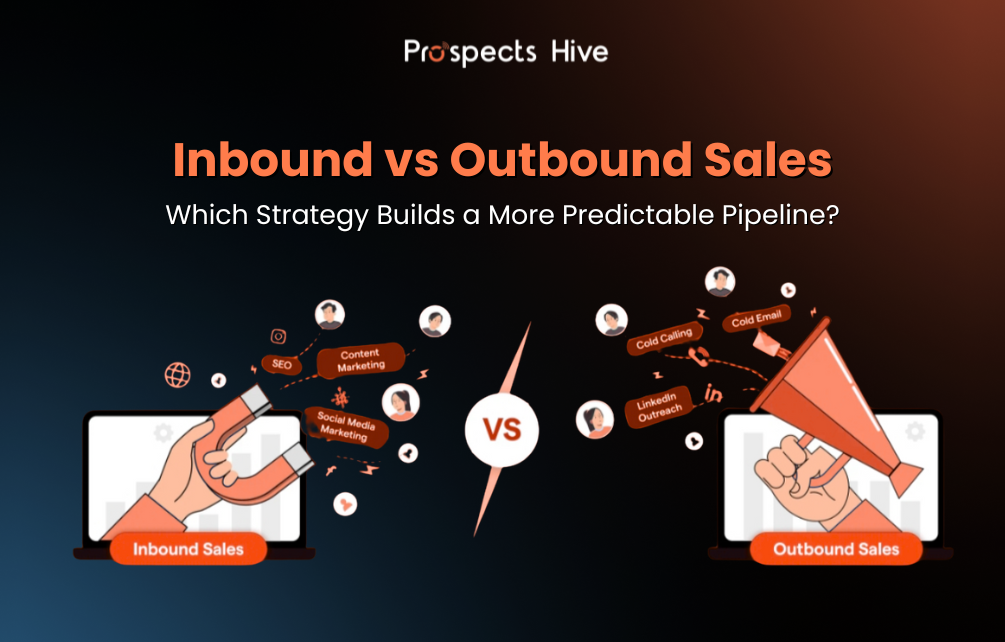
The Inbound vs Outbound Debate Inbound or outbound, which one do you think triumphs at the pipeline game? This is a debate that gets as old as modern B2B sales itself. Some teams count on inbound marketing and its compounding organic magic. Others vouch for the precision and dominance of outbound prospecting. But in 2025, the real question does not focus on which one is better. Instead, modern day marketing demands to know which one helps you build a pipeline that’s dependable and scalable through and through. In this blog, we’ll break down both approaches, study their strengths and caveats, helping you to understand how the most successful revenue teams around the world are fusing both inbound and outbound into one unified, synchronized system that boosts consistent growth. What Is Inbound Sales? In a nutshell, inbound sales is a magnet system  that attracts potential buyers through the creation of value long before a sales conversation even takes place. Instead of blindly chasing prospects, you use building blocks like awareness, trust, and credibility and build on them one by one, so that leads come to you organically. Core Inbound Channels SEO and Blogs: High-value educational content that ranks on search engines. LinkedIn & Social Content: Consistent thought leadership that builds familiarity and expertise. Email Newsletters: Regular updates that nurture relationships and encourage engagement. Referrals and Communities: Leveraging network trust and brand advocacy to bring in warm leads. The Inbound Advantage Builds long-term brand equity and thought leadership. Scales organically with compounding returns over time. Attracts high-intent leads already aware of your solution. Creates trust loops through consistent, value-first content. Reduces dependency on paid ads or cold outreach. The Inbound Limitation Slower to produce immediate results as content and SEO take time. Requires consistent content output and audience engagement. Harder to directly control lead volume or targeting. Brand visibility and search algorithms influence success. Inbound sales thrives when you have patience and a proper brand positioning. It’s about building a system where people want to buy from you because they already know, like, and trust your brand. What Is Outbound Sales? Outbound sales is the opposite philosophy, meaning it’s a precision engine. You don’t keep waiting for leads to discover you; rather you find and engage them first. This approach is built on proactive outreach, dominated by research, personalization, and technology. Core Outbound Channels Cold Email Campaigns: Personalized messages targeting decision-makers. LinkedIn Prospecting: Connection + engagement strategies for outreach. Cold Calling & SMS: Real-time conversation starters with high touch. Intent Data & Signal-Based Prospecting: Targeting prospects showing buying signals (funding, hiring, or tech adoption). Outbound Advantages Immediate control over outreach volume and targeting Predictable and scalable when systemized Quick feedback loop for messaging and market testing Works even without strong brand visibility Great for new markets, launches, or early-stage validation Outbound Limitations Requires domain warm-up and deliverability management Lower initial conversion if personalization is weak Can feel intrusive if not value-oriented Dependent on consistent follow-up and CRM hygiene 2025 Outbound Tech Stack Modern outbound teams rely on tools like: Prospecting & Enrichment: Apollo, ZoomInfo, Clay Automation: Lemlist, Instantly, Outreach CRM Integration: HubSpot, Attio CRM, Salesforce Deliverability & Warmup: Icypeas, maildoso, Dropcontact Outbound sales is about control, precision, and intent acceleration, using these you identify who you want to talk to and build a process to reach them effectively. Inbound vs Outbound: Stage-by-Stage Comparison Stage Inbound Focus Outbound Focus Awareness SEO, blogs, webinars, social visibility Targeted email, cold outreach, event prospecting Interest Lead magnets, newsletters, educational funnels Multi-touch cadences, LinkedIn engagement Consideration  Case studies, product demos, nurturing sequences Personalized follow-ups, sales sequences Decision  Retargeting, testimonial showcases, demo CTA Direct offers, calendar booking CTAs Retention  Customer success emails, community, upsell content Post-sale follow-up, feedback campaigns Inbound is the pull through which you attract. Outbound is the push through which you engage. All in all, both can feed each other when integrated intelligently. Which One Scales Faster (And When)? Let’s compare Time-to-Pipeline: Growth Stage  Recommended Approach  Why Pre-PMF (Product-Market Fit) Outbound-first You need conversations to validate ICP, not followers. Growth Stage 60% Outbound + 40% Inbound You’re scaling the pipeline and building content for inbound compounding. Scale-up Stage 70% Inbound + 30% Outbound Inbound dominates once brand visibility grows and leads to self-qualification. Therefore, outbound scales faster, but inbound sustains longer. That’s why modern B2B teams blend both into a hybrid system for predictable growth. Outbound builds momentum, whereas inbound provides a compounding effect. The Hybrid Playbook (“Allbound” System) The best-performing teams in 2025 use what’s known as the Allbound Framework – a synchronized mix of inbound and outbound strategies that feed each other. Here’s how it works: Outbound discovers opportunities. Cold email and LinkedIn identify ICPs and trigger engagement. Inbound nurtures visibility. Content, case studies, and newsletters keep your brand top-of-mind. Outbound follows up with context. Those who engaged with inbound content receive warm, personalized outreach. Inbound converts and retains. Leads become customers, then advocates through continued nurturing. Example: A cold prospect comes across your LinkedIn post while using the app, gets an outbound email referencing it, and proceeds to download your eBook. Shortly after, it joins your newsletter. Now they’re a warm inbound lead. That’s Allbound, a loop, not a line. ROI & Cost Comparison Table Metric Inbound  Outbound  Allbound Initial Cost Low (content & SEO investment) Medium–High (tools, data, manpower) Medium Time to Results Slow (3-6 months) Fast (2-4 weeks) Moderate (3-8 weeks) Scalability  Exponential (content compounds) Linear (depends on sending capacity) Hybrid (balanced ROI) Lead Quality  High-intent, but fewer Variable but depends on targeting Consistently high Predictability  Volatile early, stable later Immediate but fluctuating Most predictable Sustainability  Long-term Medium-term Long-term + scalable Key insight: Outbound gives control. Inbound gives credibility. The hybrid model gives consistency, making it the trifecta of predictable revenue. Why the Future Is “Inbound-led Outbound” The modern sales motion isn’t about choosing sides. It’s about sequencing them strategically. Outbound should spark demand, demonstrating the first handshake. Inbound should sustain interest, that is the continuation of the conversation.

B2B Sales, Cold Email, Digital Marketing, Email Marketing, Marketing Strategy

Why Email Marketing Still Wins in B2B

In today’s age of relentless digital transformation where the marketing domain is dominated by LinkedIn posts, targeted ads, and automated funnels, email continues to silently outperform every channel known to the B2B marketing landscape. Latest statistics say that the average ROI for email marketing is $36 for every $1 you spend, now that’s a number no other digital medium can touch! Nonetheless, most B2B teams are still drifting away in the whirlwind of the evolving marketing landscape in 2025. They’re curating and sending out the same generic newsletters to everyone, heedlessly reusing the templates, and hoping something clicks with their clients. The result? Declining open rates, increasing unsubscribes, and a business reputation that gets your domain flagged faster than your leads can even bother to say “Not interested.” Modern B2B teams know better than this. They’re revolutionising email from a “batch-and-blast” tool into a sophisticated and personalized outbound engine that attracts cold prospects, nurtures warm leads, and accelerates deal closing. In this guide, we’ll break down what modern email marketing really means in 2025, how the best B2B teams are combining both outbound and inbound strategies, and the exact frameworks and tools you need to make it work. Stick around till the end to understand how Prospects Hive helps businesses build intelligent, data-driven email systems that turn conversations into conversions. What Is Email Marketing (and Why It’s Evolving)? At its core, email marketing is a marketing strategy of sending messages to a defined audience to inform, nurture, or convert. Traditionally, this meant mass dispersing newsletters, promotions, or updates to everyone in a database roughly with any segmentation or personalization. But today, this marketing tactic has drastically evolved. Email is not a broadcast channel anymore. It has transformed into an intent-driven ecosystem that utilizes and evaluates real-time data, buyer intent signals, and automation to deliver the right message at the right time. For instance, think of a SaaS company which now personalizes campaigns based on their user behavior to come up with emails containing onboarding tips specifically curated for its free users, case studies for the trial users, and upgrade offers for the active customers. Similarly, financial firms are now sending newsletters with tailored insights based on client portfolios. B2B service providers are now curating follow-up sequences after prospects view pricing pages or attend webinars. To put simply, today’s email marketing is no longer about volume rather it’s about context. The Modern Email Marketing Framework (Outbound + Inbound Fusion) The truth that most teams seem to neglect is that modern B2B email strategy doesn’t live in isolation. It’s an amalgamation of outbound precision and inbound empathy, devised to attract new interest and nurture it into trust. Outbound: Reaching New Audiences Outbound email is the smarter, efficient, and digital version of your traditional cold calls; which focuses not on sending thousands of emails, rather on sending the right quantity to the right prospects. How it works: Search signals like company’s funding information, job postings, or recent news to identify timely outreach opportunities. Segment your list based on role, industry, or buying stage. Proceed to craft a multi-step sequence that progresses naturally from awareness, to value, and concluding with meeting. Integrate with LinkedIn, CRM, and data enrichment tools (like Apollo, Clay, or HubSpot) for personalization at scale. Example: Subject: Congrats on your new funding round! Hey [FirstName], noticed [Company] just closed a Series A – impeccable milestone! We’ve helped similar startups streamline their outbound outreach during growth sprints. Want to see what worked for them? [Your Name] Inbound: Nurturing Existing Relationships On the other hand, Inbound email is how you educate, retain, and build on your existing clientele. It comprises newsletters, onboarding emails, and behavior-based journeys mapped out to provide value before pitching anything or even bringing up sales. What it looks like: Majorly takes the form of educational content like guides, industry trends, templates to keep your brand at the top of your prospects’ minds. Employs behavioral triggers, for example, you may send out product tips to a user who hasn’t logged in for 7 days. Consists of retention campaigns like renewal reminders, upsell offers, loyalty rewards. Example: Subject: 3 ways to extract more from your current plan Hi [FirstName], Here are three small tweaks that can 2x your team’s results without any essential upgrade. [Link to guide] Cheers, The [Company] Team When Both Are Merged The magic happens when outbound and inbound work hand in hand, smoothing out your journey where cold prospects become subscribers. Following which, subscribers engage with your content. And engaged subscribers convert into paying customers. For example: A cold email leads a prospect to a landing page. Next, they download a free template and enter an inbound nurture flow. Two weeks later, they proceed to book a demo. That’s how a modern system aggregates, where the outbound attracts and the inbound converts. Types of Email Campaigns That Drive Pipeline Let’s break down the five core types of campaigns that ignite real B2B growth with mini examples of structure and CTAs. 1. Cold Outreach Goal: This is where you start conversations with your qualified prospects. Structure: Begin with a personalized opener to value pitch and wrap up with a clear CTA. Example: Subject: Quick idea for [Company]’s outbound Hi [FirstName], noticed your team is expanding into new markets. We recently helped [Competitor xyz] multiply their reply rates using data-driven personalization. Worth a quick 10-min chat next week? [Your Name] CTA: “Let’s connect this week, does Wednesday work?” 2. Lead Nurturing Sequences Goal: Warming up leads who aren’t ready to make the buying decision. Structure: Curate an educational email containing a case study and conclude with a gentle offer. Example: “Hey [FirstName], here’s how one of our clients improved reply rates by 50%. Want the framework?” CTA: “Grab the 5-step sequence here.” 3. Announcements Goal: This is where you share major company news such as a product launch, funding, or partnership. Structure: Start with a clear headline, followed by a short description and a link to learn more.

Business, Digital Marketing, Marketing Strategy, Outbound Tips and Basics

How Customer Nurturing Builds Lifetime Value

Did you know that increasing customer retention by just 5% can boost profits by 25% to 95% according to Forbes? That’s the power of focusing on your customer lifetime value (CLV), a metric that goes far beyond a single transaction.  Unlike traditional sales tactics, which often emphasize immediate conversions, nurturing customers is about fostering long-term engagement through personalized communication, information and support. This approach helps businesses not only to convert prospects into customers but also to build enduring relationships that encourage loyalty and repeat business. In an era where customer acquisition costs are skyrocketing and brand loyalty is harder to earn, understanding and acting on CLV is more important than you think. While many businesses focus on short-term conversions, the real winners are those who invest in building long-term, high-value customer relationships. In this article, we’ll define what customer nurturing is, show how it differs from lead nurturing, provide actionable strategies, and advise how to measure success. What Is Customer Nurturing? In the fast-paced world of marketing, where customer acquisition often takes center stage, it’s easy to overlook the importance of nurturing existing customers.  While a once-in-a-lifetime purchase might imply a single transaction, fostering brand loyalty goes beyond that initial sale. By consistently engaging with your customers, you build a relationship that extends beyond the moment of purchase. This loyalty becomes a valuable asset, as satisfied customers are more likely to choose your brand again and recommend it to others.  Here’s what customer nurturing is all about:  Beyond the First Sale: Even if your product is a once-in-a-lifetime purchase, nurturing doesn’t stop at the transaction. It’s about keeping the connection alive and meaningful long after the sale. Sustaining the Funnel: Loyal customers become your best marketers the moment they turn into brand advocates who refill your funnel through referrals and word of mouth. Building Relationships, Not Just Revenue: Consistent engagement helps you earn trust, increase satisfaction, and strengthen loyalty, thus the foundation for long-term success. The Subaru Example: Subaru sets the gold standard for post-purchase engagement by:  They maintain constant communication before and after the sale. They educate owners on new ways to use their vehicles. This ongoing relationship drives satisfaction, repeat interest, and advocacy. How It Works: Customer nurturing uses strategic communication channels such as: Email marketing campaigns Social media interactions Personalized, educational content What is the end goal? To engage, educate, and empower customers throughout their journey, building lasting trust, loyalty, and advocacy. What Are The Benefits Of Nurturing And Retaining Loyal Customers? Nurturing and retaining loyal customers can bring a multitude of benefits to your business. Here are some key advantages of focusing on building and maintaining solid relationships with your loyal customer base: Repeat Purchases and Increased Sales Loyal customers are more likely to make repeat purchases than new ones. Nurturing relationships encourages long-term loyalty, resulting in consistent revenue. These customers often have higher average order values and are open to exploring additional products or services, boosting overall sales. Positive Word-of-Mouth and Referrals Satisfied customers become brand advocates who share their positive experiences. They are more inclined to recommend your business to friends, family, and colleagues. These organic referrals lead to new customer acquisitions and expand your customer base. Lower Marketing Costs Acquiring new customers requires substantial marketing investments. Retaining existing customers is more cost-effective and delivers higher ROI. By nurturing relationships, businesses can reduce acquisition costs and redirect resources toward improving the customer experience. Higher Customer Lifetime Value (CLV) Loyal customers contribute more revenue over time than infrequent buyers. CLV measures the total value a customer brings to your business throughout their relationship. By fostering loyalty, you extend the customer’s engagement and maximize their overall impact on revenue. Valuable Feedback and Insights Loyal customers are more likely to share feedback and insights on your products or services. Their opinions help identify areas for improvement and guide business decisions. This continuous feedback loop supports innovation and long-term growth. Enhanced Brand Reputation and Trust Strong customer relationships strengthen brand credibility and trust. Consistent positive experiences foster loyalty and satisfaction. A solid reputation attracts new customers and sets your brand apart from competitors. The Impact of Nurturing on the Customer Journey   Nurturing plays a pivotal role throughout all stages of the customer journey, enhancing the experience from initial awareness through to loyalty and advocacy.  By engaging customers at each phase with personalized communication and meaningful interactions, businesses can significantly increase the likelihood of not only a sale but also of establishing a long-term relationship.  Each phase of the customer journey provides a basis for continued nurturing: Awareness Focus on educational and informative content that identifies a problem or need your brand can solve. Build visibility through targeted marketing campaigns and thought leadership. Example: A tech company publishes blogs or videos explaining the benefits of digital transformation. Consideration Provide detailed information that demonstrates your product’s value and differentiators. Use personalized emails, product comparisons, and testimonials to build trust. Example: A software company offers free trials, demos, or webinars to showcase product capabilities. Purchase Ensure a seamless and reassuring buying experience. Offer personalized consultations, responsive customer support, and transparent communication about product features. Example: Businesses provide dedicated onboarding support or purchase guides to simplify decisions. Loyalty Focus on turning one-time buyers into repeat customers through continued engagement. Implement post-purchase follow-ups, satisfaction surveys, and exclusive loyalty events or offers. Example: Brands send follow-up emails with usage tips or early access to new features. Advocacy Aim to transform loyal customers into active brand promoters. Encourage participation in referral programs, feedback initiatives, and community engagement. Example: Satisfied customers share experiences on social media or through testimonials, boosting organic reach.  These examples underline the importance of a strategic approach to customer nurturing, demonstrating how businesses can engage customers at every step of their journey, turning casual interactions into lasting relationships. Customer Nurturing vs Lead Nurturing: What’s the difference?   Aspect Customer Nurturing Lead Nurturing Target Audience Existing customers Potential customer (leads) Goal Repeat purchases and loyalty Move through the sales funnel towards

Business, Digital Marketing, Marketing Strategy, Outbound Tips and Basics

10 Best CRMs for B2B Outbound Sales

Did you know that you can close 35 times more outbound sales through dedicated software? You probably already know about CRMs tools designed to optimize how you communicate and interact with your customers. But they don’t stop there.  Some CRMs are specially built for automating and boosting outbound sales, helping teams focus their efforts where it matters most. Unlike traditional CRMs, these specialized tools simplify lead generation, segmentation, and enrichment, allowing you to personalize offers and automate outreach through email campaigns, sales cadences, and results tracking. That’s why modern sales teams need CRMs specifically designed for outbound sales equipped with functionalities like intent-based prioritization, real-time engagement, multi-channel outreach, and detailed reporting to help you work smarter, not harder. Ready to choose CRM software for outbound sales? To make things easier for you, we have selected the 10 best options available in 2025. Learn about their features, advantages, and prices! Why Outbound Sales Needs a Specialized CRM Outbound sales is already tough and the last thing you need is a generic CRM that slows your process. From messy data to missed communications, generic systems waste time and cost potential revenue. An outbound sales CRM has unique functionalities to help you with all modern sales prospecting. Whether it’s intent-based prioritization, real-time engagement, multi-channel capabilities, or detailed reporting and analytics, these tools have the functionalities to help you work better and smarter.  To put simply, a generic CRM can’t fully support your outbound prospecting workflow. Instead of streamlining, it creates problems. Think about it: your sales reps waste hours navigating clunky interfaces, manually syncing disconnected data, and struggling to extract actionable insights. The reason? Most traditional CRMs are designed for inbound sales or customer service, not outbound prospecting. As a result, outbound teams often face these challenges: Limited segmentation for high-volume leads Poor support for large-scale email outreach Lack of personalization and automated sequences Inability to track outbound-specific metrics These gaps reduce productivity and efficiency. Instead of storing data, your CRM should help you convert data into relationships. Key Features Outbound Teams Should Look For These challenges inhibit productivity and reduce efficiency. So, rather than looking for a CRM that only stores data, we advise looking for one with specific key features that fit your needs. These features include:  Lead Segmentation: Classify leads based on behavior or demographics. Email Sequences: Personalize and automate bulk campaigns. Dialer: Call prospects directly from your CRM with tracking and logging. Pipeline Management: Visualize your sales cycle from start to finish. Integrations: Sync easily with third-party tools for better workflows. Having these features will not improve your sales workflow, but will help you focus on what matters most, which is building genuine relationships with your prospects. 10 Best CRMs for B2B Outbound Sales in 2025 Choosing the right CRM can be overwhelming, especially with thousands of options online. We’ve reviewed countless platforms, pricing plans, and user feedback to bring you the 10 best outbound CRMs for 2025, all tested, rated, and ready to supercharge your outreach. 1. Close CRM – Best All-in-One CRM for Outbound Calling and Email Close CRM is an all-in-one customer relationship management (CRM) software designed for sales teams to streamline their processes and close deals more efficiently.  Strengths: Power dialer, email automation, built-in calling/SMS, task workflows. Best For: Small to mid-size outbound teams focused on high-volume outreach. Why It’s Great: Everything is in one place, so no need for third-party dialers or integrations. Key Features You can make and receive calls within the CRM using automatic call recording, logging, and voicemail capabilities.  You can craft, send, and track personalized email sequences, scaling your outreach efforts.  It features a comprehensive dashboard that measures your campaign performance with customizable metrics.  Pros Its intuitive interface makes it easy to use for sales teams and boost sales activities.  It has strong communication tools that you can use to interact with prospects.  It has excellent reporting capabilities that you can use to measure sales performance. Cons It’s more focused on sales than marketing or customer service.  The system sometimes glitches, preventing users from receiving calls or attaching documents to emails.  Pricing: Close’s pricing plans start at $49 per month. 2. Attio – AI-native CRM built to scale your business Attio CRM is a modern, collaborative CRM built for data-driven teams that want flexibility without complexity. It combines contact management, customizable workflows, and real-time collaboration tools to help businesses build stronger customer relationships and streamline sales processes effortlessly. Strengths: Highly customizable, sleek interface, and real-time collaboration capabilities. Best For: Startups and growing teams that need an adaptable CRM to manage dynamic client interactions. Why It’s Great: Attio blends powerful automation, clean design, and flexibility, allowing teams to shape their CRM exactly how they work. Key Features Build your CRM fields, views, and workflows to match your unique processes. Enables team members to collaborate on deals, contacts, and notes simultaneously. Automatically updates contact details and company information from emails and other sources. Tracks all communications and keeps inboxes connected for seamless follow-ups. Provides an intuitive drag-and-drop interface for managing sales opportunities. Connects with Google Workspace, Slack, and other productivity platforms. Offers an open API for deeper customization and integration. Pros Fully customizable to fit different sales processes. Clean, intuitive interface designed for ease of use. Enables real-time team collaboration on shared data. Automated contact enrichment reduces manual entry. Great flexibility for developers and power users. Lightweight yet scalable for growing businesses. Cons Lacks some advanced analytics compared to enterprise CRMs. Smaller integration ecosystem than older CRM platforms. Limited offline functionality. May require setup time to fully customize workflows. Pricing: Free trial available with the Starter Plan starting from $9 per user/month. 3. Zoho – All-in-one customer relationship management solution  Zoho CRM is an all-in-one customer relationship management solution designed to streamline sales, marketing, and customer support. Known for its affordability and versatility, it helps businesses of all sizes manage leads, automate workflows, and gain valuable insights into customer behavior. Strengths: Comprehensive feature set, strong automation, and excellent value for money.

Scroll to Top