Digital Marketing

Business, Digital Marketing, Marketing Strategy, Outbound Tips and Basics

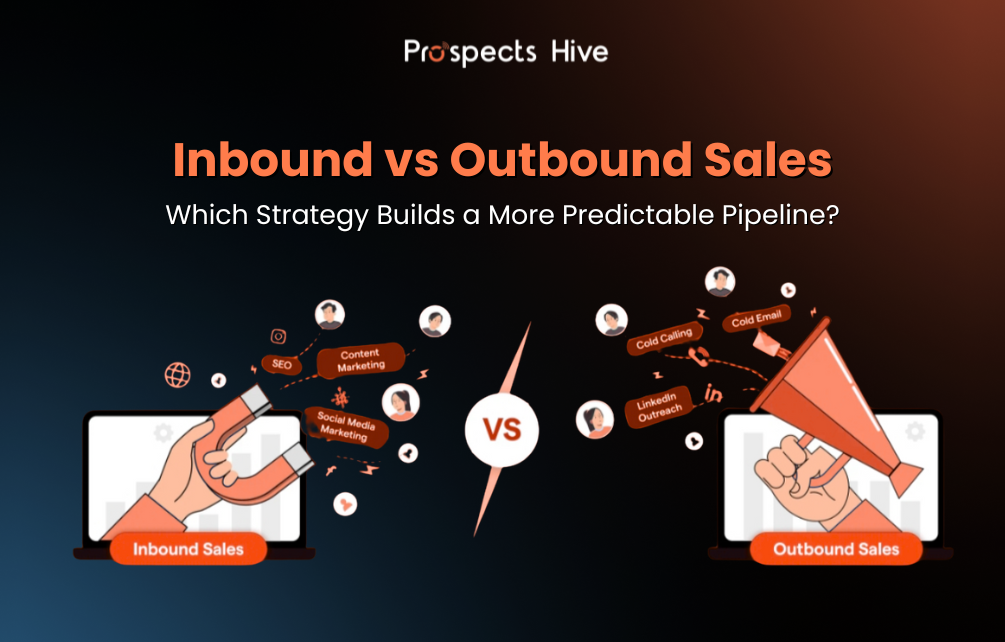
Inbound vs Outbound Sales: Which Strategy Builds a More Predictable Pipeline?

The Inbound vs Outbound Debate Inbound or outbound, which one do you think triumphs at the pipeline game? This is a debate that gets as old as modern B2B sales itself. Some teams count on inbound marketing and its compounding organic magic. Others vouch for the precision and dominance of outbound prospecting. But in 2025, the real question does not focus on which one is better. Instead, modern day marketing demands to know which one helps you build a pipeline that’s dependable and scalable through and through. In this blog, we’ll break down both approaches, study their strengths and caveats, helping you to understand how the most successful revenue teams around the world are fusing both inbound and outbound into one unified, synchronized system that boosts consistent growth. What Is Inbound Sales? In a nutshell, inbound sales is a magnet system  that attracts potential buyers through the creation of value long before a sales conversation even takes place. Instead of blindly chasing prospects, you use building blocks like awareness, trust, and credibility and build on them one by one, so that leads come to you organically. Core Inbound Channels SEO and Blogs: High-value educational content that ranks on search engines. LinkedIn & Social Content: Consistent thought leadership that builds familiarity and expertise. Email Newsletters: Regular updates that nurture relationships and encourage engagement. Referrals and Communities: Leveraging network trust and brand advocacy to bring in warm leads. The Inbound Advantage Builds long-term brand equity and thought leadership. Scales organically with compounding returns over time. Attracts high-intent leads already aware of your solution. Creates trust loops through consistent, value-first content. Reduces dependency on paid ads or cold outreach. The Inbound Limitation Slower to produce immediate results as content and SEO take time. Requires consistent content output and audience engagement. Harder to directly control lead volume or targeting. Brand visibility and search algorithms influence success. Inbound sales thrives when you have patience and a proper brand positioning. It’s about building a system where people want to buy from you because they already know, like, and trust your brand. What Is Outbound Sales? Outbound sales is the opposite philosophy, meaning it’s a precision engine. You don’t keep waiting for leads to discover you; rather you find and engage them first. This approach is built on proactive outreach, dominated by research, personalization, and technology. Core Outbound Channels Cold Email Campaigns: Personalized messages targeting decision-makers. LinkedIn Prospecting: Connection + engagement strategies for outreach. Cold Calling & SMS: Real-time conversation starters with high touch. Intent Data & Signal-Based Prospecting: Targeting prospects showing buying signals (funding, hiring, or tech adoption). Outbound Advantages Immediate control over outreach volume and targeting Predictable and scalable when systemized Quick feedback loop for messaging and market testing Works even without strong brand visibility Great for new markets, launches, or early-stage validation Outbound Limitations Requires domain warm-up and deliverability management Lower initial conversion if personalization is weak Can feel intrusive if not value-oriented Dependent on consistent follow-up and CRM hygiene 2025 Outbound Tech Stack Modern outbound teams rely on tools like: Prospecting & Enrichment: Apollo, ZoomInfo, Clay Automation: Lemlist, Instantly, Outreach CRM Integration: HubSpot, Attio CRM, Salesforce Deliverability & Warmup: Icypeas, maildoso, Dropcontact Outbound sales is about control, precision, and intent acceleration, using these you identify who you want to talk to and build a process to reach them effectively. Inbound vs Outbound: Stage-by-Stage Comparison Stage Inbound Focus Outbound Focus Awareness SEO, blogs, webinars, social visibility Targeted email, cold outreach, event prospecting Interest Lead magnets, newsletters, educational funnels Multi-touch cadences, LinkedIn engagement Consideration  Case studies, product demos, nurturing sequences Personalized follow-ups, sales sequences Decision  Retargeting, testimonial showcases, demo CTA Direct offers, calendar booking CTAs Retention  Customer success emails, community, upsell content Post-sale follow-up, feedback campaigns Inbound is the pull through which you attract. Outbound is the push through which you engage. All in all, both can feed each other when integrated intelligently. Which One Scales Faster (And When)? Let’s compare Time-to-Pipeline: Growth Stage  Recommended Approach  Why Pre-PMF (Product-Market Fit) Outbound-first You need conversations to validate ICP, not followers. Growth Stage 60% Outbound + 40% Inbound You’re scaling the pipeline and building content for inbound compounding. Scale-up Stage 70% Inbound + 30% Outbound Inbound dominates once brand visibility grows and leads to self-qualification. Therefore, outbound scales faster, but inbound sustains longer. That’s why modern B2B teams blend both into a hybrid system for predictable growth. Outbound builds momentum, whereas inbound provides a compounding effect. The Hybrid Playbook (“Allbound” System) The best-performing teams in 2025 use what’s known as the Allbound Framework – a synchronized mix of inbound and outbound strategies that feed each other. Here’s how it works: Outbound discovers opportunities. Cold email and LinkedIn identify ICPs and trigger engagement. Inbound nurtures visibility. Content, case studies, and newsletters keep your brand top-of-mind. Outbound follows up with context. Those who engaged with inbound content receive warm, personalized outreach. Inbound converts and retains. Leads become customers, then advocates through continued nurturing. Example: A cold prospect comes across your LinkedIn post while using the app, gets an outbound email referencing it, and proceeds to download your eBook. Shortly after, it joins your newsletter. Now they’re a warm inbound lead. That’s Allbound, a loop, not a line. ROI & Cost Comparison Table Metric Inbound  Outbound  Allbound Initial Cost Low (content & SEO investment) Medium–High (tools, data, manpower) Medium Time to Results Slow (3-6 months) Fast (2-4 weeks) Moderate (3-8 weeks) Scalability  Exponential (content compounds) Linear (depends on sending capacity) Hybrid (balanced ROI) Lead Quality  High-intent, but fewer Variable but depends on targeting Consistently high Predictability  Volatile early, stable later Immediate but fluctuating Most predictable Sustainability  Long-term Medium-term Long-term + scalable Key insight: Outbound gives control. Inbound gives credibility. The hybrid model gives consistency, making it the trifecta of predictable revenue. Why the Future Is “Inbound-led Outbound” The modern sales motion isn’t about choosing sides. It’s about sequencing them strategically. Outbound should spark demand, demonstrating the first handshake. Inbound should sustain interest, that is the continuation of the conversation.
B2B Sales, Cold Email, Digital Marketing, Email Marketing, Marketing Strategy

Why Email Marketing Still Wins in B2B

In today’s age of relentless digital transformation where the marketing domain is dominated by LinkedIn posts, targeted ads, and automated funnels, email continues to silently outperform every channel known to the B2B marketing landscape. Latest statistics say that the average ROI for email marketing is $36 for every $1 you spend, now that’s a number no other digital medium can touch! Nonetheless, most B2B teams are still drifting away in the whirlwind of the evolving marketing landscape in 2025. They’re curating and sending out the same generic newsletters to everyone, heedlessly reusing the templates, and hoping something clicks with their clients. The result? Declining open rates, increasing unsubscribes, and a business reputation that gets your domain flagged faster than your leads can even bother to say “Not interested.” Modern B2B teams know better than this. They’re revolutionising email from a “batch-and-blast” tool into a sophisticated and personalized outbound engine that attracts cold prospects, nurtures warm leads, and accelerates deal closing. In this guide, we’ll break down what modern email marketing really means in 2025, how the best B2B teams are combining both outbound and inbound strategies, and the exact frameworks and tools you need to make it work. Stick around till the end to understand how Prospects Hive helps businesses build intelligent, data-driven email systems that turn conversations into conversions. What Is Email Marketing (and Why It’s Evolving)? At its core, email marketing is a marketing strategy of sending messages to a defined audience to inform, nurture, or convert. Traditionally, this meant mass dispersing newsletters, promotions, or updates to everyone in a database roughly with any segmentation or personalization. But today, this marketing tactic has drastically evolved. Email is not a broadcast channel anymore. It has transformed into an intent-driven ecosystem that utilizes and evaluates real-time data, buyer intent signals, and automation to deliver the right message at the right time. For instance, think of a SaaS company which now personalizes campaigns based on their user behavior to come up with emails containing onboarding tips specifically curated for its free users, case studies for the trial users, and upgrade offers for the active customers. Similarly, financial firms are now sending newsletters with tailored insights based on client portfolios. B2B service providers are now curating follow-up sequences after prospects view pricing pages or attend webinars. To put simply, today’s email marketing is no longer about volume rather it’s about context. The Modern Email Marketing Framework (Outbound + Inbound Fusion) The truth that most teams seem to neglect is that modern B2B email strategy doesn’t live in isolation. It’s an amalgamation of outbound precision and inbound empathy, devised to attract new interest and nurture it into trust. Outbound: Reaching New Audiences Outbound email is the smarter, efficient, and digital version of your traditional cold calls; which focuses not on sending thousands of emails, rather on sending the right quantity to the right prospects. How it works: Search signals like company’s funding information, job postings, or recent news to identify timely outreach opportunities. Segment your list based on role, industry, or buying stage. Proceed to craft a multi-step sequence that progresses naturally from awareness, to value, and concluding with meeting. Integrate with LinkedIn, CRM, and data enrichment tools (like Apollo, Clay, or HubSpot) for personalization at scale. Example: Subject: Congrats on your new funding round! Hey [FirstName], noticed [Company] just closed a Series A – impeccable milestone! We’ve helped similar startups streamline their outbound outreach during growth sprints. Want to see what worked for them? [Your Name] Inbound: Nurturing Existing Relationships On the other hand, Inbound email is how you educate, retain, and build on your existing clientele. It comprises newsletters, onboarding emails, and behavior-based journeys mapped out to provide value before pitching anything or even bringing up sales. What it looks like: Majorly takes the form of educational content like guides, industry trends, templates to keep your brand at the top of your prospects’ minds. Employs behavioral triggers, for example, you may send out product tips to a user who hasn’t logged in for 7 days. Consists of retention campaigns like renewal reminders, upsell offers, loyalty rewards. Example: Subject: 3 ways to extract more from your current plan Hi [FirstName], Here are three small tweaks that can 2x your team’s results without any essential upgrade. [Link to guide] Cheers, The [Company] Team When Both Are Merged The magic happens when outbound and inbound work hand in hand, smoothing out your journey where cold prospects become subscribers. Following which, subscribers engage with your content. And engaged subscribers convert into paying customers. For example: A cold email leads a prospect to a landing page. Next, they download a free template and enter an inbound nurture flow. Two weeks later, they proceed to book a demo. That’s how a modern system aggregates, where the outbound attracts and the inbound converts. Types of Email Campaigns That Drive Pipeline Let’s break down the five core types of campaigns that ignite real B2B growth with mini examples of structure and CTAs. 1. Cold Outreach Goal: This is where you start conversations with your qualified prospects. Structure: Begin with a personalized opener to value pitch and wrap up with a clear CTA. Example: Subject: Quick idea for [Company]’s outbound Hi [FirstName], noticed your team is expanding into new markets. We recently helped [Competitor xyz] multiply their reply rates using data-driven personalization. Worth a quick 10-min chat next week? [Your Name] CTA: “Let’s connect this week, does Wednesday work?” 2. Lead Nurturing Sequences Goal: Warming up leads who aren’t ready to make the buying decision. Structure: Curate an educational email containing a case study and conclude with a gentle offer. Example: “Hey [FirstName], here’s how one of our clients improved reply rates by 50%. Want the framework?” CTA: “Grab the 5-step sequence here.” 3. Announcements Goal: This is where you share major company news such as a product launch, funding, or partnership. Structure: Start with a clear headline, followed by a short description and a link to learn more.

Business, Digital Marketing, Marketing Strategy, Outbound Tips and Basics

How Customer Nurturing Builds Lifetime Value

Did you know that increasing customer retention by just 5% can boost profits by 25% to 95% according to Forbes? That’s the power of focusing on your customer lifetime value (CLV), a metric that goes far beyond a single transaction.  Unlike traditional sales tactics, which often emphasize immediate conversions, nurturing customers is about fostering long-term engagement through personalized communication, information and support. This approach helps businesses not only to convert prospects into customers but also to build enduring relationships that encourage loyalty and repeat business. In an era where customer acquisition costs are skyrocketing and brand loyalty is harder to earn, understanding and acting on CLV is more important than you think. While many businesses focus on short-term conversions, the real winners are those who invest in building long-term, high-value customer relationships. In this article, we’ll define what customer nurturing is, show how it differs from lead nurturing, provide actionable strategies, and advise how to measure success. What Is Customer Nurturing? In the fast-paced world of marketing, where customer acquisition often takes center stage, it’s easy to overlook the importance of nurturing existing customers.  While a once-in-a-lifetime purchase might imply a single transaction, fostering brand loyalty goes beyond that initial sale. By consistently engaging with your customers, you build a relationship that extends beyond the moment of purchase. This loyalty becomes a valuable asset, as satisfied customers are more likely to choose your brand again and recommend it to others.  Here’s what customer nurturing is all about:  Beyond the First Sale: Even if your product is a once-in-a-lifetime purchase, nurturing doesn’t stop at the transaction. It’s about keeping the connection alive and meaningful long after the sale. Sustaining the Funnel: Loyal customers become your best marketers the moment they turn into brand advocates who refill your funnel through referrals and word of mouth. Building Relationships, Not Just Revenue: Consistent engagement helps you earn trust, increase satisfaction, and strengthen loyalty, thus the foundation for long-term success. The Subaru Example: Subaru sets the gold standard for post-purchase engagement by:  They maintain constant communication before and after the sale. They educate owners on new ways to use their vehicles. This ongoing relationship drives satisfaction, repeat interest, and advocacy. How It Works: Customer nurturing uses strategic communication channels such as: Email marketing campaigns Social media interactions Personalized, educational content What is the end goal? To engage, educate, and empower customers throughout their journey, building lasting trust, loyalty, and advocacy. What Are The Benefits Of Nurturing And Retaining Loyal Customers? Nurturing and retaining loyal customers can bring a multitude of benefits to your business. Here are some key advantages of focusing on building and maintaining solid relationships with your loyal customer base: Repeat Purchases and Increased Sales Loyal customers are more likely to make repeat purchases than new ones. Nurturing relationships encourages long-term loyalty, resulting in consistent revenue. These customers often have higher average order values and are open to exploring additional products or services, boosting overall sales. Positive Word-of-Mouth and Referrals Satisfied customers become brand advocates who share their positive experiences. They are more inclined to recommend your business to friends, family, and colleagues. These organic referrals lead to new customer acquisitions and expand your customer base. Lower Marketing Costs Acquiring new customers requires substantial marketing investments. Retaining existing customers is more cost-effective and delivers higher ROI. By nurturing relationships, businesses can reduce acquisition costs and redirect resources toward improving the customer experience. Higher Customer Lifetime Value (CLV) Loyal customers contribute more revenue over time than infrequent buyers. CLV measures the total value a customer brings to your business throughout their relationship. By fostering loyalty, you extend the customer’s engagement and maximize their overall impact on revenue. Valuable Feedback and Insights Loyal customers are more likely to share feedback and insights on your products or services. Their opinions help identify areas for improvement and guide business decisions. This continuous feedback loop supports innovation and long-term growth. Enhanced Brand Reputation and Trust Strong customer relationships strengthen brand credibility and trust. Consistent positive experiences foster loyalty and satisfaction. A solid reputation attracts new customers and sets your brand apart from competitors. The Impact of Nurturing on the Customer Journey   Nurturing plays a pivotal role throughout all stages of the customer journey, enhancing the experience from initial awareness through to loyalty and advocacy.  By engaging customers at each phase with personalized communication and meaningful interactions, businesses can significantly increase the likelihood of not only a sale but also of establishing a long-term relationship.  Each phase of the customer journey provides a basis for continued nurturing: Awareness Focus on educational and informative content that identifies a problem or need your brand can solve. Build visibility through targeted marketing campaigns and thought leadership. Example: A tech company publishes blogs or videos explaining the benefits of digital transformation. Consideration Provide detailed information that demonstrates your product’s value and differentiators. Use personalized emails, product comparisons, and testimonials to build trust. Example: A software company offers free trials, demos, or webinars to showcase product capabilities. Purchase Ensure a seamless and reassuring buying experience. Offer personalized consultations, responsive customer support, and transparent communication about product features. Example: Businesses provide dedicated onboarding support or purchase guides to simplify decisions. Loyalty Focus on turning one-time buyers into repeat customers through continued engagement. Implement post-purchase follow-ups, satisfaction surveys, and exclusive loyalty events or offers. Example: Brands send follow-up emails with usage tips or early access to new features. Advocacy Aim to transform loyal customers into active brand promoters. Encourage participation in referral programs, feedback initiatives, and community engagement. Example: Satisfied customers share experiences on social media or through testimonials, boosting organic reach.  These examples underline the importance of a strategic approach to customer nurturing, demonstrating how businesses can engage customers at every step of their journey, turning casual interactions into lasting relationships. Customer Nurturing vs Lead Nurturing: What’s the difference?   Aspect Customer Nurturing Lead Nurturing Target Audience Existing customers Potential customer (leads) Goal Repeat purchases and loyalty Move through the sales funnel towards

Business, Digital Marketing, Marketing Strategy, Outbound Tips and Basics

10 Best CRMs for B2B Outbound Sales

Did you know that you can close 35 times more outbound sales through dedicated software? You probably already know about CRMs tools designed to optimize how you communicate and interact with your customers. But they don’t stop there.  Some CRMs are specially built for automating and boosting outbound sales, helping teams focus their efforts where it matters most. Unlike traditional CRMs, these specialized tools simplify lead generation, segmentation, and enrichment, allowing you to personalize offers and automate outreach through email campaigns, sales cadences, and results tracking. That’s why modern sales teams need CRMs specifically designed for outbound sales equipped with functionalities like intent-based prioritization, real-time engagement, multi-channel outreach, and detailed reporting to help you work smarter, not harder. Ready to choose CRM software for outbound sales? To make things easier for you, we have selected the 10 best options available in 2025. Learn about their features, advantages, and prices! Why Outbound Sales Needs a Specialized CRM Outbound sales is already tough and the last thing you need is a generic CRM that slows your process. From messy data to missed communications, generic systems waste time and cost potential revenue. An outbound sales CRM has unique functionalities to help you with all modern sales prospecting. Whether it’s intent-based prioritization, real-time engagement, multi-channel capabilities, or detailed reporting and analytics, these tools have the functionalities to help you work better and smarter.  To put simply, a generic CRM can’t fully support your outbound prospecting workflow. Instead of streamlining, it creates problems. Think about it: your sales reps waste hours navigating clunky interfaces, manually syncing disconnected data, and struggling to extract actionable insights. The reason? Most traditional CRMs are designed for inbound sales or customer service, not outbound prospecting. As a result, outbound teams often face these challenges: Limited segmentation for high-volume leads Poor support for large-scale email outreach Lack of personalization and automated sequences Inability to track outbound-specific metrics These gaps reduce productivity and efficiency. Instead of storing data, your CRM should help you convert data into relationships. Key Features Outbound Teams Should Look For These challenges inhibit productivity and reduce efficiency. So, rather than looking for a CRM that only stores data, we advise looking for one with specific key features that fit your needs. These features include:  Lead Segmentation: Classify leads based on behavior or demographics. Email Sequences: Personalize and automate bulk campaigns. Dialer: Call prospects directly from your CRM with tracking and logging. Pipeline Management: Visualize your sales cycle from start to finish. Integrations: Sync easily with third-party tools for better workflows. Having these features will not improve your sales workflow, but will help you focus on what matters most, which is building genuine relationships with your prospects. 10 Best CRMs for B2B Outbound Sales in 2025 Choosing the right CRM can be overwhelming, especially with thousands of options online. We’ve reviewed countless platforms, pricing plans, and user feedback to bring you the 10 best outbound CRMs for 2025, all tested, rated, and ready to supercharge your outreach. 1. Close CRM – Best All-in-One CRM for Outbound Calling and Email Close CRM is an all-in-one customer relationship management (CRM) software designed for sales teams to streamline their processes and close deals more efficiently.  Strengths: Power dialer, email automation, built-in calling/SMS, task workflows. Best For: Small to mid-size outbound teams focused on high-volume outreach. Why It’s Great: Everything is in one place, so no need for third-party dialers or integrations. Key Features You can make and receive calls within the CRM using automatic call recording, logging, and voicemail capabilities.  You can craft, send, and track personalized email sequences, scaling your outreach efforts.  It features a comprehensive dashboard that measures your campaign performance with customizable metrics.  Pros Its intuitive interface makes it easy to use for sales teams and boost sales activities.  It has strong communication tools that you can use to interact with prospects.  It has excellent reporting capabilities that you can use to measure sales performance. Cons It’s more focused on sales than marketing or customer service.  The system sometimes glitches, preventing users from receiving calls or attaching documents to emails.  Pricing: Close’s pricing plans start at $49 per month. 2. Attio – AI-native CRM built to scale your business Attio CRM is a modern, collaborative CRM built for data-driven teams that want flexibility without complexity. It combines contact management, customizable workflows, and real-time collaboration tools to help businesses build stronger customer relationships and streamline sales processes effortlessly. Strengths: Highly customizable, sleek interface, and real-time collaboration capabilities. Best For: Startups and growing teams that need an adaptable CRM to manage dynamic client interactions. Why It’s Great: Attio blends powerful automation, clean design, and flexibility, allowing teams to shape their CRM exactly how they work. Key Features Build your CRM fields, views, and workflows to match your unique processes. Enables team members to collaborate on deals, contacts, and notes simultaneously. Automatically updates contact details and company information from emails and other sources. Tracks all communications and keeps inboxes connected for seamless follow-ups. Provides an intuitive drag-and-drop interface for managing sales opportunities. Connects with Google Workspace, Slack, and other productivity platforms. Offers an open API for deeper customization and integration. Pros Fully customizable to fit different sales processes. Clean, intuitive interface designed for ease of use. Enables real-time team collaboration on shared data. Automated contact enrichment reduces manual entry. Great flexibility for developers and power users. Lightweight yet scalable for growing businesses. Cons Lacks some advanced analytics compared to enterprise CRMs. Smaller integration ecosystem than older CRM platforms. Limited offline functionality. May require setup time to fully customize workflows. Pricing: Free trial available with the Starter Plan starting from $9 per user/month. 3. Zoho – All-in-one customer relationship management solution  Zoho CRM is an all-in-one customer relationship management solution designed to streamline sales, marketing, and customer support. Known for its affordability and versatility, it helps businesses of all sizes manage leads, automate workflows, and gain valuable insights into customer behavior. Strengths: Comprehensive feature set, strong automation, and excellent value for money.

Business, Digital Marketing

Combining Social Selling and Outbound: A Blueprint for B2B Growth

Key Takeaways: 1. Social selling turns outbound into relationship-driven, trust-based engagement. 2. LinkedIn, Twitter, and Facebook help engage prospects and amplify reach. 3. Personalized, value-driven outreach nurtures better leads and shortens sales cycles. 4. Combining social selling with tools like Apollo, Clay, and Instantly improves targeting and efficiency. 5. Consistency and authentic engagement build credibility and long-term relationships. 6. Be mindful of challenges like time management, ROI, cultural buy-in, and over-automation. In today’s hyperconnected digital world, the landscape of B2B sales is constantly evolving. The traditional outbound B2B sales process is fast becoming obsolete. But it has given rise to a digital revolution named social selling, a transformative approach that harnesses the power of digital platforms and relationships to drive meaningful B2B growth. Now, you can connect with prospects, build genuine relationships and convert them, all using social media! Outbound teams that blend social selling with cold email and LinkedIn outreach are not only chasing leads. They are building trust, sparking conversations, and consistently generating more pipeline. By warming prospects socially before hitting the inbox, they stand out in crowded inboxes and convert faster. Instead of cold calling, it drives sales by building authentic relationships, using personalized and value-driven engagement across social media. But what exactly is social selling, and why has it become such an essential strategy for today’s top-performing business development professionals? Let’s dig in. What is Social Selling ? At its core, social selling is about leveraging social networks like LinkedIn, Twitter, and even niche industry communities to identify, connect with, and nurture potential customers. Unlike traditional sales, which often rely on interruption and volume, social selling focuses on engagement, trust, and value-driven conversations.  To put simply, social selling is more than pushing products or services where: Sales are transformed into a dialogue and two-way exchange.  Insights are shared, needs are understood, and solutions are co-created. In B2B, buying decisions are complex and trust is the key deciding factor which makes social selling not a trend but a necessity for today’s B2B growth. Why Social Selling Matters for Outbound ?  The B2B space is uniquely suited for social selling for several reasons.  Firstly, the typical sales cycle is long, involving multiple stakeholders and extensive due diligence.  Secondly, buyers expect to make well-informed decisions backed by research and recommendations.  Thirdly, social selling positions sellers as experts and trusted advisors where buyers are 57% through the journey well before engaging sales. Here’s How Social Selling Fuels Your Outbound for B2B Growth The heart of social selling is, ultimately, relationships. If your sales team isn’t engaging where your buyers are gathering information and building trust, you are already losing territory to competitors who are. Buyers are much more likely to engage with and buy from professionals they know, like, and trust. Here’s how social selling builds these critical connections. Authentic Engagement Effective social selling starts with genuine engagement by: Engaging through likes, shares, and comments on your prospects’ posts.  Participating in relevant industry conversations to show active involvement.  Focusing on adding real value without immediately pushing for a sale.  Building familiarity and goodwill gradually through consistent, meaningful interactions. Over time, this consistent visibility and value-adding interaction fosters familiarity and goodwill. Thought Leadership Being seen as a thought leader is a powerful differentiator in the evolving B2B purchasing landscape and can influence buying decisions before direct contact even happens. Social selling helps you do this by: Sharing industry insights, original articles, and thoughtful commentary on trends.  Positioning yourself as a go-to resource within your field.  Influencing buying decisions by establishing credibility before direct contact. Personalized Communication Today’s buyers are bombarded with messages, most of which are generic and easy to ignore. Social selling allows:  Tailoring outreach messages to each prospect’s interests, challenges, and business context.  Avoiding generic messages that are easy to ignore.  Showing empathy and effort through thoughtful communication.  Building stronger rapport and trust from the very first interaction. Amplified Reach Social selling amplifies outbound reach by transforming traditional outreach into personalized, trust-based interactions on social media platforms, where: Content that can be engaged with and reshared by your network to reach a wider audience is shared.  Networks of prospects, colleagues, and influencers to expand visibility can be leveraged.  Brand awareness is increased, opens doors to new connections, and attracts potential leads organically. Consistency and Visibility  Trust and credibility grow over time, not overnight. Social selling makes it easier for you to: Maintain a regular posting schedule with helpful and informative content.  Respond promptly to questions, comments, and engagement opportunities.  Ensure your online presence is professional, positive, and approachable.  Stay top of mind so that when a prospect is ready to engage, you are recognized as a reliable resource. The Key Benefits of Social Selling for B2B Growth Organizations that embrace social selling consistently outperform those that don’t. Here’s how social selling translates to real business growth: Building Trust Engage with prospects to understand their needs and provide value. Share expertise through personalized interactions and helpful content. Become a trusted advisor, not just another salesperson. Shorter Sales Cycles Nurture leads progressively while educating and building credibility. Build relationships early so buyers are ready when making decisions. Expedite the closing process through established trust. Higher Quality Leads Use advanced targeting to identify the most relevant prospects. Focus on meaningful conversations rather than wide-net outreach. Increase conversion rates through precise, qualified leads. Improved Customer Retention Continue engagement after the sale to turn customers into advocates. Leverage opportunities for upselling, cross-selling, and referrals. Drive long-term growth through ongoing relationship building. Competitive Growth Advantage Build strong relationships in commoditized industries. Stand out by mastering social selling to increase reach and resonance. Gain a distinct edge over competitors through relationship-driven strategies. Effective Lead Nurturing Keep prospects engaged and informed throughout the buying journey. Share valuable content like insights, case studies, and success stories. Create positive brand perception to influence purchase decisions. Establishing Thought Leadership Share informative content such as blogs, articles, and webinars. Position your company as a trusted authority in the industry. Differentiate

Cold Email, Digital Marketing, Email Marketing

LinkedIn Outreach vs Cold Email: Which Works Best for B2B Sales?

Key Takeaways In 2025, B2B sales have become digital-first, with most interactions happening online. LinkedIn is best for building trust and personalization with decision-makers. Cold email is best for scaling outreach and keeping costs low. Each channel has drawbacks since LinkedIn can be slow while email risks going to spam. A hybrid approach combining both channels delivers the strongest ROI. Leveraging the right strategies and automation can make both LinkedIn and cold email outreach more efficient and effective. In the world of B2B lead generation, two specific outreach channels are always at the top of sales teams’ minds: LinkedIn and cold email. Both channels deliver results, but which one actually works best? The answer isn’t as simple as picking a side. It’s about understanding how to use each platform correctly, recognizing its strengths and limitations, and, more importantly, how it can complement each other when used strategically. The right approach can dramatically impact your ROI. From response rates and personalization to deliverability and automation, each channel has its strengths (and blind spots). In this article, uncover the pros and cons of each channel and learn how to leverage them effectively for successful B2B communication as we break down both channels, compare them side-by-side (with some bonus sections to help you get started), and help you decide which fits best based on your goals, team, and sales motion. What is B2B Sales At its core, B2B (business-to-business) sales refers to selling products or services from one business to another business. In other words, B2B sales is about delivering business value, whether it’s software that streamlines operations, equipment that boosts production, or services (like outsourced sales) that help a company grow. B2B sales isn’t just about selling products to other companies. It’s about solving business problems, building long-term relationships, and navigating complex buying processes. And in 2025, B2B sales are: Digital-first: 80% of buyer–supplier interactions now happen online through digital channels. E-commerce driven: Almost half of all B2B purchases are completed fully online. Omnichannel: Sales conversations move fluidly across LinkedIn, email, chat, and virtual demos. Stakeholder-heavy: On average, 6–10 decision-makers are involved in major B2B purchases, making personalization critical. Content-led: Buyers do 70–80% of their research before ever talking to sales. Trust-focused: Social proof, LinkedIn presence, and case studies carry more weight than cold pitches. AI-powered: Automation, predictive analytics, and intent data shape prospecting and follow-ups. Understanding LinkedIn Outreach  What is LinkedIn Outreach? LinkedIn outreach involves reaching out to potential leads on LinkedIn, a platform that is specifically designed for professionals and businesses. You can send connection requests, direct messages, or even engage with posts to start a conversation with your target audience. How LinkedIn Outreach Works Build Your Network: The first step is to connect with potential leads. This means sending them connection requests or following them. Engage with Content: Once you’re connected, engage with their posts by liking, commenting, or sharing. This gets you noticed and builds rapport. Send Direct Messages: After building some familiarity, you can send a message offering value or asking for a business discussion. Follow-up: If they don’t reply, you can follow up, but be careful not to spam them. Why LinkedIn Outreach Works for B2B ‍LinkedIn is a goldmine for B2B outreach for several reasons: Decision-makers live here: From CEOs to department heads, LinkedIn is where key stakeholders actively engage. Professional context: Unlike cold emails that land in cluttered inboxes, messages on LinkedIn are expected to be business-focused. Higher intent: People on LinkedIn are often open to opportunities ranging from partnerships, services to  new roles. For B2B companies looking to build a strong, predictable pipeline, a smart LinkedIn outreach strategy is hard to beat. Benefits of LinkedIn Outreach Higher engagement: Since LinkedIn is a professional network, people are more likely to respond to your messages, especially if you’re offering something relevant. Personalized approach: You can interact with potential leads in a more personalized way by viewing their profiles and understanding their business. Build trust: LinkedIn helps you build trust because you can show your professional background, share posts, and engage in conversations. Challenges of LinkedIn Outreach Time-consuming: Building relationships on LinkedIn takes time. It’s not as fast as sending cold emails to hundreds of people. Limited reach: You can only connect with people who are on LinkedIn and limit your outreach to the size of your network. Message fatigue: People can get tired of constant messages, so you need to be careful not to over-message. Understanding Cold Email Outreach What is Cold Email Outreach Cold email outreach is a marketing strategy where you send emails to people who don’t know you yet. These emails are typically sent to a list of potential leads, offering something valuable or asking for a business conversation. The goal is to get them interested enough to reply or take action, like scheduling a call or checking out your product. How Cold Email Outreach Works Targeting: First, you need to identify the people or companies that might be interested in your product or service. Crafting the Message: Then, you write a personalized email. While it’s a cold email, you can still make it feel personal and relevant to the recipient. Sending the Email: Once your message is ready, you send it out to your targeted list. This can be done manually or using email marketing tools to send many emails at once. Follow-ups: After the first email, you may send follow-up emails to remind the recipient about your offer. How is Cold email outreach used across industries Cold email outreach isn’t just for selling. Here are a few ways it’s used across industries: ‍Sales: Prospecting and booking meetings with potential clients. Partnerships: Reaching out to complementary businesses for collaboration. Recruitment: Contacting passive candidates who aren’t actively job hunting. Benefits of Cold Email Outreach Reach a wide audience: You can send your emails to hundreds or thousands of people. Automation: Tools can help automate the process, making it faster and more efficient. Scalability: You can easily scale cold email outreach campaigns

Business, Digital Marketing

Agentic AI: The New Frontier in B2B Outbound Automation

Key Takeaways  Agentic AI autonomously plans, analyzes, and executes campaigns with minimal human input. Launches multi-channel campaigns in minutes, cutting development time from weeks to hours. Enables one-to-one personalization, boosting engagement and conversion rates. Aligns marketing and sales, ensuring smooth lead handoffs and higher revenue. Tracks accounts and optimizes campaigns in real time for continuous improvement. Delivers measurable ROI, reduces operational costs, and frees humans for strategic work. Artificial intelligence has already become a cornerstone of modern B2B outbound marketing with 71% of B2B leaders leveraging AI tools, and 80% of businesses integrating AI into their campaigns. But beyond  automation and chatbots, what if your AI didn’t just follow commands but planned, adapted, and executed like a strategist? That’s Agentic AI.  Agentic AI is the next frontier in B2B outbound automation. Unlike traditional AI that waits for instructions, Agentic AI acts with autonomy, adapts in real time, and makes proactive decisions. It can understand context, set goals, and execute complex campaigns without constant human oversight. With the Agentic AI market projected to surge from $1.45B in 2024 to $47.68B by 2034, the message is clear: businesses that embrace this shift will scale faster, personalize better, and outperform competitors in an increasingly crowded landscape. Agentic AI isn’t just about efficiency. It’s about transforming how B2B marketers build, execute, and optimize outbound strategies at scale. What Agentic AI Can Do for B2B Outbound Marketers Fine-tunes campaigns in real time. Adjusts outreach based on buyer behavior. Tracks account-level interactions with precision. Operates seamlessly across digital channels. Delivers more with less manual effort. Personalizes journeys at every touchpoint. Handles lead scoring, ABM, and content personalization without constant oversight. AI agents that work like SDRs, but faster, smarter, and tireless. What is Agentic AI? Agentic AI refers to AI systems designed with the capacity to act independently, make decisions, and adapt to changing environments. These agents are not limited to predefined scripts; they can interpret context, learn from interactions, and adjust their behavior to achieve desired outcomes.  To put simply, Agentic AI: Is goal-driven, not task-tied. Can break big goals into smart, bite-sized moves. Is a self-starter, doesn’t wait for a human greenlight to act. Can remembers past wins (and failures) to get sharper next time. Agentic AI vs AI Agents: Key Differences Suppose a customer cancels a sales demo. An agentic AI system might choose to delay the next outreach, notify the account manager, and reprioritize follow-up tasks based on current pipeline status, all on its own. In contrast, an AI agent would follow a preset workflow by logging the cancellation, sending a rescheduling email, and waiting for the user to define next steps. They’re excellent at executing defined tasks, but they don’t independently replan or shift goals without human input. Agentic AI and AI agents are fundamentally different in how they’re designed, what they can do, and how much autonomy they truly have. Here’s a direct comparison to help clarify the difference: Feature Agentic AI AI Agent Goal-oriented Yes. Sets and reprioritizes its own goals Yes. Pursues goals defined by humans Memory Yes. Uses short- and long-term memory to inform decisions Sometimes. Memory use varies by platform Tool Access Yes. Integrates with APIs and external systems Yes. Same Autonomy Yes. Acts with minimal oversight and replans dynamically Yes, within a scoped task Task-scoped No, operates across multiple tasks and goals Yes, typically focused on one repeatable task Example Claude with ReAct, GPT Assistants API, LangGraph-based systems AI agents handling outreach or scheduling Why Agentic AI Marketers Matter in 2025 B2B Outbound Automation In 2025, as 74% percent of B2B leaders see AI and automation as critical to strategy, the business landscape features heightened competition, information-saturated buyers, and tightening budgets.  Agentic AI plays a pivotal role in addressing these challenges and is fast becoming a cornerstone of the modern outbound niche. Here’s why it matters now: 1. Scaling Outreach with Fewer Resources Agentic AI launches full campaigns in minutes instead of months, dramatically speeding up GTM execution. Early adopters cut campaign development time from weeks to hours, improving time-to-market. Reduces the need to hire additional SDRs, marketers, or operations staff, lowering costs and resource strain. 2. Improving Conversion and ROI AI drives higher-quality engagement, resulting in improved lead-to-opportunity conversions. Landbase reported a 7× increase in conversion rates using agentic AI compared to   traditional methods. Data-backed improvements like 5-7 times more leads converting to opportunities strengthen the case for AI investment. 3. Hyper-Personalization as a Competitive Requirement Agentic AI enables one-to-one personalization at scale, improving engagement with each prospect. 73% of customers expect businesses to understand their unique needs; AI helps meet this demand. Personalized campaigns reduce churn, increase deal closure rates, and improve long-term customer loyalty. 4. Breaking Down Marketing & Sales Silos Agentic AI platforms can manage both marketing and sales functions. MQLs handed off seamlessly to AI sales agents and feedback loops adjust campaigns in real time based on sales signals. This creates a cohesive funnel and higher revenue conversion. 5. Strategic Focus and Agility Agentic AI handles execution, freeing human teams to focus on strategy, storytelling, and relationship-building. 83% of marketers report more time for creative and strategic work when using AI. AI iterates campaigns hourly or daily, enabling continuous optimization compared to slower human cycles. 6. ROI and Performance Metrics Agentic AI improves key sales metrics including conversion rates, deal sizes, and sales cycle speed. 30% reduction in operational costs reported by Emergen Research from AI adoption. By 2027, 50% of businesses are projected to use agentic AI, underlining its growing strategic How Agentic AI is Used Across the B2B Outbound Industry for Automation Companies leveraging AI in sales see 20–30% higher productivity. Agentic AI takes this further by automating B2B outbound with precision, speed, and scale. From refining ICP to acquiring multi-channel perfection, here is how it works:  Autonomous Prospecting and ICP Refinement Agentic AI refines and augments the Ideal Customer Profiles by: Using CRM data, social media, market intelligence, and website analytics. It identifies success patterns

Business, Digital Marketing

AI GTM in Outbound Marketing 2025: Strategies, Benefits & Tools

Struggling to Scale Your Outbound in 2025? Maybe you’re running campaigns that look good on paper, but the leads aren’t converting. Or you’re hitting the right audience but at the wrong time. The truth is, in 2025, outbound-led growth isn’t just about sending catchy sequences anymore. AI-powered GTM strategies are the game-changer. With the right tools and playbooks, you can identify high-fit accounts faster, personalize messaging at scale, and engage prospects at exactly the right moment. This guide will show you how to use AI to transform your go-to-market strategy step by step: from defining your Total Relevant Market (TRM) to orchestrating multichannel outreach, and the tools that make it happen. What Does a GTM Strategy Mean in 2025? In 2025, a modern GTM strategy isn’t a one-time launch plan. It’s an AI-fueled system for continuously engaging and expanding your market. It blends data-driven insights with automation, aligning sales, marketing, and customer success into one unified motion. The result? Faster execution, sharper targeting, and a competitive edge that keeps evolving with your buyers. The fundamentals stay the same, from defining your offer, targeting the right audience, to aligning sales and marketing. But AI transforms the how that lies behind: Identifying niche customer segments in real-time Personalizing outreach dynamically across accounts and personas Gathering continuous feedback and optimize instantly Replacing static timelines with adaptive campaigns So the bottom line is that GTM in 2025 is agile, personalized, and data-driven. The one-size-fits-all approach is dead. What is AI in Outbound Marketing for GTM? AI in outbound marketing means using technologies like machine learning, natural language processing, and predictive analytics to: Automate repetitive tasks (lead gen, email outreach, social posting). Personalize interactions based on live data. Prioritize leads with predictive scoring. Scale outreach without losing quality. A recent McKinsey study shows AI can: Increase leads by up to 50% Reduce call times by 60% Cut costs by up to 60% That’s why GTM teams are embedding AI into every stage of outbound. Benefits of AI in Outbound Marketing AI gives GTM teams an edge by: Automating grunt work: data analysis, lead scoring, email sequencing.  Enhancing personalized outreach: dynamically generating messages that match a prospect’s industry, role, and pain points. Scaling efficiently: engaging thousands of accounts without generic templates. Delivering insights: surfacing who’s ready to buy and what messages work best. Did you know 80% of marketers report higher engagement when using AI-driven personalization? How AI Supercharges Each Step of Outbound Let’s explore how AI can supercharge each key aspect of modern outbound-led growth: 1. Identifying Your TRM (Total Relevant Market) AI analyzes win/loss data, firmographics, technographics, and intent signals to shrink your total addressable market into a sharper TRM consisting of accounts most likely to buy today. 2. Personalizing Messaging at Scale Traditional outbound = static templates. But AI outbound means dynamic scripts, call guides, and content tailored per account. For example:  Prospect hiring SDRs? → Talk ROI + speed. Searching for solutions? → Send comparison guides. Engaged with your LinkedIn? → Reference past interactions. 3. Orchestrating Multichannel Outreach AI aligns email, LinkedIn, ads, and calls into coordinated campaigns that: Map the full buying committee. Automate role-based cadences. Track engagement and trigger next-best actions. 4. Continuous Optimization AI doesn’t just run campaigns, it learns and unlearns. It identifies high-performing tactics, adjusts in real-time, and auto-generates new scripts or cadences. 5. Augmenting Sales Teams AI surfaces competitive intelligence, forecasts pipeline, and even generates real-time battlecards so your team always knows what to say next. Looking for the Top AI GTM Tools in 2025?  Not every AI platform is built for outbound-led GTM. Here are the 20 must-have tools to keep your GTM engine sharp in 2025: 1. Jasper AI 90+ AI content templates & brand guidelines AI doc editor + image generation Martech integrations for seamless workflow Best for: Scalable content creation and GTM messaging 2. Common Room Real-time community intelligence and account insights Tracks engagement across Slack, Discord, LinkedIn, GitHub Alerts GTM teams when target accounts show activity Best for: Community-led growth and account insights 3. Unify Revenue orchestration across sales and marketing stacks Centralized pipeline visibility and team alignment AI-powered forecasting and analytics Best for: GTM alignment and revenue execution 4. Bardeen Automates manual prospecting and enrichment workflows One-click data scraping from LinkedIn, Crunchbase, and more Plays well with CRMs and outbound platforms Best for: Automating repetitive GTM tasks 5. Clay Dynamic data enrichment with 75+ integrations Tracks intent signals (funding, hiring, tech changes) Syncs live data into CRMs and outreach tools Best for: Building enriched, high-fit lead lists 6. Apollo.io Massive B2B contact database with verified emails Engagement scoring + automated sequences Native CRM + sales analytics Best for: Prospect discovery and outreach 7. Lemlist Multichannel outreach across email, LinkedIn, and calls Smart personalization with dynamic variables Native deliverability tools to avoid spam Best for: Human-like outbound campaigns 8. Appify Automates repetitive sales and support workflows Drag-and-drop builder for no-code GTM ops Integrates across enterprise tools Best for: Scaling GTM processes without dev effort 9. Persana AI Hyper-personalized outreach powered by AI Generates custom copy based on role, company, and intent Works seamlessly with email and LinkedIn sequences Best for: Personalized outbound at scale 10. Fireflies AI meeting assistant for call recording and transcription Summarizes sales conversations into action items Syncs directly into CRM for context-rich follow-up Best for: Sales call intelligence and coaching 11. HeyReach LinkedIn automation with multi-account scaling Auto-connect, message, and drip sequences Safe limits to avoid bans Best for: LinkedIn-based outbound at volume 12. Smartlead Cold email automation with unlimited inbox rotation Native warm-up to boost deliverability Centralized dashboard for campaign performance Best for: Scaling email outreach safely 13. Instantly AI-powered lead sourcing and cold email platform Verifies emails and automates inbox rotation Real-time deliverability scoring Best for: Email campaigns that scale globally 14. Trigify Captures buying signals from LinkedIn engagement Surfaces competitor mentions and ICP discussions Provides real-time triggers for outreach Best for: Intent-based ABM campaigns 15. Make.com Visual no-code automation builder Connects CRMs, outreach,

Scroll to Top