B2B growth is no longer a 2-lane highway, it’s a convergence zone.
For years, teams ran inbound and outbound as if they were “different worlds in B2B marketing” with different playbooks, different tools, and zero shared intelligence. Thus, growth feels busy but inconsistent.
But modern buyers don’t move in straight lines anymore and your revenue engine can’t either.
Now that’s where Allbound enters, not as an industry buzzword but as a model that unifies inbound, outbound, and partner-led growth into one coordinated system. No silos. No data black holes.
Instead of isolated campaigns, you build a full-funnel, signal-driven growth system that actually compounds.
This blog helps you get started with allbound marketing as a system that connects inbound, outbound, data, and CRM into one unified engine to ramp up your B2B growth.
TL;DR
- Allbound marketing combines inbound + outbound + data + CRM into one system
- It aligns sales and marketing around shared signals, data, and execution
- It replaces disconnected campaigns with a coordinated GTM strategy
- It uses intent data, automation, and multichannel marketing to drive results
- The goal isn’t more activity. It’s predictable revenue growth
What is Allbound Marketing and Why it Matters?
Allbound marketing is a modern B2B marketing strategy that combines:
- Inbound marketing (content, SEO, demand generation)
- Outbound marketing (cold outreach, SDR motions, LinkedIn outreach)
- Data layers (firmographic, technographic, behavioral data)
- CRM and automation systems
All working together inside one integrated marketing and sales system. Instead of treating inbound and outbound as separate plays, Allbound connects them through:
- Buyer intent signals
- Lead scoring
- Website visitor tracking
- Multichannel execution
- Shared CRM visibility
At its core, Allbound is not about channels.
It’s about alignment + timing + system design.
The Core Idea of Allbound Marketing
The core idea of Allbound marketing is to connect every touchpoint instead of relying on a single channel.
The goal is not just generating leads.mThe goal is creating a system where:
- signals trigger outreach,
- content builds trust,
- automation keeps follow-ups moving,
- CRM tracks everything,
- and sales focuses on conversations instead of manual admin.
In short: Outbound creates attention. Inbound builds trust. Automation keeps momentum. CRM keeps context.
Together, they create predictable pipeline growth.
The Core 5 Components of Allbound Marketing
To build a real Allbound strategy, you need more than channels. You need layers that form distinct components of a complete allbound marketing strategy.
Here are the 5 core components of allbound marketing,each forming an essential layer in your strategy:
1. Signal Layer
- Buyer intent signals
- Website visitor tracking
- Engagement data
This tells you when to act.
2. Data & Enrichment Layer
- Firmographic data
- Technographic data
- Behavioral data
This tells you who to target and how to personalize.
3. Execution Layer
- Content marketing
- Cold outreach
- LinkedIn outreach
- Social selling
This is how you engage across touchpoints.
Also Read: Combining Social Selling and Outbound: A Blueprint for B2B Growth
4. CRM & Automation Layer
- CRM (HubSpot, Attio)
- Automation workflows
- Lead scoring
This ensures nothing breaks after first touch.
5. Measurement Layer
- Attribution models
- A/B testing
- Pipeline tracking
This shows what actually drives revenue.
How Allbound Marketing Works
Allbound marketing works by connecting every major part of your growth system into one coordinated flow.
Instead of running outbound, inbound, content, CRM, and follow-ups separately, Allbound brings them together so every touchpoint supports the next one.
Here’s how the allbound system works:
1. Start With a Unified Data Foundation
Allbound starts with clean, connected data.
Most teams have prospect data spread across LinkedIn, CRM, website analytics, outreach tools, and spreadsheets. The problem is that none of it talks to each other.
In an Allbound system, you bring together:
- ICP data
- firmographic data
- technographic data
- behavioural signals
- enriched contact data
- CRM activity
For example, you can pull target accounts from LinkedIn Sales Navigator, enrich them through Clay, add company size, tech stack, hiring trends, funding updates, and buyer signals.
Now you are not targeting random lists but context-rich accounts.
2. Connect Sales and Marketing Around the Same Buyer Journey
Allbound only works when sales and marketing operate from the same system.
That means both teams need shared visibility into:
- CRM activity
- lead scoring
- website visits
- content engagement
- outreach history
- pipeline stage
For example, if a company visits your pricing page twice, that signal should appear inside the CRM and trigger the right sales follow-up.
3. Use Content to Build Familiarity Before Outreach
Outbound works better when the prospect has already seen your thinking.
That is where content creates air cover.
Your LinkedIn posts, case studies, short-form insights, and thought leadership help prospects understand your expertise before they ever reply.
For example, a prospect receives your cold email. Before replying, they tend to check your profile.
If they see clear positioning, useful insights, and relevant content, your outreach feels less cold and more contextual.
4. Layer Multiple Touchpoints Across Channels
Allbound is not single-channel marketing.
It combines email, LinkedIn, content, website visits, retargeting, and CRM follow-ups into one connected motion.
A simple flow might look like this:
A prospect receives a cold email → sees your LinkedIn content → gets a connection request → visits your website → sees a relevant retargeting ad → receives a follow-up based on their engagement.
That is how Allbound creates momentum.
Also Read: Cold Emailing Tools: Best Software for Scalable B2B Outbound
5. Run Account-Based Plays Based on Signals
Not every lead deserves the same level of attention.
Allbound helps you prioritise accounts based on fit, timing, and intent.
This is where you can leverage ABM and outbound together.
For example, a SaaS company raises funding, starts hiring SDRs, and visits your website.
Instead of sending generic outreach, you can personalise the message around their current growth stage, hiring activity, and likely pipeline challenges.
Also read: How SaaS Companies Can Scale Faster by Combining ABM and Allbound Marketing
This makes outreach more signal-driven, not random.
6. Measure What Actually Moves Pipeline
Allbound is not measured by vanity metrics alone.
Opens, clicks, and impressions can help, but they do not tell the full story.
The better metrics are:
- meetings booked per account
- pipeline contribution
- conversion across touchpoints
- signal-to-action speed
- revenue per engaged account
- channel combinations that drive replies
Once you know what works, you double down on the metrics that actually move the pipeline.
That is how Allbound marketing works. It connects your data, signals, content, outreach, CRM, and automation into one growth system.
What makes Allbound Marketing Different: Inbound vs Outbound vs Allbound
Here is a quick comparison between inbound, outbound, and allbound marketing in terms of B2B growth:
| Approach | Focus | Strength | Limitation |
| Inbound Marketing | Attracting leads through content | Scales awareness and demand | Slow, passive, low control |
| Outbound Marketing | Proactively reaching prospects | Fast, targeted outreach | Can feel cold, low context |
| Allbound Marketing | Coordinated full-funnel system | Combines scale + precision + timing | Requires system and alignment |
Key difference:
Inbound captures interest. Outbound activates that interest.
Allbound combines both inbound and outbound marketing into a single revenue-generating unit.
The Modern Tech Stack Your B2B Team Needs for Allbound Marketing
A winning Allbound tech stack is built on 5 layers- each supporting the next. Below are the 5 layers:
A. Data Infrastructure & Enrichment
Your data layer is the foundation. If your data is not clean, enriched, and unified, nothing in your Allbound engine will work.
| Category | Tools |
| CRMs | HubSpot, Salesforce, Monday, Attio, Zoho, Pipedrive, Apptivo, Commonroom |
| Data enrichment | ZoomInfo, Clay, Apollo, Clearbit, ContactOut |
| Intent data & signals | 6sense, Demandbase, Zoominfo |
B. Outbound Prospecting & Automation
Your outbound stack should help your team reach, engage, and personalize at scale.
| Category | Tools |
| Sales engagement | Outreach, Salesloft, Instantly, Lemlist, GetResponse, Reply.io |
| Lead sourcing & list building | LinkedIn Sales Navigator, Lusha, Contactout, RocketReach |
| Sequencing & personalization | Saleshandy, Clay, Smartlead, Lavender, Hyperise, Sendoso |
Also Read: The Future of Outbound Sales: How to Adapt and Win
C. Inbound & Content Nurture Tools
Inbound fuels warm demand, and when integrated properly, it accelerates outbound results.
| Category | Tools |
| Marketing automation | HubSpot, ActiveCampaign, Marketo, Mailchimp |
| Content distribution | LinkedIn Ads, Meta Ads, Google Ads |
| SEO & content tracking | Ahrefs, Semrush |
D. Revenue Intelligence & Analytics
These tools help teams understand conversations, measure performance, and forecast accurately.
| Category | Tools |
| Revenue intelligence & analytics | Gong, Chorus ai, Clari, HubSpot Insights, Outboundsync |
E. Partner & Channel Enablement
Partners can be a major Allbound multiplier, if managed efficiently.
| Category | Tools |
| PRMs | PartnerStack, Kiflo, ChannelScaler |
| Affiliate tools | Impact, Tapfiliate |
What an Allbound Workflow Looks Like in Practice with Examples
Here are few examples to help you understand what an automated allbound workflow looks like in practice:
Example 1
Lead downloads an eBook → CRM updates automatically → SDR outbound sequence triggers → Slack notification alerts the team.
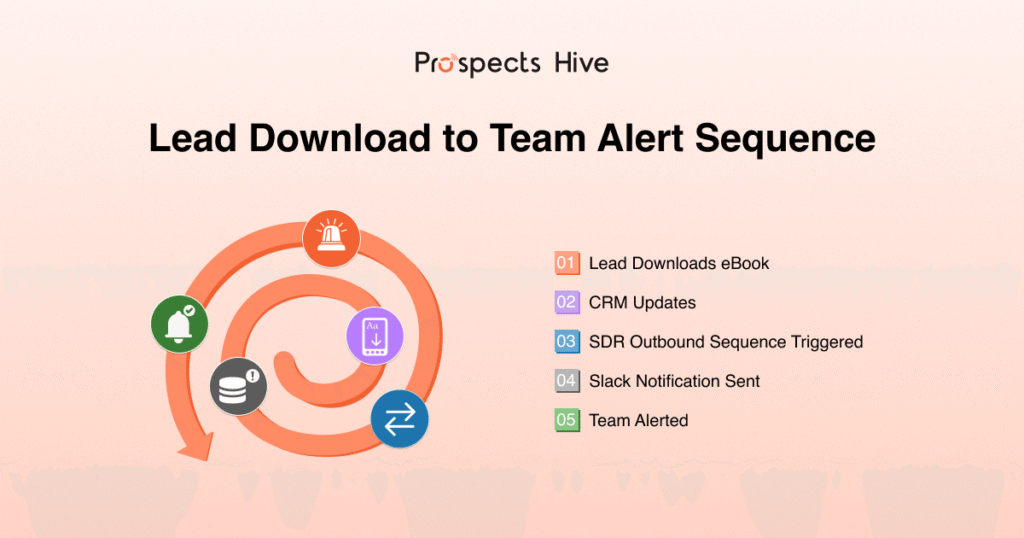
Why it works:
- Starts with inbound (content download)
- Immediately triggers outbound (SDR sequence)
- Syncs into CRM + internal ops (Slack)
Example 2
6sense detects high-intent activity → automated LinkedIn DM or cold email is sent → SDR gets a task to follow up the next day.
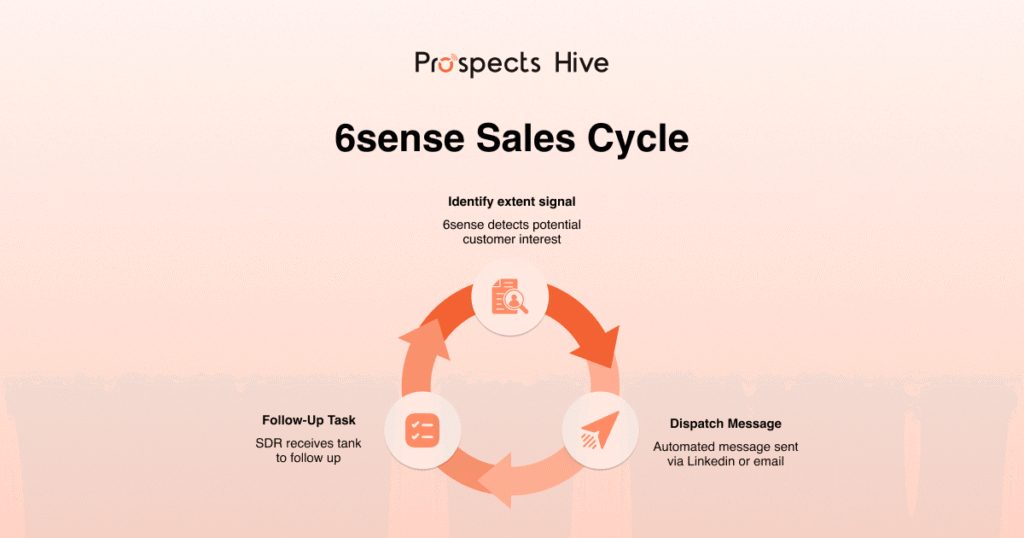
Why it works:
- Starts with intent data (not traditional inbound, but signal-based inbound)
- Triggers automated outbound
- Adds human follow-up layer
Example 3
Inbound lead inactive for 30 days → automatically added to outbound retargeting ads and email sequence.
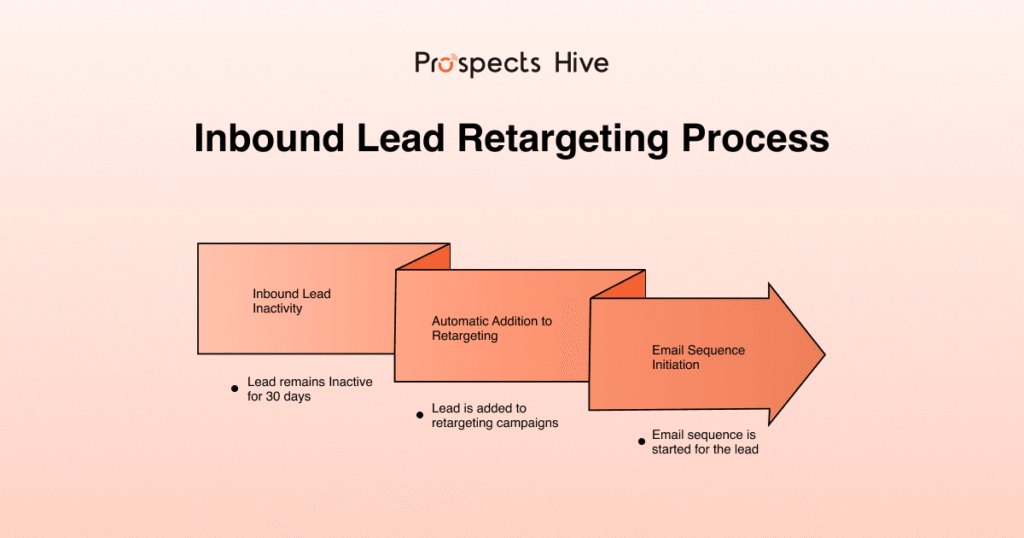
Why it works:
- Starts with inbound
- Detects behavior gap (inactivity)
- Triggers outbound + paid retargeting
That’s Allbound: Signals come in → system reacts → outreach adapts → data updates → loop continues.
Benefits of the Allbound Approach
When done right, Allbound changes how growth works. Here are the core benefits of Allbound marketing:
| Benefit | What It Means in Practice |
| More Predictable Revenue Growth | Moves you away from random spikes and builds a system that compounds over time |
| Higher Conversion Across the Funnel | Traffic doesn’t just visit, it converts through structured follow-ups and connected touchpoints |
| Better Use of Outbound | Outbound becomes contextual and timely instead of cold and disconnected |
| Stronger Sales and Marketing Alignment | Breaks silos so both teams operate within one unified system |
| Clear Attribution and Visibility | Gives clarity on what worked, what didn’t, and where pipeline actually comes from |
Execute Your Allbound Marketing Strategy with Prospects Hive
Most teams try to implement Allbound using disconnected tools.
That’s where they go wrong.
At Prospects Hive, our focus is simple:
- Build your Allbound GTM system
- Connect your data, CRM, and outreach
- Turn signals into actual pipeline
From ICP design to automation workflows, everything is built to work together.
Conclusion
Growth is no longer about choosing between inbound and outbound.
The real question is: How well do your channels, data, and systems work together?
The future belongs to teams who orchestrate a connected system, not just execute.
Tools matter, yes. But alignment, data synergy, and automation are what turn those tools into a predictable revenue engine.
Prospects Hive helps B2B teams like yours build and optimize their allbound approach, from tool selection and integration to workflow automation and performance reporting. If your goal is to scale both inbound and outbound revenue, you need an infrastructure that works in harmony.
Ready to build an Allbound engine that scales your pipeline?
Let’s design your stack today.
FAQs
1. Why do growth leaders use allbound marketing?
Growth leaders use allbound marketing because it connects outbound, inbound, content, and CRM into one system that drives more predictable pipeline growth.
2. When to implement allbound marketing?
Implement allbound marketing when disconnected tools, inconsistent follow-ups, and siloed teams start slowing down your pipeline growth and conversion.
3. Who are best fit for allbound marketing?
B2B companies with longer sales cycles that rely on trust, multichannel engagement, and relationship-driven buying journeys.
4. What is an allbound strategy?
Allbound strategy unifies inbound, outbound, and account-based marketing into a single B2B growth engine that leverages all channels for maximum pipeline impact.
5. What do you mean by inbound marketing?
Inbound marketing attracts leads through valuable content, SEO, and organic channels, drawing prospects to your brand rather than interrupting them.
6. What is the 3-3-3 rule in sales?
The 3-3-3 rule prescribes 3 touches in 3 days across 3 channels to prospects, accelerating outbound response rates and early pipeline momentum.
7. How does Allbound Marketing reduce customer acquisition costs (CAC)?
Allbound cuts CAC by 30-50% through multi-channel synergy, eliminating siloed waste and amplifying high-ROI tactics like intent-based targeting.
8. How do I define Ideal Customer Profiles (ICPs) for Allbound success?
Define ICPs by mapping firmographics (industry, size), technographics, and behaviors of your top customers, then validate with win/loss data.
9. What role do buyer intent signals play in Allbound strategies?
Buyer intent signals identify active researchers via content consumption and site activity, enabling precise outbound timing that boosts reply rates 3x.
10. How does Allbound Marketing improve targeting high-value accounts?
Allbound sharpens high-value targeting by layering ICP data with real-time intent signals and personalized outbound.
11. What key metrics should I track in an Allbound Marketing framework?
Track pipeline velocity, CAC payback, channel attribution (MQL-to-SQL), and account engagement score across all five pillars monthly.
12. How do I measure and optimize Allbound campaigns for growth?
Measure via unified dashboards (pipeline influenced, ROI per channel), then reallocate budget weekly to top performers while killing underperformers.