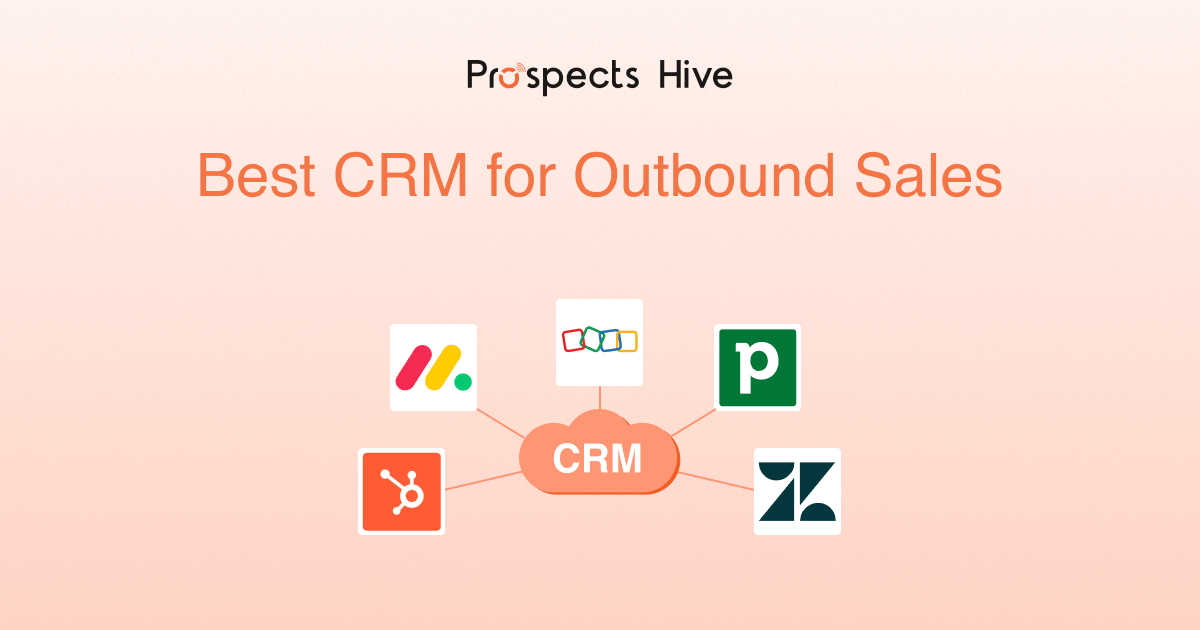
Most CRMs weren’t built for outbound sales. They focus on managing deals, not generating them. Outbound sales require speed, volume, and personalization elements that generic CRMs often miss.
This guide is a decision framework that helps you choose the best CRM for your unique needs. We’ve ranked tools by stage and use case, ensuring real workflow clarity for every team type.
Expect a balanced, vendor-neutral approach, no fluff, just actionable insights to optimize your outbound efforts.
TL;DR for Decision Makers
- HubSpot: A popular all-in-one CRM that works well for teams combining inbound and outbound sales in one platform.
- Attio: A modern, highly customizable CRM designed for startups and fast-growing outbound teams.
- GoHighLevel CRM: An automation-heavy CRM built for agencies and small teams running outbound campaigns.
- Zoho CRM: A budget-friendly CRM with solid automation and multichannel outreach capabilities.
- Salesforce: A powerful enterprise CRM ideal for large outbound teams needing deep customization and integrations.
- Affinity: A relationship-focused CRM that uses data and AI insights to strengthen pipeline and deal management.
- Pipedrive: A simple, visual pipeline CRM that helps small sales teams manage outbound deals efficiently.
- Outreach: A leading sales engagement platform built for running structured outbound sequences at scale.
- Freshsales: An easy-to-use CRM with built-in calling, email tracking, and AI insights for sales teams.
- Salesloft: A sales engagement platform designed for high-volume outbound prospecting and pipeline acceleration.
- Close: A CRM built specifically for outbound sales with strong calling, SMS, and email features.
- Instantly.ai: A cold email outreach platform focused on scaling outbound campaigns with high deliverability.
Comparison Table: 10+ Best CRM for Outbound Sales
Here you will see a quick overview of of 11 best crm from outbound sales to make a decision faster:
| CRM | Best for | Strength | Pricing |
| HubSpot | SMB to mid-market teams combining inbound + outbound | Easy to use, strong automation, large integration ecosystem | starting from $15/month |
| Attio | Startups and modern GTM teams building custom outbound workflows | Highly customizable data model, strong automation, modern UI | Starting from $36/month |
| GoHighLevel CRM | Agencies and small businesses running outbound campaigns | All-in-one automation, funnel building, SMS/email outreach | Starting from $97/month |
| Zoho CRM | Growing teams needing affordable outbound CRM | Low cost, strong automation, multichannel outreach | Starting from $20/month |
| Salesforce | Enterprise outbound teams with complex sales processes | Deep customization, powerful reporting, huge integration ecosystem | Starting from $25/month |
| Affinity | Relationship-driven sales teams and deal networks | Relationship intelligence, automated contact data capture | Starting from $0 |
| Pipedrive | Small to mid-size sales teams needing simple pipeline tracking | Visual pipeline management, easy adoption, strong reporting | Starting from $19/month |
| Outreach | Enterprise SDR teams running large outbound sequences | Advanced sequencing, analytics, automation for outbound | Custom pricing |
| Freshsales | SMB teams wanting built-in calling + CRM | Built-in phone, AI insights, simple automation | Starting from $9/month |
| Salesloft | High-volume outbound teams using structured cadences | Powerful sales engagement tools, coaching and analytics | Custom pricing |
| Close | Call-heavy outbound teams and inside sales | Built-in power dialer, email + SMS outreach, simple workflow | Starting from $49/month |
| Instantly.ai | Teams focused on scaling cold email outreach | High deliverability, email automation, multi-inbox sending | Starting from $47/month |
5 Best CRM for Outbound Sales in Detail
Here’s a deep dive into each platform including pricing, positioning, key features, and an honest look at where each tool excels and where it falls short for outbound teams.
1. HubSpot
Pricing
Free plan available. Sales Hub Starter: $20/user/mo. Sales Hub Professional: $100/user/mo. Sales Hub Enterprise: $150/user/mo. Pricing scales quickly with contacts and features.
Best for
Small to mid-size teams combining inbound and outbound sales workflows.
Overview
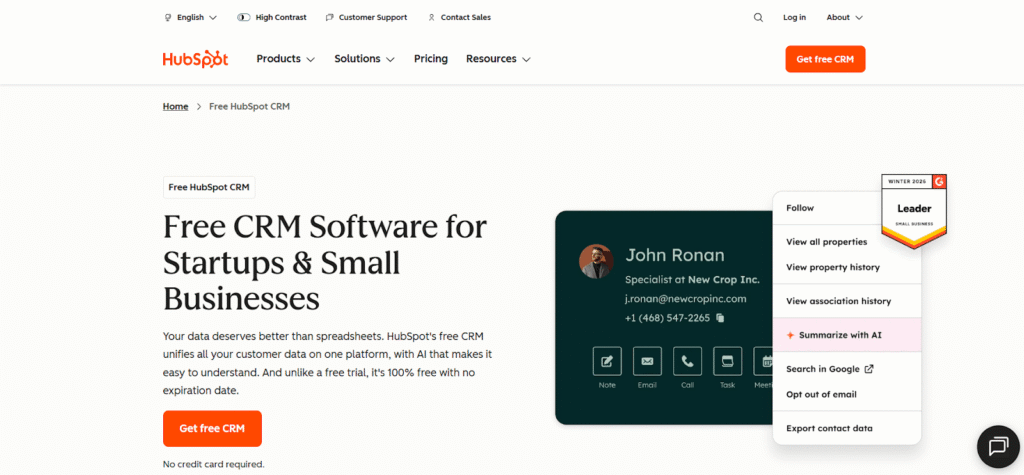
HubSpot is one of the most widely adopted CRMs. While it started as an inbound marketing platform, it has evolved into a strong sales tool that also supports outbound outreach.
For outbound teams, HubSpot works best when paired with email sequencing tools or sales engagement platforms.
⚡ How Can Email Marketing Fuel Your Overall Inbound Strategy
Key Features
- Built-in email tracking and sequences
- Pipeline and deal management
- Sales automation workflows
- Contact and lead tracking
- Reporting dashboards
- Large integration ecosystem
Pros and Cons
| Pros | Cons |
| * Very easy to use | * Advanced outbound features require higher-tier plans. |
| * Strong automation tools | * Not optimized for high-volume outbound by default |
| * Large marketplace of integrations |
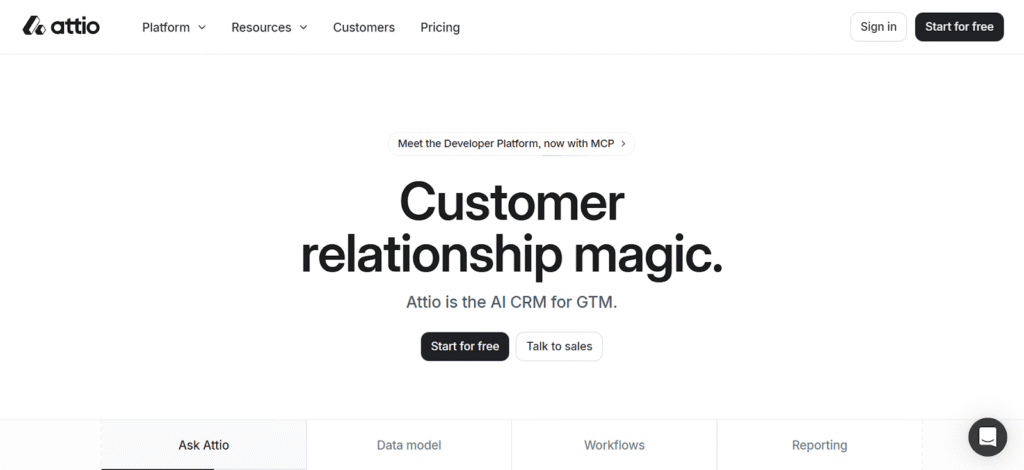
1. Attio
Pricing
Free plan (up to 3 seats). Plus: $34/user/mo. Pro: $69/user/mo. Enterprise: $119/user/mo. Annual billing available with discounts.
Best for
Startups and modern GTM teams are building custom outbound workflows.
Overview
Attio is a newer CRM designed for flexible relationship management. It’s highly customizable and works well for teams building modern outbound systems with tools like Clay, Apollo, or LinkedIn.
Key Features
- Flexible data model
- Custom objects and workflows
- Powerful automation capabilities
- Real-time collaboration
- Integrations with modern GTM tools
Pros and Cons
| Pros | Cons |
| * Highly customizable | * Smaller ecosystem than legacy CRMs |
| * Modern UI and workflows | * Requires setup for complex workflows |
| * Excellent for relationship-driven outbound |
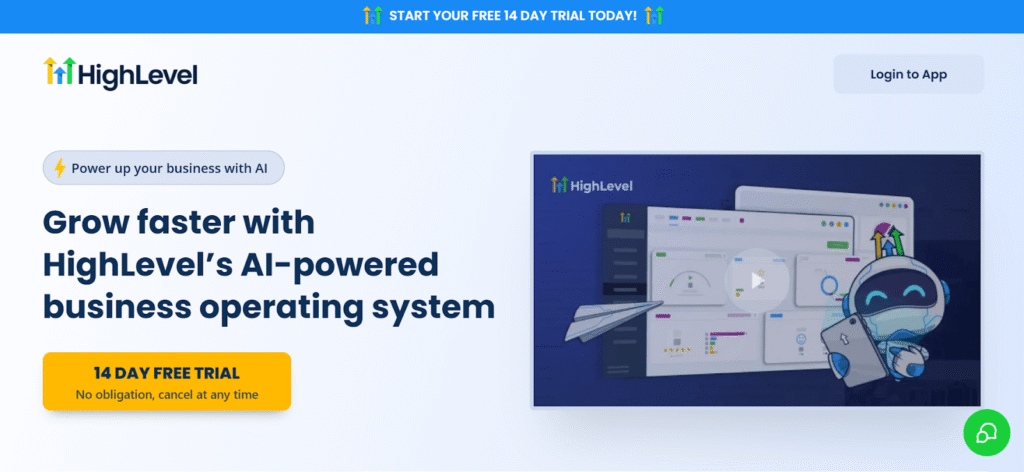
3. GoHighLevel CRM
Pricing
Starter: $97/mo (flat, unlimited users). Agency Pro: $297/mo. White-label options available. No per-seat pricing — major advantage for agencies.
Best for
Agencies and small businesses running automated outbound campaigns.
Overview
GoHighLevel is an all-in-one platform that combines CRM, marketing automation, funnels, and messaging tools. It’s especially popular among marketing agencies that manage outbound client outreach.
Key Features
- Built-in SMS and email automation
- Sales pipeline management
- Landing page and funnel builder
- Appointment scheduling
- Automation workflows
Pros and Cons
| Pros | Cons |
| * All-in-one marketing and sales platform | * UI can feel complex |
| * Good automation capabilities | * Limited enterprise capabilities |
| * Useful for agencies managing multiple campaigns |
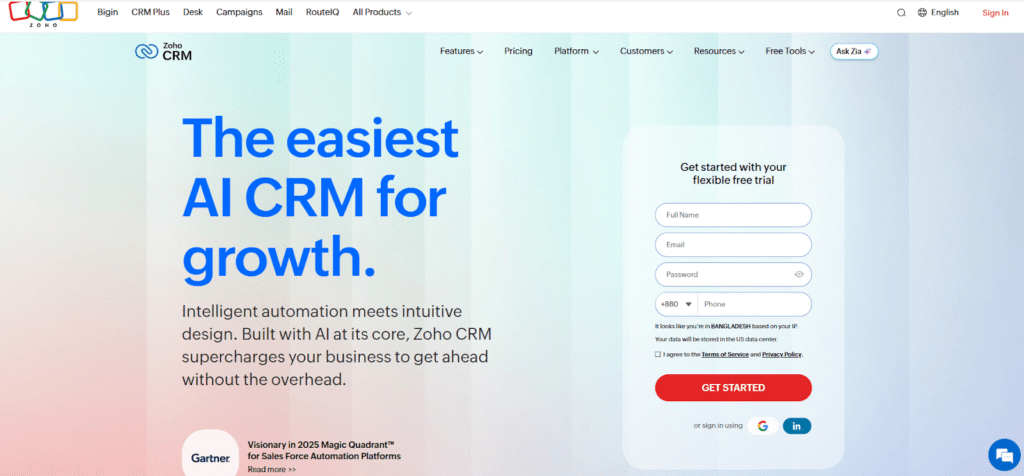
4. Zoho CRM
Pricing
Standard: $14/user/mo. Professional: $23/user/mo. Enterprise: $40/user/mo. Ultimate: $52/user/mo. Free plan available for up to 3 users. Annual billing recommended.
Best for
Growing businesses are looking for an affordable outbound CRM.
Overview
Zoho CRM is a cost-effective alternative to larger platforms. It supports multi-channel communication, automation, and reporting features that work well for outbound sales teams.
⚡ The Future of Outbound Sales: How Automation is Changing the Game
Key Features
- Multichannel communication (email, phone, social)
- Workflow automation
- Lead scoring and tracking.
- Sales forecasting
- Reporting dashboards
Pros and Cons
| Pros | Cons |
| * Affordable pricing | * Interfaces can feel outdated. |
| * Strong automation capabilities | * Customization requires a learning curve. |
| * Large ecosystem of Zoho apps |
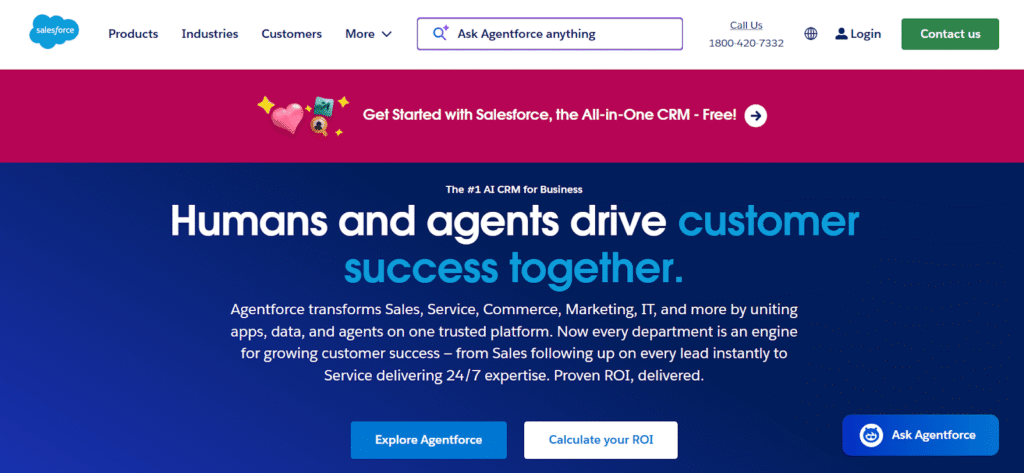
5. Salesforce
Pricing
Starter Suite: $25/user/mo. Pro Suite: $100/user/mo. Enterprise: $165/user/mo. Unlimited: $330/user/mo. Einstein 1 Sales: $500/user/mo. Significant implementation costs often apply.
Best for
Enterprise teams managing large outbound sales operations.
Overview
Salesforce is the most powerful CRM on the market. It offers deep customization, advanced reporting, and integrations with almost every sales tool available.
However, it usually requires RevOps support or technical expertise to implement properly.
Key Features
- Custom objects and workflows
- Advanced analytics and dashboards
- Territory management
- Large integration ecosystem
- AI-powered sales insights
Pros and Cons
| Pros | Cons |
| * Extremely customizable | * Complex to implement |
| * Enterprise-grade reporting | * Expensive for small teams |
| * Massive ecosystem |
How to Choose the Best CRM for Your Outbound Sales Workflow
There is no universally best CRM for outbound sales. The right choice depends on your motion, team size, tech stack, and growth stage. Use this framework to make a structured decision.
Answer These Before Choosing
- Are you call-heavy, email-heavy, or multi-channel?
Dialers matter for call-heavy teams; sequencing depth matters for email-heavy teams.
- Do you have RevOps support?
If not, avoid Salesforce. Complexity without support kills productivity.
- What is your team size and growth trajectory?
Flat-fee tools like GHL work at any size; per-seat tools like Salesforce become expensive fast.
- Do you need deep reporting for leadership?
Zoho and Salesforce win here. Attio and GHL are lighter.
- Is email deliverability a priority?
If you’re sending 500+ emails/day, choose tools with dedicated deliverability controls or pair with a dedicated ESP.
- Do you need LinkedIn automation?
None of the 5 CRMs above include native LinkedIn automation. You’ll need a tool like Expandi, La Growth Machine, or Lemlist.
⚡ Cold Email vs LinkedIn: The Real Outbound Performance Breakdown
- What does your current stack look like?
The best CRM is often the one that integrates cleanest with your existing tools.
Decision Tree; Follow this branching logic to narrow your choice,
| Your Situation | Condition | Recommended CRM |
| Startup / SMB, budget-conscious | Email + call outbound, <20 reps | HubSpot or Zoho CRM |
| Agency running client outbound | Multi-channel, need flat pricing | GoHighLevel |
| Modern tech startup, PLG motion | Relationship-driven, low volume | Attio + SEP |
| Mid-market with RevOps team | Multi-channel, need reporting depth | HubSpot Pro or Salesforce |
| Enterprise, complex territories | High-volume, need integrations | Salesforce + Outreach/Salesloft |
| Call-heavy SDR team | Dialer is non-negotiable | GoHighLevel or Zoho + PhoneBridge |
Why Your Outbound Sales System Needs More Than a CRM
Here’s the hard truth most CRM vendors don’t want you to hear: a CRM alone will not fix your outbound. CRMs are systems of record. They store what happened. They don’t make it happen.
Outbound success in 2026 is built on 3 pillars working together:
- Automation: sequences, cadences, triggers, and follow-ups that run without rep intervention
- Data: accurate, enriched, and continuously updated prospect data that powers targeting
- Workflow Clarity: defined processes that tell reps exactly what to do, when, and why
The Full Outbound GTM Stack
- CRM (System of Record): HubSpot, Salesforce, Zoho; stores contacts, deals, activity
- Sales Engagement Platform (Execution Layer): Outreach, Salesloft, Apollo, Instantly; manages sequences and cadences
- Data Provider (Intelligence Layer): Apollo, Clay, ZoomInfo, Lusha; enriches and verifies prospect data
- Dialer (Call Layer): Aircall, JustCall, RingCentral; powers call-heavy outbound
- LinkedIn Automation (Social Layer): Expandi, La Growth Machine; manages LinkedIn touchpoints
⚡ AI GTM in Outbound Marketing: Strategies, Benefits & Tools
At Prospects Hive, we help teams design and implement full outbound GTM systems, not just set up tools. The difference between a CRM implementation and an outbound system is the difference between a garage full of tools and a working production line.
Ready to Build Your Outbound GTM System?
There is no single best CRM for outbound sales. If anyone tells you otherwise, they’re trying to sell you something.
The right CRM depends on your outbound motion.
- How you prospect,
- how you reach out, and
- How your reps spend their time.
A call-heavy SDR team has fundamentally different needs than a founder doing manual LinkedIn outreach. A 5-person startup has fundamentally different constraints than a 200-rep enterprise team.
Choose your CRM as part of that system, not as a replacement for it.
If you’re unsure which CRM fits your outbound motion or if you know the CRM but aren’t sure how to build the full system around it, Prospects Hive helps teams design and implement full outbound GTM systems. Contact us today to start building your outbound machine, not just its components.
FAQs
1. Do outbound teams need both a CRM and a sales engagement platform (SEP)?
Often yes, especially at scale.
A CRM manages contacts, deals, and the pipeline. A Sales Engagement Platform (like Outreach, Salesloft, or Instantly) manages sequences, cadences, and rep activity.
Some CRMs, such as HubSpot and GoHighLevel, have built-in sequencing, reducing the need for a separate SEP. But for high-volume or enterprise outbound, pairing a CRM with a purpose-built SEP almost always outperforms a single all-in-one tool.
2. Can HubSpot be used for outbound sales?
Yes, with caveats.
HubSpot’s Sales Hub Professional and Enterprise tiers include email sequencing, a built-in dialer, and solid pipeline management. However, HubSpot was originally designed for inbound marketing, and it shows:
- deliverability controls are basic,
- LinkedIn automation requires third-party tools, and
- Daily email limits can be restrictive for high-volume outbound.
For teams sending under 300–500 emails per day and running a blended inbound/outbound motion, HubSpot is an excellent choice
3. What CRM is best for cold calling?
For cold call-heavy outbound, GoHighLevel and Zoho CRM (with PhoneBridge) are the strongest native options.
Both include built-in dialer functionality, eliminating the need for costly CTI integration. For enterprise teams, Salesforce with a CTI integration delivers the best call management.
4. What CRM integrates best with cold email tools?
HubSpot integrates natively with most cold email tools via Zapier and has direct integrations with tools like Lemlist and Mailshake.
Salesforce has the deepest AppExchange ecosystem, with native integrations for Outreach, Salesloft, and Apollo. Zoho CRM also integrates with many cold email tools via Zoho Campaigns or third-party platforms.
For teams using Instantly, Smartlead, or Lemlist as their primary outbound tool, any of these CRMs can serve as the backend system of record.
5. Is Apollo a CRM or an outbound tool?
Apollo is a hybrid;
- part data provider,
- part sales engagement platform, and
- part lightweight CRM.
It has contact and account management features that function like a CRM, but it’s primarily built for outbound execution: prospecting, sequencing, and outreach.
Many teams use Apollo as their outbound execution engine and sync data back to a dedicated CRM for pipeline management and reporting. Apollo is not a replacement for a full CRM at scale.
6. What features should an outbound sales CRM have?
The essential features for outbound:
(1) Email sequencing with A/B testing and deliverability controls,
(2) Built-in or tightly integrated dialer,
(3) Contact and activity management with automatic logging,
(4) Pipeline and deal tracking,
(5) Workflow automation for lead routing and follow-up,
(6) Reporting on rep activity and pipeline health,
(7) Integration with LinkedIn, data providers, and SEPs,
(8) Lead scoring and prioritization. Nice-to-haves: AI-powered insights, territory management, and conversation intelligence.
7. What’s the difference between inbound and outbound CRM?
An inbound CRM is optimized for capturing and nurturing leads that come to you. Think lead forms, website tracking, and marketing automation.
An outbound CRM is optimized for proactive prospecting. Think email sequencing, dialing, and contact enrichment.
In practice, most CRMs support both motions, but they often have clear strengths in one direction. HubSpot leans inbound. GoHighLevel and Zoho CRM lean outbound. Salesforce is motion-agnostic but requires configuration for either.