









Build a Predictable Pipeline with a Scalable GTM System
We build the GTM system behind your growth, connecting ICP, signals, outreach, CRM and automation to create qualified pipeline.
VP Sales, SaaS
Just raised Series A


See how we execute modern GTM solutions
In under two minutes, watch GTM strategy, buyer signals, outbound execution and revenue workflows come together into one connected path to growth.

Your all-in-one growth engine
More conversations. More meetings. More revenue.
More qualified meetings
Book meetings with best-fit accounts that are ready to buy.
Faster sales follow-up
Move qualified replies straight into sales follow-up, no delays.
Scalable pipeline
Turn proven campaigns into pipeline your team can scale.
Our GTM expertise that drives real growth
We're a go-to-market partner that combines buyer research, outbound execution, ABM, content and automation into one connected GTM system.
GTM Strategy & Market Research
Build your go-to-market plan on real market understanding: clear segments, buyer research and opportunities you can actually act on.
Email Marketing
Personal email campaigns that nurture leads, engage prospects and keep follow-ups moving through the buying journey.
Learn more →B2B Content Marketing
Content that educates buyers, builds authority and warms up accounts before your outreach lands.
Learn more →Cold Email Outreach
Personal, signal-based cold email that lands in the inbox and starts real conversations with decision-makers.
Learn more →- ✓Domains, inboxes & warm-up
- ✓Personalised copy at scale
- ✓Follow-up sequences
- ✓Reply handling & booking
LinkedIn Outreach
Relationship-first LinkedIn outreach that builds trust with decision-makers and opens real sales conversations.
Learn more →B2B Lead Generation
Well-targeted, verified leads through signal-based list building, enrichment and multichannel outreach.
Learn more →Account-Based Marketing (ABM)
Win high-value accounts with focused research, personal campaigns and coordinated buyer engagement.
Learn more →- ✓Target account selection
- ✓Account research
- ✓Buyer mapping
- ✓Personalised campaigns
AI Workflow Automation
AI workflows that handle research, data, follow-ups and reporting, so your team gets hours back every week.
Learn more →CRM & Revenue Operations
Clean, connected revenue data with pipelines, routing and reporting your sales team can trust.
Learn more →Outbound efforts fail when the GTM system behind them is missing
Many B2B teams invest in outbound but struggle to build a consistent pipeline, because targeting, data, messaging and revenue systems aren't aligned.
Unclear target accounts
Without a defined ICP, account research and segmentation, teams spend time on prospects who are unlikely to convert.
Poor timing & buyer signals
Without tracking intent and trigger events, outreach lands before buyers actually need a solution.
Generic outreach messaging
Broad messages fail to start conversations when they lack personalisation, insight and buyer context.
Disconnected revenue systems
When CRM, automation and follow-ups aren't connected, teams rely on manual work and lose visibility.
Prospects Hive: a GTM partner that builds systems
Successful outbound and B2B demand generation takes more than sending campaigns. We connect targeting, buyer signals, outreach and revenue workflows into a structured GTM system built for scalable growth.
Define your ideal buyers
A clear picture of your best-fit accounts through ICP work, segmentation and account research.
Use buyer signals effectively
Spot real opportunities by tracking intent, triggers and account insights that improve timing.
Create relevant outreach
Personal outbound campaigns that connect with buyers through meaningful, multichannel messaging.
Build connected revenue systems
CRM workflows, automation, follow-ups and reporting aligned into one efficient growth operation.

A connected GTM system from insight to revenue
Our framework connects strategy, data and execution at every step, so B2B teams find the right buyers, start relevant conversations and build a growth system that scales.
Tap a stage to see how it works. Stages rotate on their own too.
We find the right people to target
We map your total addressable market and define your ICP using sales calls, closed-won data and customer interviews, then track the signals that show who's ready to buy.
Market intelligence
Size your market, map segments and understand the buyer landscape before a single message goes out.
Account selection
Define and prioritise the accounts that match your ICP on company fit, market relevance and buying potential.
Buyer signal tracking
Watch funding, hiring, leadership and intent signals so outreach lands exactly when the need is real.
We start real conversations on every channel
Enriched data and personal messaging power coordinated email, LinkedIn and follow-up sequences, all triggered by real buying signals and running as one campaign.
Data enrichment
Verified contacts and rich account context from Clay, so every message starts from real information.
Personalisation
Messaging shaped around each buyer's role, pains and timing, written to sound human, not templated.
Multichannel outreach
Email, LinkedIn, SMS and follow-ups coordinated as one conversation, on safe sending infrastructure.
We turn replies into revenue
AI agents and our team qualify every reply, route it into your CRM and keep follow-ups moving, while clear reporting shows exactly what drives pipeline.
Qualification & CRM routing
Replies are scored, tagged and routed to the right rep in your CRM, so no warm lead waits.
Sales follow-up
Timely follow-ups keep conversations moving until a qualified meeting lands on your calendar.
Performance reporting
Stage-by-stage reporting from reply to revenue, feeding every learning back into targeting.
How we build and execute your GTM strategy
Research, strategy, execution and optimisation, one step at a time, so your GTM process fits your buyers, campaigns and revenue goals.

We understand your goals
We analyse your business model, target market, current processes and growth goals to understand your challenges and set the right GTM direction.
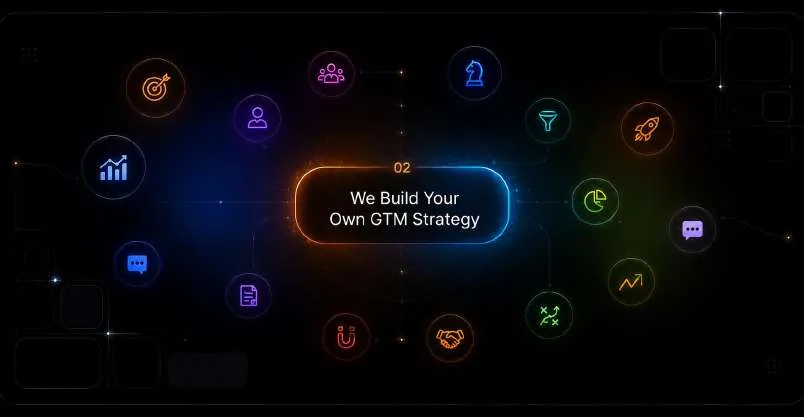
We build your own GTM strategy
We define your ideal customer profile, target segments and priority accounts, so your effort goes to the right buyers.

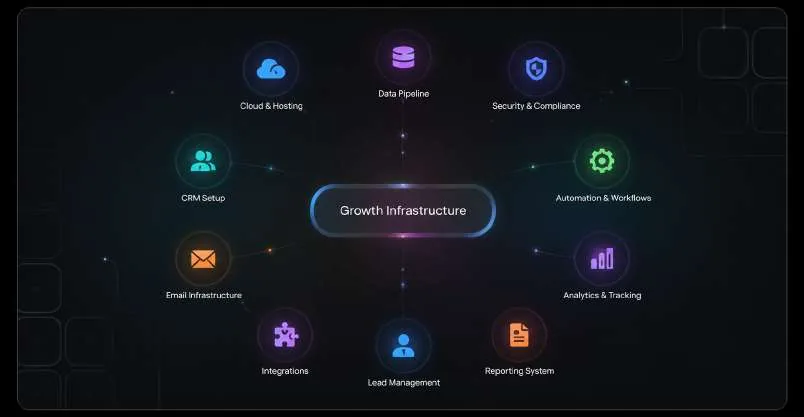
We set up your growth infrastructure
We organise prospect data, research insights, messaging workflows and the systems you need for effective outreach.
We launch & manage campaigns
We run multichannel campaigns across email, LinkedIn and follow-up workflows to engage buyers with relevant messages.
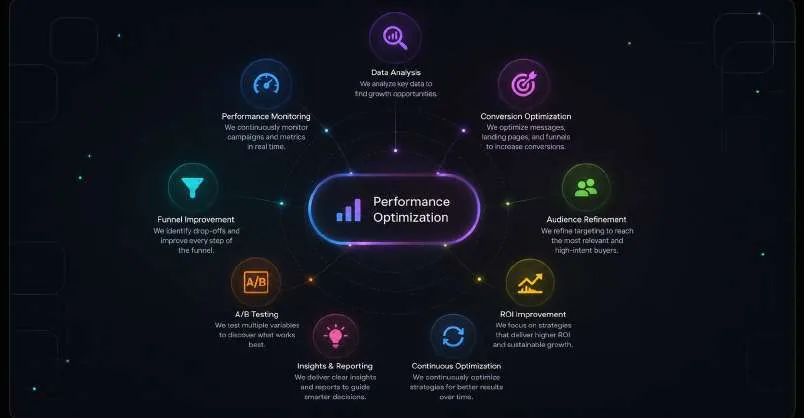
We optimise for better performance
We review performance, sharpen targeting and messaging, and improve workflows so your GTM system keeps getting stronger.
More than lead generation: the impact of a connected GTM system
{{ impact.title }}
{{ impact.body }}
- ✓{{ pt }}
From account research to closed deals,
we build the system behind it
We connect research, outreach and GTM workflows to help B2B teams reach the right buyers and start meaningful sales conversations.
Research & signal tracking
We build your ICP, tier your accounts and track signals like funding, hiring and leadership changes, so outreach hits the right accounts at the right time.
Multichannel outreach
Coordinated email and LinkedIn campaigns built around real signals, not one generic template for everyone.
Qualify & route
We qualify replies, route them through your CRM and follow up until a real conversation lands on your calendar.
Close & scale
You close the deals. We keep research, signals and outreach running so the pipeline stays full behind you.
Why B2B teams choose Prospects Hive for GTM growth
We connect research, outreach and GTM workflows to help B2B teams reach the right buyers and create meaningful sales conversations.
GTM-first strategy
A clear understanding of B2B markets, buyers and complex sales cycles guides every decision, keeping targeting, outreach and pipeline aligned from the start.
Buyer intelligence
Account research, buyer context and relevant signals uncover the strongest opportunities, so your team focuses on better fit, timing and intent.
Strategy into execution
Clear GTM planning turns into coordinated campaigns, messaging and workflows across email, LinkedIn and follow-up.
Connected GTM operations
CRM data, automation, reporting and workflows work together for better visibility, smoother handoffs and more consistent execution.
Built around your stack
Your existing tools stay where they already work well. We configure integrations around your team's workflow, no forced platform changes.
B2B growth focus
Long sales cycles, multiple stakeholders and high-value offers need structure. Our GTM model supports that from targeting to sales handoff.
Why businesses choose Prospects Hive over others
Prospects Hive's strategic B2B approach
- ✓Builds outbound around market understanding, buyer segments and GTM goals
- ✓Uses ICP work, account research and market insight to find the right accounts
- ✓Runs email, LinkedIn and multichannel campaigns in one connected approach
- ✓Uses account context and business signals to make messages relevant
- ✓Feeds campaign insights back into targeting, messaging and execution
- ✓Connects outreach with CRM workflows, follow-ups and reporting
Typical outbound approach
- ✕Focuses on running campaigns rather than broader GTM planning
- ✕Often works from predefined lists or basic targeting
- ~Runs outbound across channels like email and LinkedIn
- ✕Relies mainly on whatever contact data is available
- ~Optimises based on response and activity data
- ✕Campaigns run separately from internal revenue workflows
See how businesses grow with Prospects Hive
{{ cs.title }}
{{ cs.summary }}
{{ cs.buttonText }}- Client
- {{ cs.client }}
- Industry
- {{ cs.industry }}
- Services
- {{ cs.services }}
{{ cs.title }}
GTM systems built for B2B industries
Connect your GTM tools into a unified GTM system



A handful of the hundreds of tools we've worked with over the last decade

{{ headingBefore }}{{ highlight }}
{{ spotsLine2 }}
{{ p.name }}
{{ p.badge }}{{ p.description }}
- ✓{{ item }}
{{ p.buildHeading }}
{{ p.buildDescription }}
- {{ m.label }}
{{ m.title }}
- {{ task }}
Output: {{ m.output }}
{{ p.customHeading }}
{{ p.customDescription }}
{{ afterHeading }}
{{ afterDescription }}
Our success stories
See how B2B teams turned outbound into a predictable source of pipeline with Prospects Hive.
[Client quote 1 about working with Prospects Hive.]

[Client quote 2 about working with Prospects Hive.]
[Client quote 3 about working with Prospects Hive.]

[Client quote 4 about working with Prospects Hive.]
[Client quote 5 about working with Prospects Hive.]

[Client quote 6 about working with Prospects Hive.]
Our official partners
Certified by the tools we build your system on.
InstantlyCertified Expert
GetSalesCertified Expert
HeyReachExpert
lemlistService Partner
ApolloCertified Partner
Questions we get asked a lot
Everything you need to know about our process, performance benchmarks and long-term partnership models.

What makes Prospects Hive different from a traditional lead generation agency?
Other agencies focus on running outbound campaigns and generating leads. We build the GTM system behind them, combining market research, buyer intelligence, targeted outreach and revenue workflows so your pipeline becomes predictable.
What does a B2B GTM agency do?
It works out who you should sell to and what to say, then builds the data, outreach, CRM and automation that turn that plan into qualified sales conversations.
Do you only provide outbound services?
Outbound is our core, but we also cover GTM strategy, ABM, B2B content marketing, CRM and revenue operations, and AI workflow automation, all connected into one system.
How do you identify the right target accounts and buyers?
[Answer: the ICP research, buying signals and filters you use]
Can you help improve our existing outbound campaigns?
[Answer: how you audit and improve existing campaigns]
How do you measure and optimise campaign performance?
We track every stage, from replies to meetings to closed deals, then adjust targeting, messaging and workflows based on what the numbers show.
Outbound efforts fail when the GTM system behind them is missing
- ✓Expect a response from us within 24 hours
- ✓We're happy to sign an NDA on request
- ✓Get access to a team of dedicated GTM specialists

Latest GTM insights

Hard Bounce vs Soft Bounce Email: Key Differences & How to Avoid Them
You launch a cold email campaign with a new prospect list. Soon after, a few messages come back as bounced. One says the mailbox does not exist. Another says the company mail server cannot accept the email right now. Those failures need different responses. The main difference in hard bounce vs soft bounce email is permanence. A hard bounce usually signals a permanent delivery failure, while a soft bounce points to a temporary problem that may clear later. This guide explains why hard and soft bounces happen, what the server responses mean, and how to handle them in B2B outreach. It also shows why verified emails can still bounce and what to do with a prospect after delivery fails. What Is a Hard Bounce Email? A hard bounce happens when an email cannot be delivered permanently. The mailbox or domain may be invalid, although sender blocks, security rules, and other permanent rejections can also cause the failure. Sending the same message to a permanently invalid address again will usually fail. The bounce response helps you determine whether the contact data or another delivery issue caused it. Common Causes of Hard Bounced Emails Hard bounces commonly appear when the recipient address can no longer receive email. The exact cause can sit with the prospect data, recipient domain, or sending environment. Common reasons include: The recipient email address does not exist. The prospect left the company and their mailbox was disabled. The email address contains a typo. The company domain is invalid or no longer active. The receiving server permanently rejects the sender. Your sending domain or IP is blocked. A security or authentication policy causes a permanent rejection. Previously working addresses can become invalid over time. B2B data changes as people leave companies, change roles, and move to new domains. Hard Bounce Example Suppose you email alex@company.com, but Alex left the company several months ago. Their old mailbox has since been removed, so the company mail server returns a permanent mailbox error. Further email follow-ups to that address will keep failing. Suppress the old address and check whether Alex has a current business email before continuing outreach. What Is a Soft Bounce Email? A soft bounce happens when email delivery fails temporarily. The recipient address may still be valid, and delivery could succeed once the temporary problem clears. These failures often come from mailbox limits, server availability, or temporary receiving restrictions. Your sending platform may retry the message automatically. Common Causes of Soft Bounced Emails Temporary mailbox or server conditions cause many soft bounces. The problem often sits with the recipient environment rather than the email address itself. Common causes include: The recipient mailbox is full. The receiving server is temporarily unavailable. The server is overloaded. The email or attachment is too large. The recipient server is temporarily limiting incoming mail. A temporary security rule delays or rejects the message. One soft bounce does not automatically make an address unusable. Repeated failures need closer review because the temporary issue may be lasting longer than expected. Soft Bounce Example Imagine sending an email to a verified prospect while their company mail server is temporarily offline. The server cannot accept the message at that moment, even though the mailbox still exists. Your outreach platform may retry delivery later. If the same address keeps failing, review the server response before allowing further email steps. Hard Bounce vs Soft Bounce Email: Quick Comparison Table Factor Hard Bounce Soft Bounce Delivery failure Permanent Temporary Email address May be invalid or unavailable Often still valid Common example Mailbox does not exist Mailbox is full Retry Usually avoid retrying a confirmed permanent failure May be retried Next step Diagnose and suppress permanently invalid addresses Monitor and retry where appropriate Cold email concern Needs quick attention Needs attention when failures repeat What Should You Do After a Hard or Soft Bounce? Your next step should come from the bounce reason. A hard or soft label gives useful context, but the server response usually tells you more about what actually failed. Use the delivery message to decide what needs attention: Bounce situation What it may mean What to do Mailbox does not exist Invalid or outdated prospect data Suppress the address and look for current contact data Prospect changed jobs Old work email Re-enrich the prospect Mailbox is full Temporary recipient issue Allow an appropriate retry Server unavailable Temporary server issue Retry later Sender blocked Reputation or recipient policy issue Investigate the rejection Authentication failure Sending setup problem Review your authentication records Repeated soft bounces Persistent delivery problem Review the address before continuing Sending platforms can classify and handle these failures differently. Read the full response before making a permanent decision about the prospect. Why Can a Valid or Verified Email Still Bounce? Email verification lowers the chance of using an invalid address, but it cannot guarantee successful delivery. Verification reflects what the tool could confirm when the address was checked, while mailbox status and delivery conditions can change afterward. A prospect might leave the company after verification, for example. Their mailbox could be disabled before your sequence begins. Other reasons include: The domain uses a catch-all setup, which makes the exact mailbox harder to confirm. The recipient server blocks your sending domain or IP. Your authentication fails the recipient server’s policy checks. The mailbox becomes unavailable after verification. The receiving server develops a temporary issue. Your prospect data becomes outdated. Verification works best as one quality check within prospect research and enrichment. Delivery still depends on what happens when the receiving server processes the actual email. Is the Bounce Caused by Your Prospect Data or Your Sending Setup? The bounce response can help you identify whether the problem comes from your prospect data or your sending environment. Each cause needs a different fix, so finding the source early can prevent unnecessary changes. One outdated address usually points you toward the contact record.
Read article →
Why Invest in Content Marketing When You’re Already Doing Outbound?
Imagine your outbound campaigns are already working. Cold emails are getting replies, LinkedIn conversations are starting, and sales is booking meetings. At that point, investing in content marketing can feel like adding another cost to a system that is already producing results. So, why invest in content marketing when outbound already works? Content fills the gaps that direct outreach cannot cover on its own. It helps prospects research your company, build trust before a call, stay engaged between conversations, and find you even when they are not on your outbound list. Content does not need to replace outbound marketing. The two can work together, with outbound creating direct conversations and content supporting the research and decisions around those conversations. This guide explains how content marketing strengthens an existing outbound strategy. You will also see what content to create, when to invest, and how to measure its effect on pipeline. Why Content Marketing Still Matters When Outbound is Working Content marketing still matters because outbound can reach the right prospect without answering every question that comes after a cold email or LinkedIn message. Your outreach can earn attention, but prospects may still need proof and more detail before they reply or book a call. Outbound gives you control over who you contact. You can define your ICP, research target accounts, identify relevant contacts, and start conversations through cold email or LinkedIn. Content covers what a short outbound message cannot. Articles, case studies, comparison pages, and research can give prospects more detail when they want to understand the problem or evaluate your approach. That is one reason B2B content marketing works well alongside outbound. It gives relevant prospects useful information while your sales team continues reaching selected accounts directly. Content can also create demand outside your prospect lists. Search engines and other distribution channels can put your company in front of people already researching problems your service solves. What Happens After a Prospect Receives Your Outreach? An interested prospect may research your company before replying to your outbound message. A cold email can create interest without producing an immediate response. The prospect may visit your website, check your LinkedIn presence, read a case study, or look more closely at the service you mentioned. They may also research the problem itself before deciding whether a sales conversation is worth their time. B2B buyers often form vendor preferences before speaking with sales. The 2025 6sense B2B Buyer Experience Report found that buyers chose a vendor from their Day One shortlist in 95% of the purchases studied. That makes the information prospects find about your company important. Content can give them useful proof and answers before the first sales conversation begins. Prospects Research Your Company Before They Reply Your content helps prospects check whether the claims in your outbound message hold up. A cold email may get their attention, but they can still look for evidence before replying. They may want to see: Experience with companies like theirs Evidence that you understand the problem Relevant case studies Details about your approach Integration or implementation information Comparisons with other options Proof of results If that information is easy to find, your outbound message has more evidence behind it. Thin service copy or generic claims mean sales has to build that credibility from scratch on the call. Your outbound message and the content prospects find afterwards should also tell the same story. Different positioning across email, LinkedIn, service pages, and articles creates unnecessary confusion. Content Answers Questions Before the First Sales Call Useful content can answer common prospect questions before sales needs to explain them on a call. That leaves more time to discuss the prospect’s actual system, priorities, and constraints. For example, a company considering CRM optimization may first want to understand why lead routing keeps failing. Another team may want to know what CRM data cleanup involves before discussing an implementation. A practical guide can answer those questions before a discovery call or demo. Sales can then focus on how the problem applies to that specific company instead of spending the call explaining basic concepts. 5 Ways Content Marketing Makes Your Outbound Campaigns Stronger Content marketing makes outbound stronger by giving prospects useful information before, during, and after direct outreach. It can build familiarity before an email arrives, support the claims sales makes, and give reps useful reasons to continue the conversation. The value comes from using content where outbound alone has limits. The five areas below show where that difference matters most. 1. Content Warms Up Cold Outreach Before You Hit Send Content can make a prospect familiar with your company before your cold email or LinkedIn message reaches them. They may have already seen one of your LinkedIn posts, found a guide or report through search, or visited your website while researching the problem. That prior exposure will not happen with every account. But when it does, your company name is no longer completely unfamiliar when sales reaches out. Targeted content can also create useful context around the problem you plan to discuss. For example, an article about a common CRM issue can introduce the problem before your outbound campaign approaches companies dealing with it. The goal is not to publish content just so prospects recognize your logo. Create content around the problems, questions, and situations your target accounts already care about. 2. Content Adds Proof Behind Your Outbound Claims Content gives prospects evidence behind the claims you make in cold email, LinkedIn outreach, and sales conversations. A short message can say you understand a problem, but it has little room to prove that expertise. Case studies can show how you handled a similar situation. Original research can support a market insight, while a practical guide can show how you approach a problem in detail. This ability to show rather than simply claim expertise is one reason content marketing
Read article →
How to Scale LinkedIn Outreach Campaigns Effectively
A LinkedIn campaign can work well with 100 prospects and start falling apart when you push it to 1,000. The list gets broader, messages lose context, replies become harder to manage, and several team members may contact the same account without knowing it. To scale LinkedIn outreach effectively, start with a campaign that already produces qualified conversations. Then expand proven segments, keep qualified prospects entering the pipeline, prioritize stronger intent signals, increase team capacity, and connect every reply to your CRM. This guide explains how to scale LinkedIn outreach campaigns without losing relevance as volume grows. You will also see how to control prospect quality, manage multiple senders, handle extra replies, and decide when a campaign should scale, change, or stop. What Does It Mean to Scale LinkedIn Outreach? Scaling LinkedIn outreach means increasing the number of qualified conversations your campaign can generate without lowering targeting quality or losing control of the process. It is different from simply sending more connection requests or LinkedIn messages. A scalable campaign expands the whole outreach system. Your prospect sourcing, research, personalization, sender capacity, reply handling, CRM workflows, and reporting all need to support the higher volume. Sending More Scaling Effectively Add more names to a list Add more qualified prospects Send more connection requests Expand proven audience segments Automate more activity Reduce repetitive work around outreach Count total replies Measure positive and qualified replies Increase activity from one LinkedIn profile Increase capacity across the sales team Focus on activity Focus on meetings and pipeline If you still need to build the basic outreach process, our guide to LinkedIn outreach strategies for B2B prospecting covers ICP targeting, profile credibility, Sales Navigator, messaging, personalization, and follow-ups in more detail. How Do You Know Your LinkedIn Campaign is Ready to Scale? A LinkedIn outreach campaign is ready to scale when the current version consistently reaches the right prospects and creates useful sales conversations. More volume should amplify something that already works, not hide problems in your targeting or message. Do not make the decision from connection acceptance or raw reply rate alone. Look further down the funnel and ask whether those replies are coming from companies and contacts that match your ICP. Check Targeting, Replies, and Qualified Meetings First Your current campaign should show clear signs of audience and message fit before you expand it. That means knowing which segment responds, what problem starts conversations, and whether those conversations lead somewhere useful. Use a simple readiness check: Area Ready to Scale When Targeting The right roles and accounts are responding Messaging One or more angles consistently start relevant conversations Reply quality Positive replies come from ICP-fit prospects Meetings Conversations turn into qualified meetings Sales fit Meetings have real opportunity potential Prospect supply Similar qualified accounts remain available Team capacity Replies can be handled without delays CRM Owners, stages, and follow-ups are recorded clearly A high reply rate can still hide weak targeting if most responses are negative or come from poor-fit accounts. Qualified replies and sales conversations tell you much more about whether the campaign deserves more reach. Make Sure Your Team Can Handle More Conversations Your response capacity should grow before your send volume does. If a campaign produces more interested prospects than your team can respond to properly, successful outreach can create its own bottleneck. Define who monitors replies, who qualifies interest, and who takes over when a prospect wants to talk. Set the process before adding another large batch of prospects. 10 Ways to Scale LinkedIn Outreach Campaigns Effectively Once your campaign is producing qualified responses, scale it through the following steps while keeping targeting, personalization, and sales follow-up under control. 1. Scale Your Best-Performing Prospect Segments The safest place to expand is around the prospect segment already producing qualified results. Starting with proven patterns gives you a baseline against which every new audience can be measured. Suppose sales leaders at 50 to 200-person SaaS companies are responding to a specific operational problem. Expanding first into closely related accounts gives you cleaner data than suddenly targeting every sales leader across several industries. Expand One Targeting Variable at a Time Change one important audience variable at a time so you can see what affects campaign performance. If you change industry, seniority, company size, message, and volume together, you will struggle to identify why results changed. A controlled expansion could look like this: Proven ICP and proven trigger. Same ICP with another relevant trigger. Adjacent role inside similar accounts. Adjacent company-size band. Closely related industry or use case. Compare each new segment against the original one. Keep expanding where qualified outcomes remain healthy and stop where prospect quality starts falling. Keep Prospect Quality High as Your Lists Grow Larger prospect lists often contain weaker matches because the strongest accounts get selected first. The goal is not to preserve list size but to preserve the criteria that made the first segment worth contacting. Set minimum qualification rules before leads enter a LinkedIn outreach campaign. Company fit, relevant role, location, business model, seniority, current need, and meaningful intent signals may all help depending on your offer. 2. Add Qualified Prospects Consistently A scalable LinkedIn outreach campaign needs a repeatable flow of qualified prospects rather than one large list that eventually runs out. Prospect sourcing should continue while existing campaigns are running. A practical flow looks like this: Source → Enrich → Qualify → Prioritize → Deduplicate → Assign → Outreach → Recycle LinkedIn Sales Navigator can support account and lead discovery through filters and saved searches. Enrichment tools can then add company and contact context before your team decides whether the prospect belongs in an active campaign. Source, Enrich, Qualify, and Deduplicate New Prospects Every new prospect should pass the same qualification logic before entering an outreach sequence. This protects campaign performance as the number of records grows. A scalable prospecting workflow should check: ICP and account fit
Read article →Ready to build a GTM system that drives predictable growth?
Let's map the buyers, signals and outreach that will fill your pipeline at every stage of the buyer journey.
Book a strategy call