Cold emailing remains one of the most effective outreach methods in modern sales and marketing with an average reply rate of 3.02% as per Reply. Yet, it is also one of the most misunderstood approaches.
Many beginners avoid cold email because they fear spamming, legal risks, or simply not knowing where to begin. That hesitation often costs them valuable opportunities.
When done correctly, cold email is not about spamming inboxes. It’s about starting relevant conversations with people who may genuinely benefit from what you offer.
This blog breaks down cold email in a simple, practical way. You’ll learn what cold email is, how it works, whether it’s legal, and how to write your first cold email with confidence.
Let’s dive in!
Key Takeaways
- Cold emailing is a marketing tactic to send emails to individuals or businesses with whom you have no previous interaction.
- Cold emailing works when it focuses on relevance, clarity, and conversation, not just aggressive selling.
- A successful cold email depends on clear goals, strong personalization, concise value offering, and a low-friction CTA.
- Compliance with cold email laws and strong email deliverability practices are essential for long-term outreach.
- Consistent follow-ups, segmentation, and value-driven cold messaging significantly improve response rates.
- The right tools and systems can turn cold emailing into a scalable growth channel.
What is Cold Emailing?
Cold emailing is the practice of sending emails to individuals or businesses with whom you have no prior contact.
The purpose is simple: introduce your product, service, or idea and start a conversation.
Unlike cold calling, cold emailing allows you to reach people asynchronously. Recipients can read, ignore, or respond on their own time. This makes it scalable and less intrusive when executed properly.
Cold emailing is used for lead generation, business development, brand introduction, and partnership outreach purposes without pushing a sale in the first message. Rather, it is about relevance, timing, and offering value to someone who fits your ideal audience.
Legal Considerations & Compliance for Cold Emailing
One of the most common beginner questions is whether cold emailing is legal. The short answer is yes. With that being said, cold emailing is legal if you follow the applicable regulations.
One of the key cold emailing laws you should be aware of is CAN-SPAM (US), which requires honest sender details, clear subject lines, and an easy way to unsubscribe. Next comes the GDPR (EU), governing how personal data is collected and used, demanding legitimate interest, transparency, and strong respect for privacy. Lastly, CASL (Canada) is the strictest, requiring explicit consent before outreach and imposing heavy penalties for non-compliance.
Cold emailing becomes illegal only when it ignores consent rules, hides the sender’s identity, or prevents recipients from opting out. For a sustainable cold email outreach practice, compliance is mandatory.
How to Write Cold Emails
Writing effective cold emails is always about clarity. Your goal is not to “sell” in the first email, but to start a relevant conversation with the right person.
Here is a simple, step-by-step approach:
Step 1: Define Your Goal and Audience
Every cold email should have one clear objective. Trying to achieve multiple goals in a single email almost always reduces response rates. Before jumping into, decide what you want the reader to do.
Common cold email goals include:
- Booking a discovery or intro call
- Starting a conversation
- Introducing a service or solution
- Validating interest before pitching
For example, if your goal is to book a call, your email should be short and focused on why the call is worth their time, not on explaining everything you offer.
Once the goal is clear, it becomes much easier to define the structure and tone of the email as well as your audience.
Ask yourself:
- Who exactly am I emailing?
- What role do they have?
- What problem are they likely facing?
- Why should this matter to them now?
Example: Emailing a Head of Marketing will require a different message than emailing a Founder. A founder may care about revenue and growth speed, while a marketing lead may care about performance metrics and efficiency.
Without clarity on both the goal and the audience, your cold email, no matter how well written, will fail.
Step 2: Craft a Compelling Subject Line
A subject line in an email is the first single line text your recipient sees after your name when they receive an email from you.
The subject line determines whether your email gets opened or is labeled as spam. Even the best email body won’t matter if the subject line feels irrelevant or salesy.
A good subject line is short, specific, and directly relevant to the recipient’s role or business context. It should set clear expectations rather than relying on hype or exaggerated promises.
Clickbait-style subject lines may increase opens in the short term, but they damage trust, sender reputation, and reduce reply rates.
Effective subject lines are short, specific, relevant to the recipient’s role or business, and honest (not clickbait).
Avoid hype-driven phrases like: “Amazing opportunity, “Guaranteed results,” or “Don’t miss out.” Instead, focus on context and relevance.
Few good subject line examples are:
- “Reducing cart abandonment for eCommerce brands.”
- “Quick question about your outbound strategy”
- “Idea for improving demo-to-close rates”
If your subject line sounds like something the recipient would actually care about, they’re far more likely to open it.
Step 3: Personalize the Opening Line
Generic openings are one of the biggest reasons cold emails get ignored. Personalization does not mean just using a first name. It means showing that this email was written for them, not copied and pasted to hundreds of people.
A good personalization can make a reference to:
- Their role or team.
- Their company or industry.
- A recent post, update, or product.
- A visible challenge is common in their space.
You don’t need a paragraph. One genuine sentence is enough. When done well, personalization builds credibility and earns attention without feeling forced or intrusive.
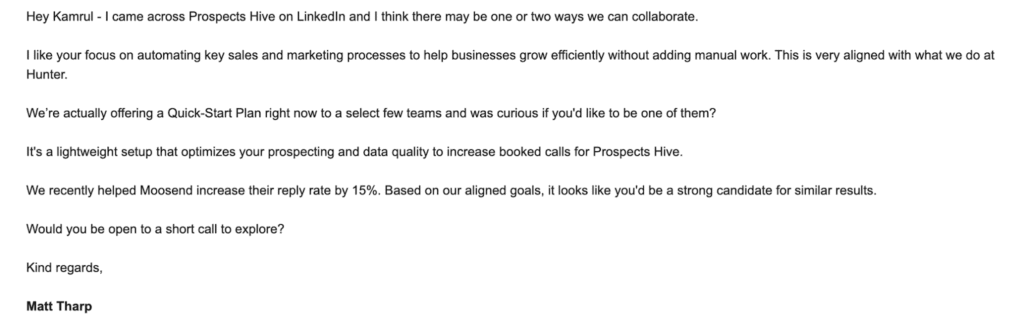
Step 4: Clearly State the Value
This is the most important part of your cold email. After earning attention, you must clearly explain why you’re reaching out and what value you offer.
Avoid vague claims or long explanations. Instead of listing features or capabilities, focus on one clear outcome or benefit that matters to the recipient. The goal is not to impress, but to be understood.
A simple structure works best: explain what you do, who it’s for, and how it solves a specific problem. Concrete results are far more effective than broad promises.
For example:
“We help early-stage SaaS teams book qualified demos by running targeted LinkedIn and email outreach without increasing ad spend.”
Notice how this avoids exaggeration and focuses on a concrete result. Resist the urge to oversell. Cold emails work best when they feel informative and relevant, not promotional.
Step 5: Add Social Proof to Build Credibility
Social proof can help prospects trust you. Since the recipient doesn’t know you, they’re more likely to believe your claims if backed by real results or recognition.
Here’s how to do that:
- Mention successful case studies or client results
- Highlight awards or recognitions
- Reference partnerships with notable brands
- Include a client testimonial or review
- Include any social validation.
Step 6: Add a Simple CTA
Every cold email needs a clear next step. If you don’t guide the reader, they won’t know how to respond. The most effective calls to action are low-friction and respectful of the recipient’s time. Phrasing your CTA as a question or a soft invitation makes it easier for them to say yes without feeling pressure.
Some good CTA examples that doesn’t sound salesy:
- “Open to a quick 15-minute call next week?”
- “Would it make sense to explore this briefly?”
- “Should I send over a short overview?”
Avoid aggressive or pushy language like:
- “Let’s schedule a demo now”
- “Book a call today”
A good CTA feels like an open door, not a sales push and that’s what keeps cold emails human, effective, and sustainable.
Cold Email Strategy for Success
The success of your cold emailing is not determined by sending more emails, but rather by sending better emails through a repeatable, data-driven process.
A strong strategy can transform your cold outreach from a one-off activity into a systematic channel that consistently generates conversations, replies, and opportunities.
A strong cold email strategy includes:
Prospect Research: Know Who You’re Emailing and Why
71% of ignored emails are ignored because they lack relevance. Decision-makers ignore irrelevant emails. Research ensures your message aligns with the recipient’s context and increases the chance they actually read and respond.
Here’s how to start your prospect research:
- Build ideal customer profiles (ICPs) before assembling your list (e.g., Marketing Heads and CTOs of 50–500-employee SaaS companies).
- Use real signals (job role, recent news, product launches, LinkedIn activity) to personalize why you’re reaching out.
Audience Segmentation: Tailor Messages for Different Roles
Different job titles and decision-making stages have different priorities. Cold emails targeting finely segmented audiences reach reply rates of 15–25% or higher, while the average reply rates can get 2-3 times higher.
Segmentation examples:
- Founders & CEOs → focus on growth challenges
- Marketing leads → highlight performance and automation
- Operations heads → emphasize efficiency and process bottlenecks
Segmenting your email list helps you align your cold messaging with their specific pain points, making the message distinct from a generic pitch.
Consistent Follow-Ups: Most Replies Come After Multiple Touches
Cold prospects often don’t reply to the first email because they are busy, skeptical, or simply miss the message. A thoughtful follow-up sequence dramatically increases the total number of replies. With consistent follow-ups, reply rates can increase by 28 – 65% compared to a single email.
Follow-up best practices:
- Space follow-ups strategically (e.g., 2–4 days after the previous email).
- Each follow-up should add something new (insight, data, resource), not just repeat the original message.
- Cap your sequence thoughtfully for too many repetitive follow-ups can feel pushy.
Value-Driven Messaging: Add Context or Insight Every Time
Cold emails with a clear call-to-action seem to have 42% higher response rates. Cold emails succeed when recipients feel they genuinely benefit from reading them, not when they are just being spammed with sale pitches.
Certain value-driven tactics that you can follow:
- Insight first: Start with a genuinely helpful observation or resource.
- Context next: Link that insight to a challenge they might recognize.
- CTA last: Ask a clear, low-friction next step (e.g., “Open to 10 minutes next week?”)
Best Practices for Cold Email Success
Successful cold emailing results from consistently applying proven practices that strengthen email deliverability and drive long-term results. These best practices improve email deliverability and response rates over time.
- Use Multiple Email Addresses: Distributing outreach across multiple inboxes protects sender reputation and prevents deliverability issues.
- Make Sure Your Email List is Verified: A verified list reduces bounce rates and improves inbox placement by removing invalid or risky addresses.
- Make Sure Your Email Accounts are Warmed Up: Gradually increasing send volume builds trust with email providers and avoids spam filters.
- Send Follow-up Emails: Most replies come after follow-ups, making consistent outreach essential for higher response rates.
- Use Unsubscribe Links: Clear opt-out options improve compliance, trust, and long-term deliverability.
- Make Sure the Email Content is Under 100-150 Words: Short, focused emails respect the reader’s time and increase the likelihood of a reply.
- Always Add a CTA in the Cold Email: A clear CTA tells the recipient exactly how to respond.
- A/B Test Your Emails: Testing subject lines, openings, and CTAs helps identify what resonates and improves performance over time.
Examples of a Good Cold Email
Here are some cold email examples, considerably good ones.
Example 1:
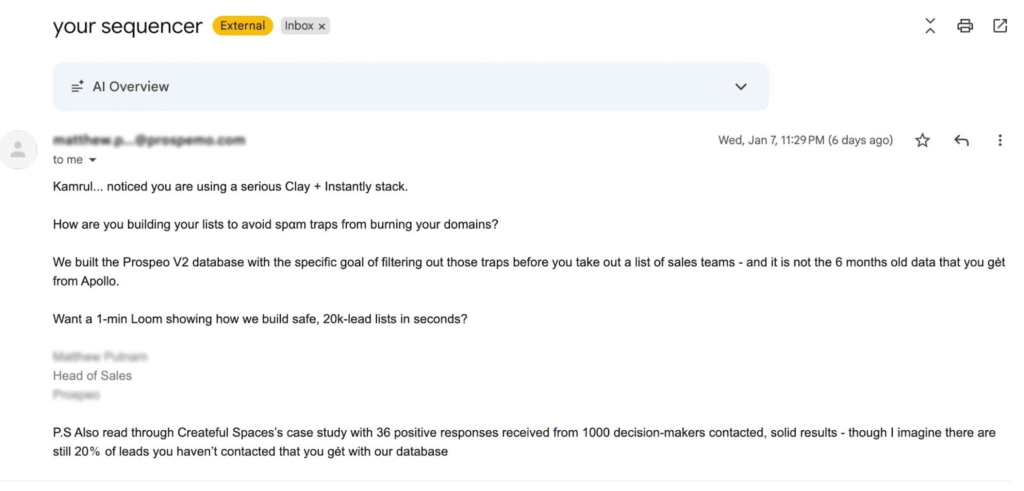
This cold email opens with a specific observation about the tools being used (Clay + Instantly), which immediately makes it feel relevant. The sender leads with a practical question around spam traps and domain safety, a real concern for anyone running outbound at scale. They clearly explain why their database exists and how it solves that exact problem, then close with a low-commitment CTA by offering a short Loom instead of a meeting.
Example 2:
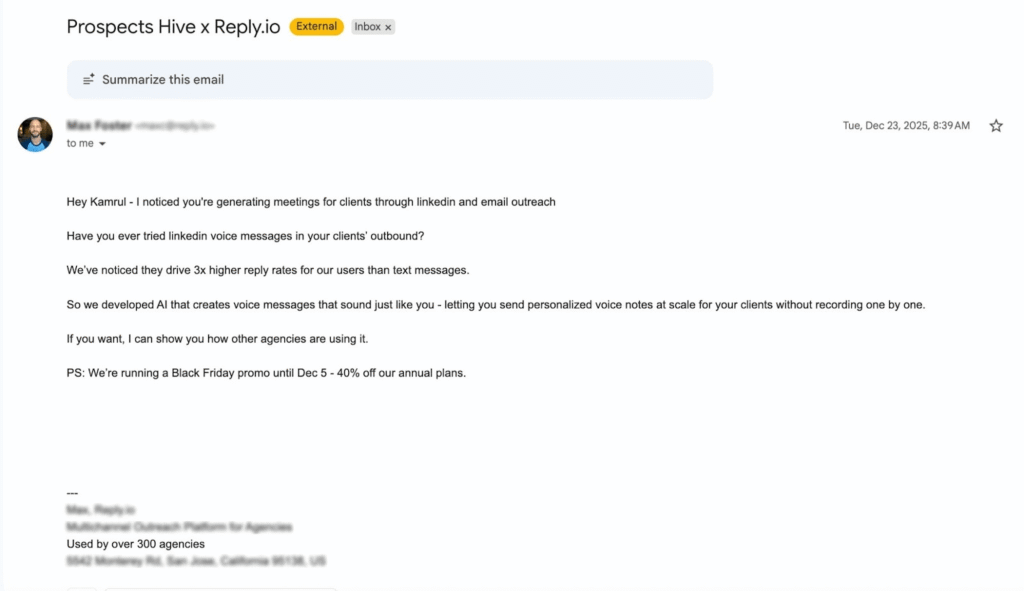
This cold email introduces the sender, identifies the outreach channels already being used (LinkedIn and email), and highlights a clear performance gap. It supports the claim with a concrete metric (3x higher reply rates) and explains how their product fits naturally into existing outbound workflows. The email stays concise and ends with an open-ended invitation to learn how similar agencies are using the tool.
Example 3:
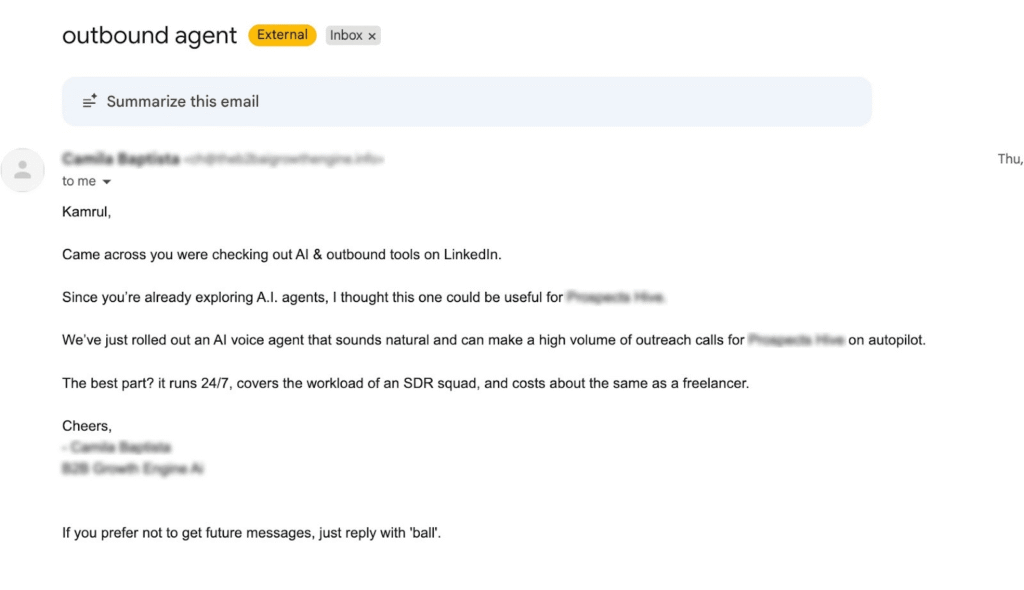
This cold email mentions recent activity to stay relevant and personal. It quickly explains what’s new, why it matters, and focuses on clear outcomes. The message highlights scale and cost in a simple way and lets the reader decide without pressure.
Tools to Enhance Your Cold Emailing Campaigns
Using the right cold emailing tools makes it easier to manage outreach, track performance, and scale campaigns effectively. Below listed are tools that help you automate your outreach while maintaining control:
1. Saleshandy
Pricing: Free trial available with paid plans starting from $25/month with annual billing.
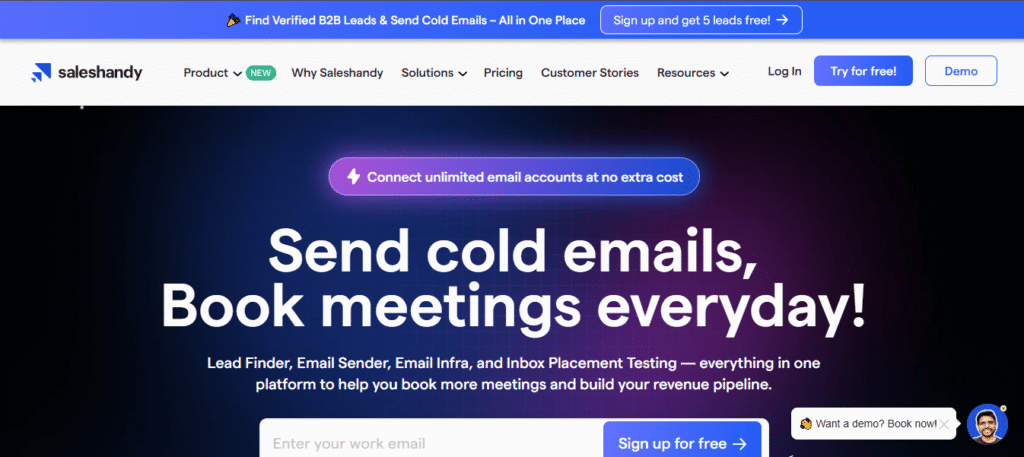
Overview: Saleshandy is a dedicated cold email outreach platform with automated sequences, follow-ups, inbox warm-up, deliverability features, personalisation and reporting. It’s built for teams that want to scale outbound safely while keeping inbox health and reply management under control. The platform also makes A/B testing and performance tracking straightforward, even at higher send volumes.
Best for:
- Automating email sequences with personalized follow-ups.
- Providing A/B testing for subject lines and email copy.
- Including email warm-up features to maintain domain reputation.
- Tracking opens, clicks, and replies with detailed analytics.
- Supporting mail merge and custom variables for hyper-personalization.
Pros and Cons
Here are some pros and cons of Saleshandy:
| Pros | Cons |
| Automates personalized email sequences. | Limited CRM integrations. |
| Warm-up features to protect domain reputation | Slow for large campaigns |
| A/B tests subject lines and copy | Basic reporting features |
2. Smartlead
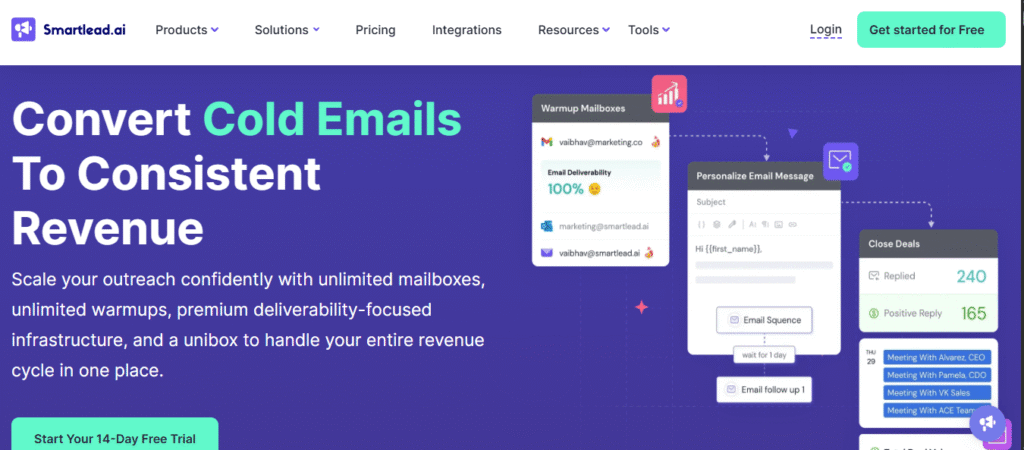
Pricing: Free trial of 14 days available with basic paid plan starting at $39/month.
Overview: Smartlead is a high-volume cold email tool designed for outbound campaigns with automation, warm-up, inbox rotation, and centralized replies. It’s built for teams sending at scale across multiple inboxes without hurting deliverability. The platform focuses on proper compliance, maintaining inbox health, and managing replies from one place.
Best for:
- Managing and scaling cold email outreach with AI-driven automation.
- Automatically handling warm-up and deliverability across multiple inboxes.
- Supporting unlimited sender accounts for high-volume campaigns.
- Enabling personalization with dynamic fields at scale.
- Providing AI-based inbox rotation to spread sending load safely.
Pros and Cons
Here are some pros and cons of Smartlead:
| Pros | Cons |
| AI-driven automation for scaling outreach. | Technical setup may be complex. |
| Auto warm-up and deliverability management. | Overwhelming for small teams. |
| Unlimited sender accounts for high volume. | Limited reporting depth. |
3. Instantly
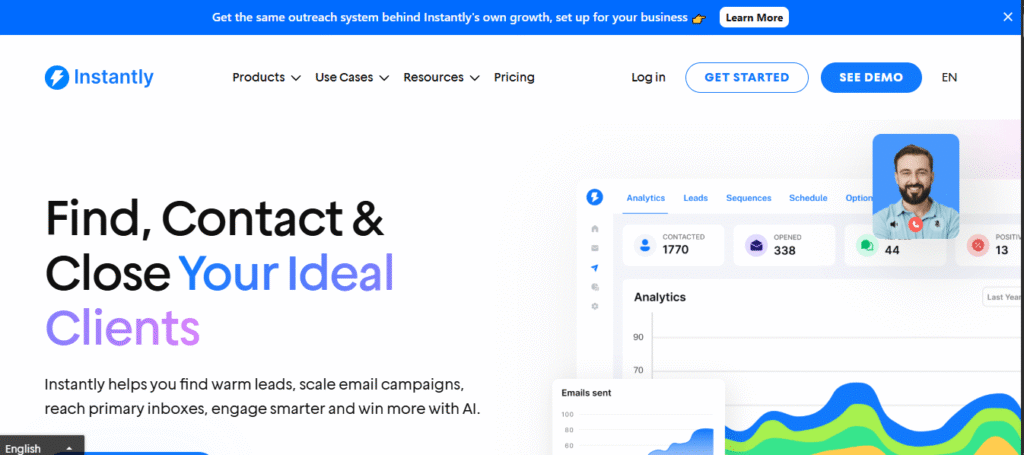
Pricing: Free plan available with paid growth plans starting from $30/month.
Overview: Instantly is a cold email outreach software focused on scaling sending volume, warm-up, automated sequences and deliverability. It’s commonly used by teams that want to send large volumes quickly while keeping inbox reputation stable. The setup is simple, making it popular for agencies and growth teams running multiple campaigns at once.
Best for:
- Sending cold emails at scale while staying within safe limits.
- Automatically warming up new email domains.
- Supporting message personalization and custom variables.
- Enabling A/B testing for subject lines and email copy.
Pros and Cons
Here are some pros and cons of Instantly:
| Pros | Cons |
| Scales outreach within safe limits. | Limited personalization options. |
| Automates domain warm-up. | Basic reporting. |
| A/B testing for subject lines and copy. | Struggles with inbox rotation at high volumes |
4. ReachInbox
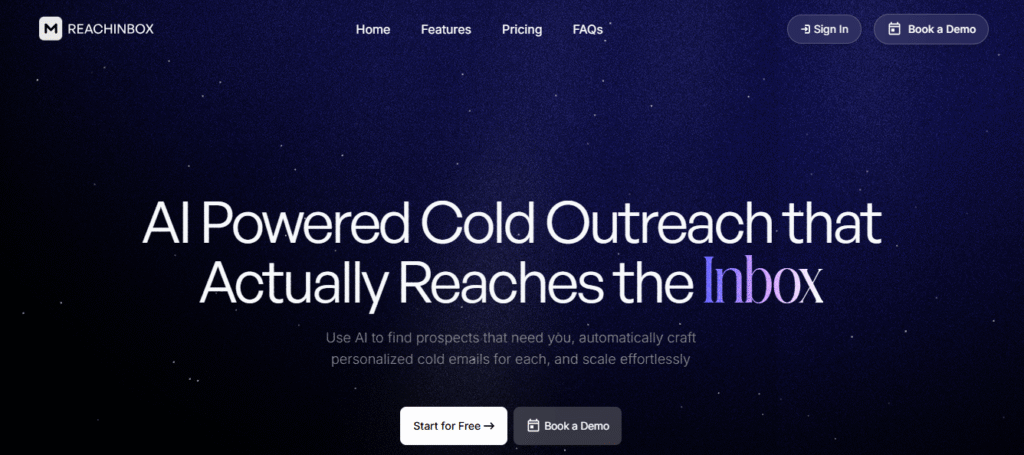
Pricing: Free plan available with starter and growth plan starting from $30/month and $75/month respectively.
Overview: ReachInbox is an AI-powered cold email outreach platform that automates campaign creation, warm-up, personalization and deliverability. It’s designed to reduce manual setup by using AI to generate email sequences and optimize sending behavior. The tool suits teams that want faster campaign launches without spending much time on copy and configuration.
Best for:
- Protecting domain reputation.
- Offering AI-powered smart reply detection (positive, neutral, negative).
- Supporting multi-step sequences with personalization.
- Providing A/B testing for subject lines and body copy.
- Centralizing all replies in a unified inbox for easy follow-up.
Pros and Cons
Here are some pros and cons of ReachInbox:
| Pros | Cons |
| AI-powered reply detection. | Limited third-party integrations. |
| Centralized reply management | Overcomplicated for basic needs |
| Multi-step sequences with personalization. | AI reply detection needs manual oversight |
5. Lemlist
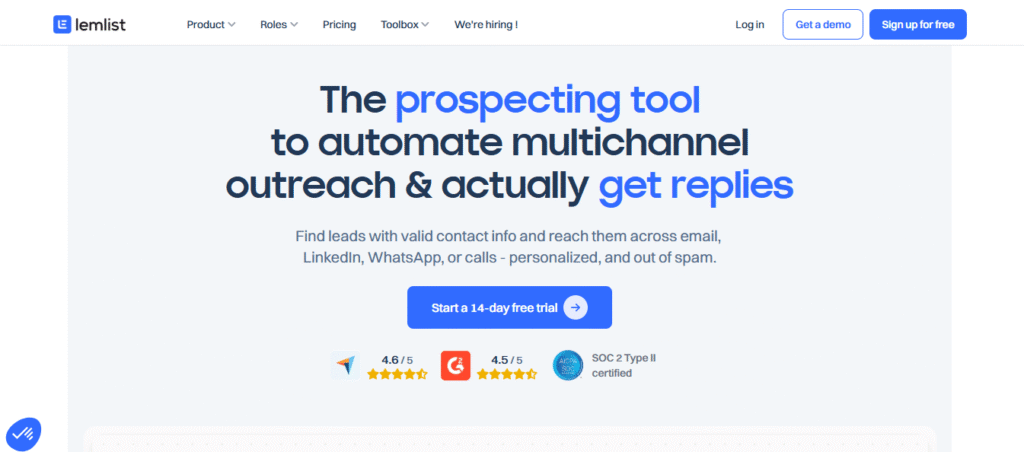
Pricing: 14 days free trial with paid plans starting at 55€ /month.
Overview: Lemlist is a full cold email outreach tool with multi-step sequences, personalization (including images/video), automated follow-ups and warm-up. It works great for teams that care about standing out in crowded inboxes with creative, human-style outreach. The platform also supports multichannel workflows, making it useful beyond just cold email marketing.
Best for:
- Rich email personalization, including images and videos.
- Multi-step outreach sequences with automated follow-ups.
- Ensuring high deliverability by warming up inboxes.
- Testing subject lines and email copy for better performance.
- Providing detailed tracking of opens, clicks, and replies.
Pros and Cons
Here are some pros and cons of Lemlist:
| Pros | Cons |
| Multi-step sequences with rich personalization. | Higher pricing for small businesses. |
| Automated follow-ups and warm-up. | Advanced features in higher-tier plans. |
| A/B testing and detailed tracking. | Complex interface for beginners. |
If you don’t want to rely entirely on tools and their limits, an agency-led approach makes more sense. Tools help with sending and tracking, but strategy, personalization, follow-ups, and CRM hygiene still require experience and hands-on execution.
That’s where Prospects Hive fits in. Instead of just giving you software, they run cold email outreach end to end. From prospect research and messaging to follow-ups and CRM management, Prospects Hive handles the parts tools can’t, helping you turn cold emailing into a consistent, results-driven channel.
Final Thoughts on Cold Emailing
Cold emailing remains a cornerstone of effective outreach. Executing a successful cold email campaign requires more than just sending mass emails; it requires personalization, compliance, and a clear strategy that resonates with your target audience.
Tools can help you send emails, but they don’t solve strategy, messaging, segmentation, or follow-ups on their own. That’s where an execution-first approach matters.
Prospects Hive helps businesses run cold email the right way. From research and hyper-personalized outreach to follow-up automation and CRM management, they turn cold emailing into a repeatable growth system instead of a hit-or-miss tactic.
If you’re exploring how to make cold email work better for your business, a short conversation is often the easiest place to start.
FAQs
1. What is Cold Email Marketing?
Cold email marketing is a marketing tactic of reaching out to new prospects via email to start conversations or generate leads.
2. What is the Difference Between Cold Email and Warm Email?
A cold email is an email you send to someone with no prior contact, while a warm email is sent to an existing or previously engaged contact.
3. What is the 30/30/50 Rule for Cold Emails?
The rule suggests 30% personalization, 30% value-focused messaging, and 50% targeting the right audience.
4. How to Increase the Response Rate of Cold Emails?
You can increase responses by targeting the right prospects, personalizing emails, sending follow-ups, and using clear CTAs.
5. How do you Avoid Spam Filters With Cold Emails?
Avoid spam filters by verifying lists, limiting volume, and using natural, non-promotional language.
6. What are the 7 C’s of Email Etiquette?
The 7 C’s are clear, concise, correct, courteous, concrete, coherent, and complete communication.