Struggling to scale your outbound in 2026? That’s majorly because outbound marketing is undergoing a major transformation.
Maybe you’re running campaigns that look good on paper, but the leads aren’t converting. Or you’re hitting the right audience but at the wrong time.
In 2026, outbound growth isn’t about sending clever sequences anymore. The real advantage comes from AI-driven GTM systems that identify high-intent leads, personalize outreach at scale, and engage prospects at the right moment.
In this blog, you’ll learn how to build an AI-powered outbound GTM strategy and discover the tools that help scale pipeline faster while giving your team clearer data to act on.
Key Notes
- AI GTM in outbound marketing refers to using AI-driven systems, automation, and data signals to build a more intelligent GTM strategy.
- AI-driven outbound marketing combines data enrichment, intent signals, and automation for precise prospecting.
- AI GTM improves lead targeting, pipeline forecasting, and multi-channel outreach.
- Modern B2B GTM strategy is a combination of AI-powered prospecting, signal-based outreach, and conversational intelligence.
- Teams implementing AI-powered GTM strategies are scaling outbound marketing without proportionally increasing SDR headcount.
What is AI GTM in Outbound Marketing?
AI GTM in outbound marketing refers to the use of AI to design, automate, and optimize a company’s GTM strategy for outbound sales and marketing.
With AI GTM in outbound marketing, you use AI to analyze large datasets to identify patterns, predict buying behavior of your prospects, and improve targeting.
This empowers B2B teams like yours to build a smarter, precise, and more responsive go-to-market strategy.
Typically, a traditional outbound process includes:
- Manual list building
- Generic email sequences
- SDR-led research
- Basic CRM tracking
In contrast, AI-driven outbound marketing introduces automation and intelligence across your entire GTM tech stack. With AI systems, you can:
- Identify high-fit prospects using AI lead targeting.
- Automate prospect research.
- Personalize outreach at scale.
- Predict pipeline performance through AI pipeline forecasting.
- Optimize campaigns across multiple channels.
In 2026, a modern AI-powered GTM platform blends data enrichment, intent signals, and automated outreach workflows to identify prospects having the maximum potential to convert into sales.
See also: The Future of Outbound Sales: How Automation is Changing the Game
As a result, AI has become a core component of B2B marketing and outbound sales strategies, particularly for companies aiming to scale growth efficiently.
Why is Traditional Outbound Not Enough Anymore?
Traditional outbound marketing once worked well when competition was lower and inboxes were less crowded.
Today, however, generic templates and list-based prospecting can no longer deliver consistent results. Several challenges have made traditional outbound less effective, including:
- Static lead lists
- Limited personalization
- Manual research and workflow bottlenecks
- Lack of signal-based outreach
Because of these changes, modern B2B companies have rapidly shifted to onboarding AI-powered GTM strategies that combine automation, data intelligence, and multi-channel execution.
The Core Components of An AI GTM System
A successful AI GTM strategy is not just about using a single AI tool. It requires a structured system that integrates data, automation, and sales workflows.
Below are the key components of a modern AI-powered GTM tech stack.
1. Data and Enrichment Layer
Every AI-driven outbound system begins with high-quality data.
AI platforms collect and enrich prospect data from multiple sources such as:
- company databases
- social platforms
- technology usage data
- hiring trends
Data enrichment helps improve AI lead targeting and ensures that outreach campaigns reach the right decision-makers.
2. ICP Modeling and Predictive Targeting
AI tools can analyze existing customer data to identify patterns among successful deals.
This enables teams to build stronger Ideal Customer Profile (ICP) models based on factors such as:
- company size
- industry
- revenue growth
- technology stack
With predictive targeting, AI systems can prioritize personas most likely to convert.
3. Signal Detection
Modern AI systems monitor buying signals that indicate a prospect’s potential buying intent.
Examples include:
- job postings
- funding announcements
- leadership changes
- product launches
Signal-based targeting allows teams to run triggered outbound campaigns rather than generic outreach.
4. Automation and Workflow Orchestration
Automation tools integrate the entire GTM automation workflow, connecting prospecting, outreach, and CRM systems.
This includes:
- automated lead enrichment
- multi-channel outreach sequences
- automated task assignments
- pipeline updates inside CRM platforms
Also read: 10 Best CRMs for B2B Outbound Sales
5. AI Sales Enablement and Insights
AI tools also analyze conversations between sales teams and prospects.
This includes:
- call recordings
- email conversations
- meeting transcripts
Through this conversational intelligence, AI platforms can extract insights about objections, buyer priorities, and deal risks.
These insights help improve your sales enablement strategies and messaging.
How to Create An AI-Driven Go-To-Market Strategy from the Scratch?
Building an AI-driven go-to-market strategy starts with the adoption of a structured approach, keeping your marketing, sales, and data infrastructure aligned.
Below is a simplified framework for implementing AI GTM in outbound marketing.
Step 1: Define Your Ideal Customer Profile
Start by analyzing your best existing customers.
Identify common attributes such as:
- industry
- company size
- revenue range
- technology adoption
AI tools can analyze historical data to identify patterns and refine your B2B GTM strategy.
Step 2: Build Your Data Pipeline
Next, create a reliable data pipeline that collects and enriches prospect data.
A modern GTM tech stack typically includes:
- data enrichment platforms.
- AI prospecting tools.
- CRM systems.
- outreach automation tools.
These systems work together to create a centralized data environment.
Step 3: Implement AI Prospect Research
AI research tools can gather contextual information about prospects.
For example, AI can analyze:
- company websites
- news articles
- LinkedIn updates
- product announcements
This information enables AI sales scripts and outreach messages to reference relevant events or insights.
Step 4: Design Multi-Channel Outreach Campaigns
Modern outbound marketing relies on multiple communication channels.
AI-driven outreach systems combine:
- email outreach
- LinkedIn messaging
- phone calls
- content engagement
This approach is often referred to as AI multi-channel outreach.
Step 5: Monitor Performance and Optimize
Once your campaigns are live, AI platforms can track performance metrics such as:
- reply rates
- meeting bookings
- pipeline velocity
- deal conversion
Through AI pipeline forecasting, your sales team can identify which strategies generate the most revenue.
5 AI GTM Strategies for Scaling Outbound Marketing
B2B teams adopting AI-powered GTM systems often focus on several high-impact strategies. These strategies enable outbound marketing teams to scale efficiently.
Below are the 5 AI GTM strategies implemented by every B2B team that are winning in 2026:
1. AI-Powered Prospecting & ICP Modeling
AI-driven prospecting tools analyze large datasets to identify accounts that match a company’s Ideal Customer Profile.
This process improves AI lead generation by prioritizing high-fit prospects instead of targeting random contacts.
AI prospecting tools can evaluate:
- company growth indicators.
- hiring activity.
- product development signals.
- technology adoption.
By continuously refining ICP models, you can improve targeting accuracy and reduce wasted outreach.
2. Hyper-Personalization at Scale
Personalization is no longer optional. It has become a must-have in modern outbound marketing. However, manually personalizing every message is time-consuming.
That is where AI comes in. AI solves this challenge by generating contextual insights automatically.
For example, AI can:
- summarize a company’s product offering.
- identify recent news or announcements.
- highlight industry trends affecting the prospect.
This helps sales teams to execute hyper-personalized messaging while still maintaining scale.
This is also one of the main reasons why AI-driven outbound marketing campaigns often achieve higher engagement rates than traditional sequences.
3. Signal-Based Triggered Outreach
One of the most powerful capabilities of AI GTM systems is the ability to trigger outreach based on real-time signals.
Signal-based selling has become the most effective B2B sales method for modern outbound growth.
Examples of useful signals include:
- funding announcements.
- hiring expansion.
- product launches.
- technology adoption.
AI systems monitor these signals continuously.
When a relevant signal appears, the system automatically activates an outbound campaign.
This approach ensures that outreach occurs when a prospect is most likely evaluating new solutions.
Also read: How to Use Intent Signals to Get More B2B Sales
4. Multi-Channel Orchestration
Modern outbound marketing rarely happens through a single channel. Successful B2B teams know that an essential trick is to coordinate communication across multiple platforms.
AI tools can orchestrate outreach sequences across channels such as:
- phone
- website engagement
This strategy is often called AI multi-channel marketing.
By coordinating touchpoints across different channels, you can increase response rates and build stronger relationships with prospects.
5. Conversational Intelligence & Sales Insights
This new marketing tactic empowered by AI helps teams get sales insights that can be used to skill up sales reps and close more deals.
AI also plays a crucial role after conversations begin with your prospects.
Conversational intelligence platforms analyze interactions between sales teams and prospects.
These systems evaluate:
- meeting transcripts.
- email conversations.
- call recordings.
Through these evaluations, AI identifies common objections, buying signals, and risks; which help teams refine messaging and improve AI sales enablement strategies.
Top 5 AI GTM Platforms in 2026 for Outbound Marketing
Implementing AI GTM strategies becomes easier with the right AI GTM platform.
With new AI GTM solutions being rolled out continuously, it’s difficult to keep pace with every tool that’s now available in the market.
Below listed are the best 5 AI GTM platforms for scaling your outbound marketing:
1. Prospects Hive
Pricing: Automation and GTM audit starting from $199/ one-time only.
Best for: AI-driven outbound systems and signal-based GTM automation
What it does
Prospects Hive helps businesses build scalable outbound systems using AI, intent signals, automation workflows, and multichannel outreach strategies.
Why it’s powerful for outbound
- Connects buyer intent signals, enrichment, and outreach workflows
- Builds automated pipelines using tools like Clay, CRM platforms, and outreach tools
- Enables companies to run signal-based outbound instead of manual prospecting
Typical use cases
- Building AI-powered outbound systems
- Signal-to-outbound workflow automation
- Multichannel GTM campaigns
- Scaling pipeline generation with automation
2. Clay
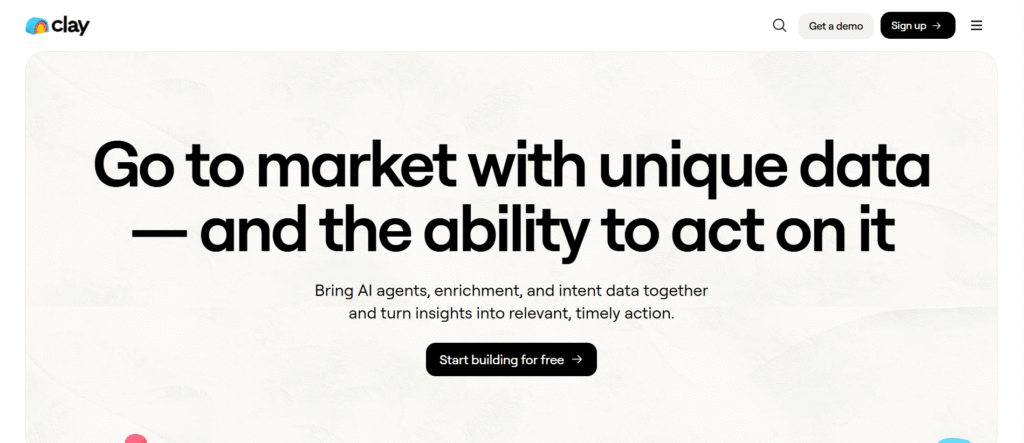
Pricing: Starter packs starting from $134/month, offering customized plans for enterprises.
Best for: AI-powered data enrichment and GTM workflow automation
What it does
Clay automates prospect research, enrichment, and personalization workflows to help teams build high-quality prospect lists.
Why it’s powerful for outbound
- Pulls enrichment data from multiple providers in one place
- Detects signals such as funding events, hiring trends, and technology usage
- Generates AI-powered personalization at scale
- Integrates with outreach tools like Lemlist, Smartlead, and Instantly
Typical use cases
- Intent-based prospecting
- Automated account and contact research
- AI-generated personalization lines for cold outreach
- Enrichment workflows for outbound campaigns
3. Apollo.io
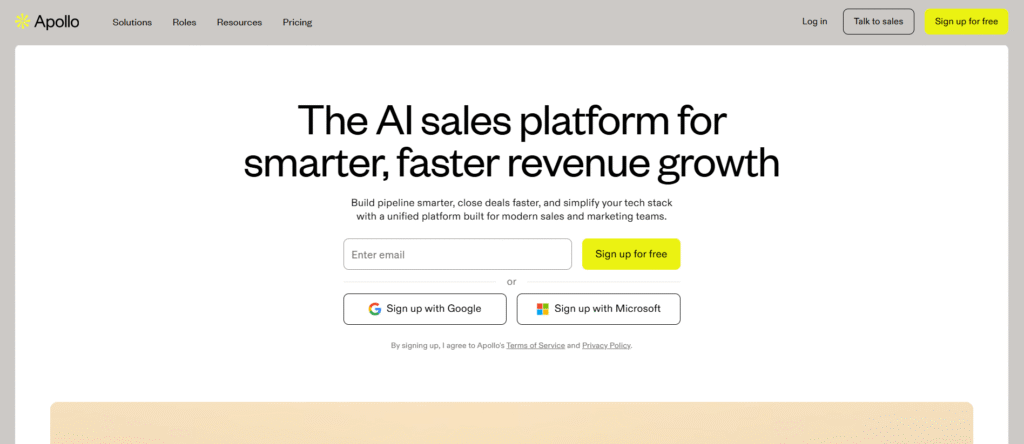
Pricing: Basic plans starting from $49 per user per month, billed annually.
Best for: All-in-one prospecting and outbound sales platform
What it does
Apollo.io provides access to a large B2B contact database combined with email sequencing, automation, and help teams find prospects and run outbound campaigns from a single platform.
Why it’s powerful for outbound
- Combines prospect data, outreach automation, and analytics in one platform
- Reduces the need for multiple tools in the outbound stack
- AI helps prioritize leads and optimize messaging sequences
- Built-in engagement tracking for pipeline visibility
Typical use cases
- Lead sourcing and prospect database search
- Automated cold email campaigns
- Sales pipeline development and prospect engagement
- Outbound performance tracking and optimization
4. 6sense
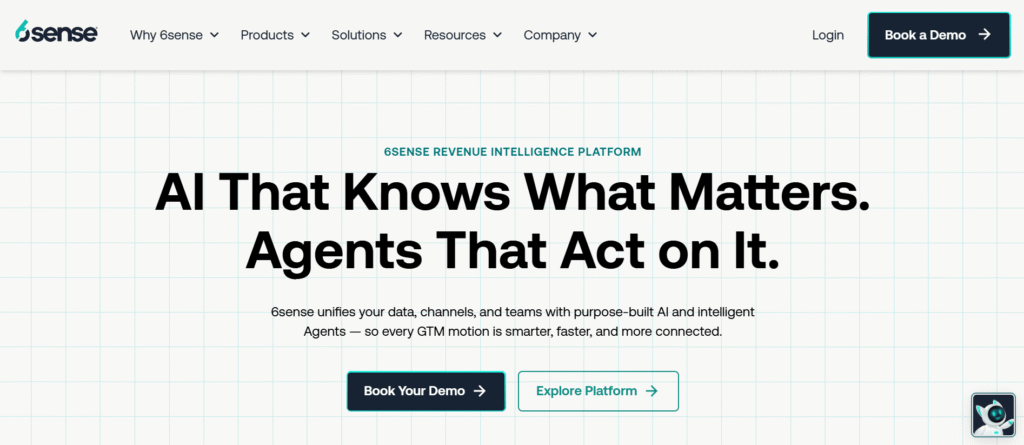
Pricing: Free plan available with customized plans requiring a custom quote.
Best for: Predictive intent data and AI-driven account prioritization
What it does
6sense uses AI to analyze anonymous buyer behavior, intent signals, and engagement data to identify which accounts are actively researching solutions.
Why it’s powerful for outbound
- Detects in-market accounts before competitors reach them
- Prioritizes outreach using predictive scoring
- Aligns sales and marketing around the same high-intent accounts
Typical use cases
- Intent-driven outbound prospecting
- Account prioritization for ABM campaigns
- Predicting pipeline opportunities
- Triggering sales outreach when buying signals appear
5. Unify
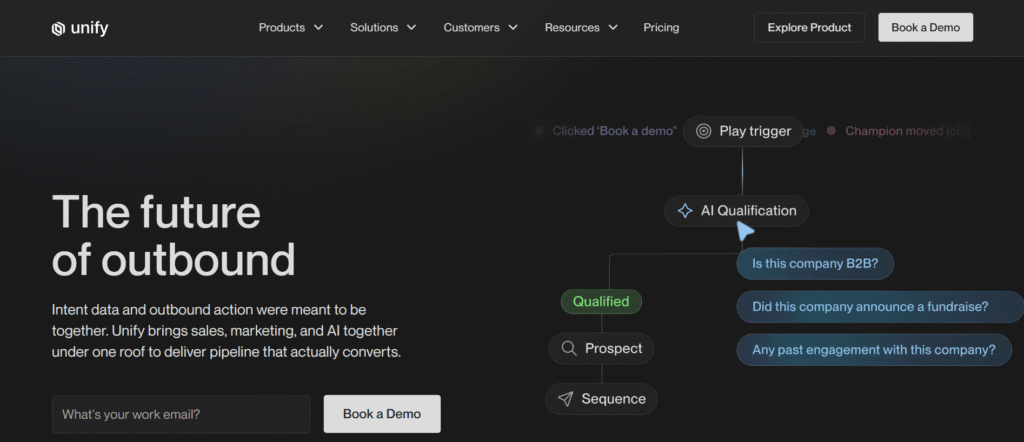
Pricing: Growth plans starting from $1740 per month, billed annually with custom plans available.
Best for: Automated outbound orchestration powered by AI signals
What it does
Unify connects data sources, intent signals, and outreach tools to automatically identify prospects and trigger personalized outbound campaigns.
Why it’s powerful for outbound
- Combines signal detection, enrichment, and outreach automation
- Launches outbound workflows automatically when signals appear
- Reduces manual prospect research and campaign setup
Typical use cases
- Automated signal-based outbound campaigns
- AI-driven account research and enrichment
- Dynamic prospect targeting
- Workflow-driven GTM automation
Build a Scalable Outbound System That Runs Itself
The ultimate goal of AI GTM in outbound marketing is to create a system that continuously generates pipeline with minimal manual effort.
That’s exactly what Prospects Hive helps you build.
With Prospects Hive, you can develop a scalable AI-driven outbound system, that typically includes the following workflow:
- Signal detection identifies potential buying opportunities.
- AI enrichment tools gather detailed prospect data.
- AI research tools generate contextual insights about the prospect.
- Personalized outreach campaigns activate across multiple channels.
- CRM automation tracks engagement and updates pipeline stages.
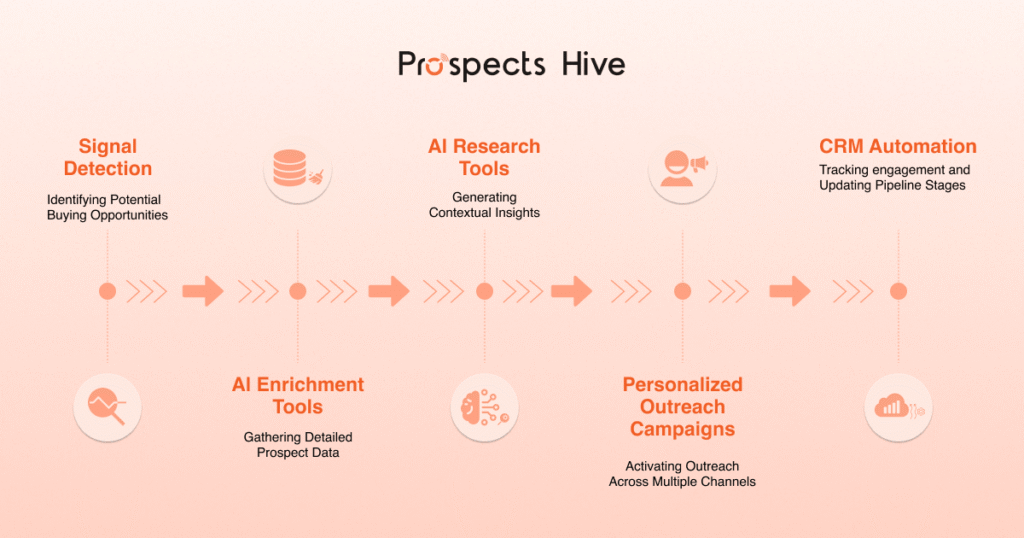
This automated workflow enables your B2B team to run outbound campaigns at scale while maintaining high levels of personalization.
Over time, the AI system learns from performance data and improves targeting, messaging, and campaign timing.
This is why many organizations now treat AI-powered GTM automation as a core growth engine.
Conclusion
AI GTM for outbound marketing offers a blend of data intelligence, automation, and multi-channel engagement.
Teams implementing AI-driven GTM strategies are achieving better results in prospect targeting and personalized customer experiences while establishing more reliable sales development processes.
They are gaining a significant competitive advantage in building scalable revenue engines.
If you want to build a system like this for your own outbound motion, book a free consultation call with the Prospects Hive team. We’ll help you map your ICP, identify the right signals, and design an AI-powered GTM workflow that turns intent into a predictable pipeline.
FAQs
1. How can AI help a small business create a GTM strategy?
AI helps a small business build a GTM strategy by quickly finding ideal customers and personalizing messaging with data‑driven insights.
2. Can smaller B2B teams implement GTM automation effectively?
Smaller teams can use GTM automation by starting with simple AI tools that handle repetitive tasks while humans guide the strategy.
3. What data do I need to automate outbound marketing?
To automate outbound marketing you need target‑account data, contacts, firmographics, engagement history, and intent signals.
4. How does a GTM AI platform work with tools we already use?
A GTM AI platform like Prospects Hive connects to your CRM, email, calendar, and other tools to sync data and power workflows inside your existing stack.
5. How should I use AI in my sales strategy?
Use AI in sales to prioritize leads, personalize outreach, automate follow‑ups, and refine messaging based on performance data.
6. What’s the first step to adopt AI in GTM?
Start small: audit your current GTM process, clean your CRM data, and pilot AI in 1-2 areas like lead scoring or outreach personalization before scaling across your team.